
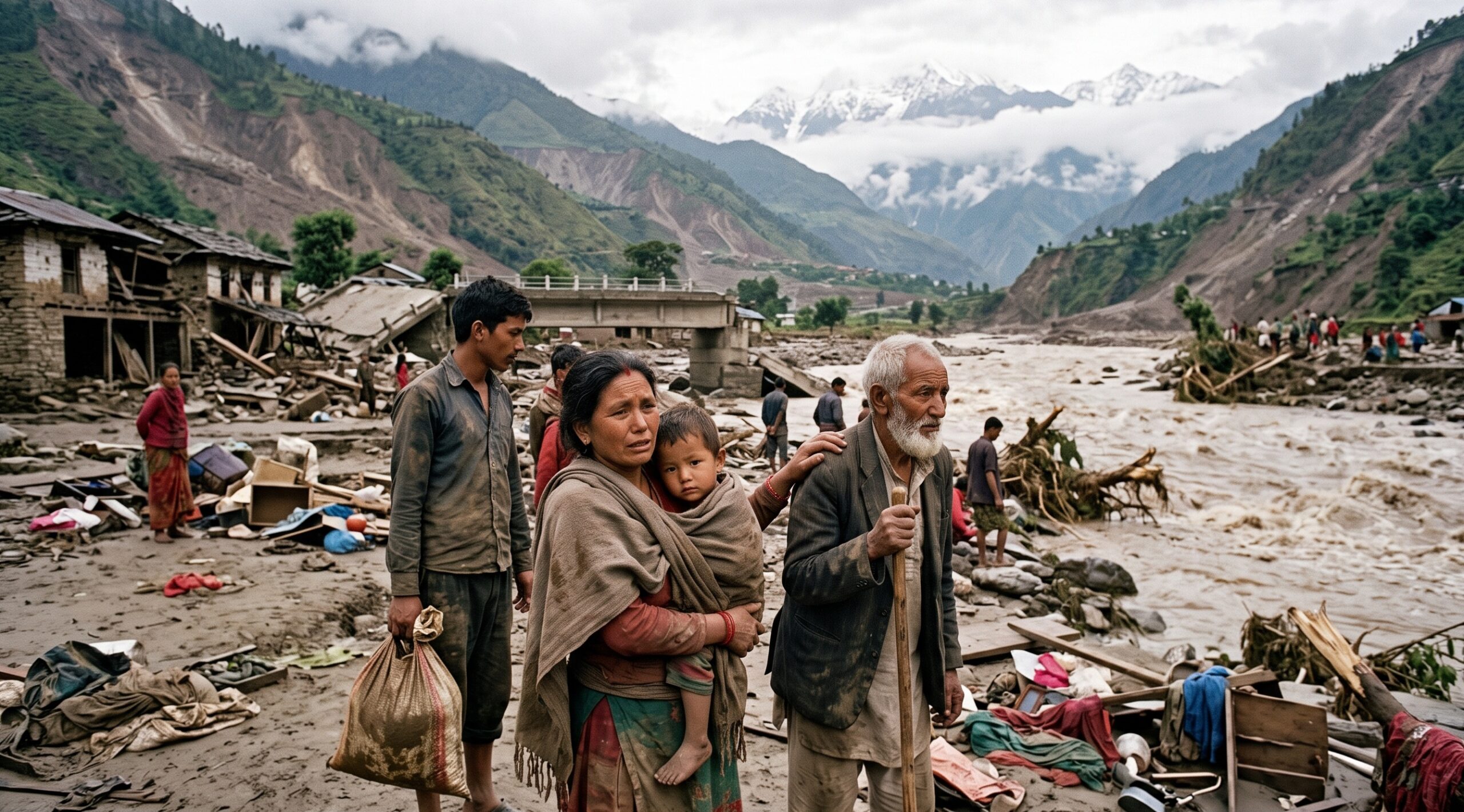
KATHMANDU, September 1, 2026, Himalini Desk: An avalanche near the Nepal-China border on the 10th of Bhadra, followed by catastrophic flooding in the Bhote Koshi and Trishuli rivers, has impacted an estimated 1.6 million people. The National Disaster Risk Reduction and Management Authority (NDRRMA) revealed the massive scale of the devastation in its first official situation report released on Tuesday.
According to the report, Rasuwa and Nuwakot have been classified as highly affected districts, while Dhading, Gorkha, and Chitwan are categorized as moderately affected.
987 Confirmed Dead, 3,916 Missing
The NDRRMA confirmed that the death toll from the floods and landslides has reached 987. The highest number of casualties was recorded in Chitwan with 321 deaths. Authorities have also recovered the bodies of victims in Nawalparasi East (216), Nawalparasi West (170), Nuwakot (95), Gorkha (65), Dhading (55), Tanahun (38), and Rasuwa (27).
Meanwhile, a staggering 3,916 people from 62 districts have been reported missing. Among them, approximately 62% are Nepali citizens and domestic tourists, 17% are government employees, and 15% are foreign nationals.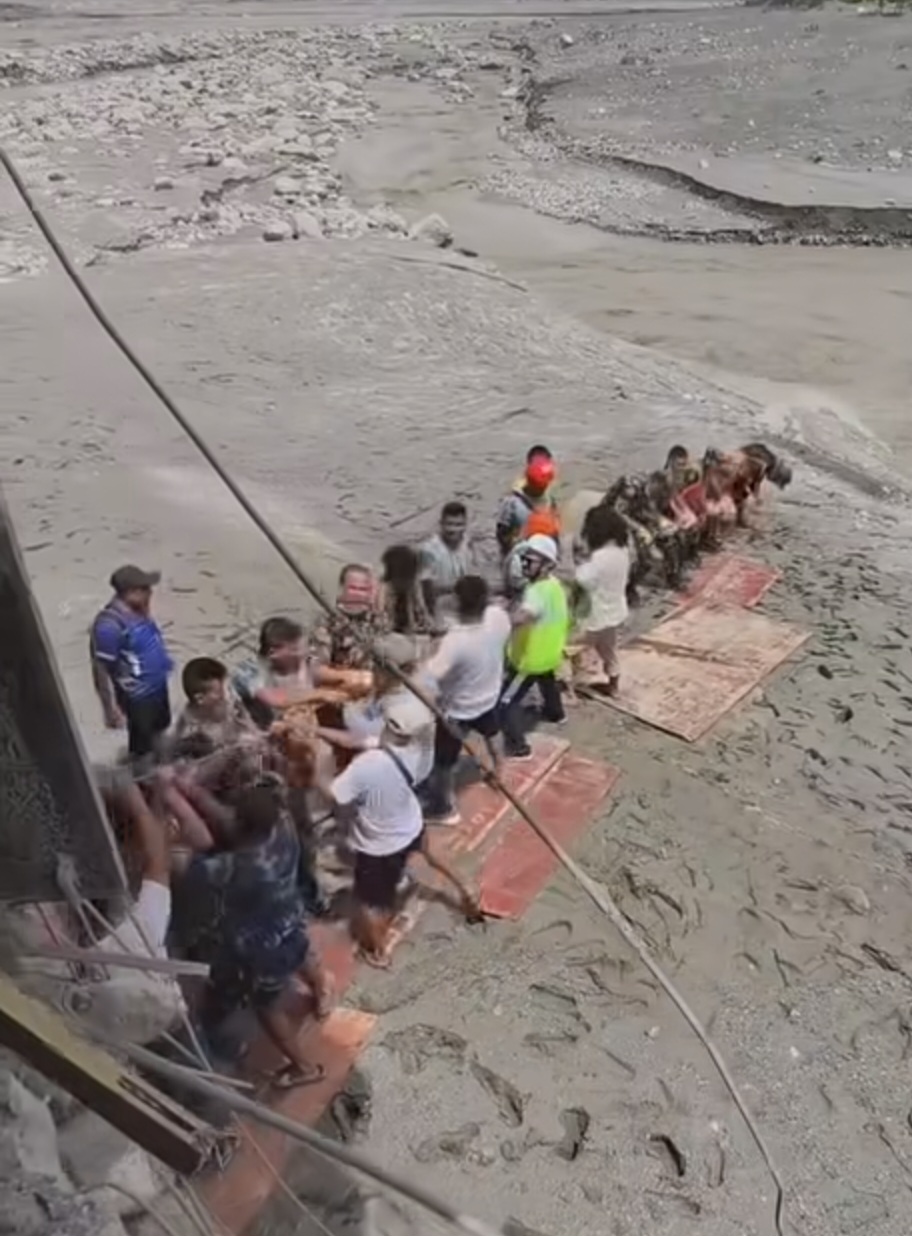
Massive Rescue Operations Underway
Search and rescue teams have successfully evacuated 11,814 people so far, including 253 foreign nationals. Aerial rescues played a crucial role, with 3,702 people airlifted across 573 helicopter and aircraft flights.
A total of 21,011 security personnel have been deployed for the ongoing rescue missions, comprising 8,896 troops from the Nepali Army, 7,912 from the Nepal Police, and 4,203 from the Armed Police Force. International search and rescue teams from India, China, and South Korea have also joined forces with Nepali security personnel to conduct joint operations.
According to the report, 279 injured individuals received treatment at various hospitals. While 168 have been discharged, 79 remain admitted, and three tragically succumbed to their injuries during treatment. Additionally, the Nepali Army has provided critical health services to 2,740 people in the hardest-hit areas.
Infrastructure, Roads, and Communications Destroyed
The scale of infrastructural damage is unprecedented:
-
Bridges & Homes: 41 concrete bridges were completely washed away, and 4 others were damaged. Satellite mapping shows that 4,689 buildings in the Bhote Koshi-Trishuli corridor remain in high-risk zones. In Nuwakot alone, preliminary data indicates that 1,267 houses were completely destroyed and 1,253 partially damaged.
-
Cut Off from the World: In Rasuwa, 14,461 people across 3,702 families in the Gosaikunda and Amachodingmo rural municipalities have been entirely cut off from roads, electricity, and communication networks for the past six days.
-
Road Closures: All major highways in Rasuwa are closed indefinitely. The Trishuli-Mailung-Syabrubesi road is completely blocked. In Nuwakot, traffic on the Tokha-Chhahare road is suspended from 10 PM to 5 AM due to landslide risks, while the Pasang Lhamu Highway at Belkotgadhi-10 remains entirely shut.
-
Telecom Disruptions: 110 Nepal Telecom towers and 78 Ncell towers have been damaged, severely hampering communication.
783 MW Hydropower Capacity Hit
The energy sector has taken a massive blow, with several hydropower projects along the river corridors heavily damaged. Affected projects include Rasuwagadhi, Rasuwa-Bhote Koshi, Chilime, Langtang Khola, Upper Trishuli-1, Upper Trishuli-2, Upper Trishuli-3A, Upper Trishuli-3B, Mailung Khola, Middle Trishuli Ganga, Trishuli, Devighat, and Super Trishuli. Combined with solar energy losses, a total installed capacity of 783.385 megawatts has been impacted, alongside widespread damage to substations and transmission lines.
Severe Impact on Education, Health, and Basic Amenities
The disaster has disrupted the education of 6,901 students across 19 schools in Rasuwa, Nuwakot, and Dhading. Of these, 8 schools were entirely destroyed, 8 were partially damaged, and only 3 remain safe.
Healthcare and sanitation infrastructure have also collapsed in several regions. Health posts in Syabrubesi and Timure, the Rasuwagadhi Health Desk, and the Mailung Community Health Unit in Rasuwa are completely destroyed. In Dhading, the Baireni Hospital and Charaundi Basic Health Service Center suffered partial damage.
Furthermore, two sewage treatment plants in Nuwakot (Dhunge and Bidur) were wiped out. The destruction of the Bidur drinking water project—where 4.5 kilometers of pipeline and three sump wells were washed away—has deprived 4,000 families of clean drinking water. An additional 465 families are affected due to damages to the Trishuli Colony, Devighat, and Betrawati water supply schemes.
Government Offices and National Parks Damaged
Conservation and government facilities were not spared. Offices and buildings of the Langtang National Park located in Timure, Syabrubesi, Mailung, and Bandare have been completely or partially destroyed. Nuwakot’s Agriculture Development Center and the Plant Quarantine Office in Timure also suffered severe flood damage.
Authorities urge citizens to remain on high alert as rescue and relief distribution efforts continue in the affected districts.