
Murli Manohar Tiwari (Sipu), 21 Oct.
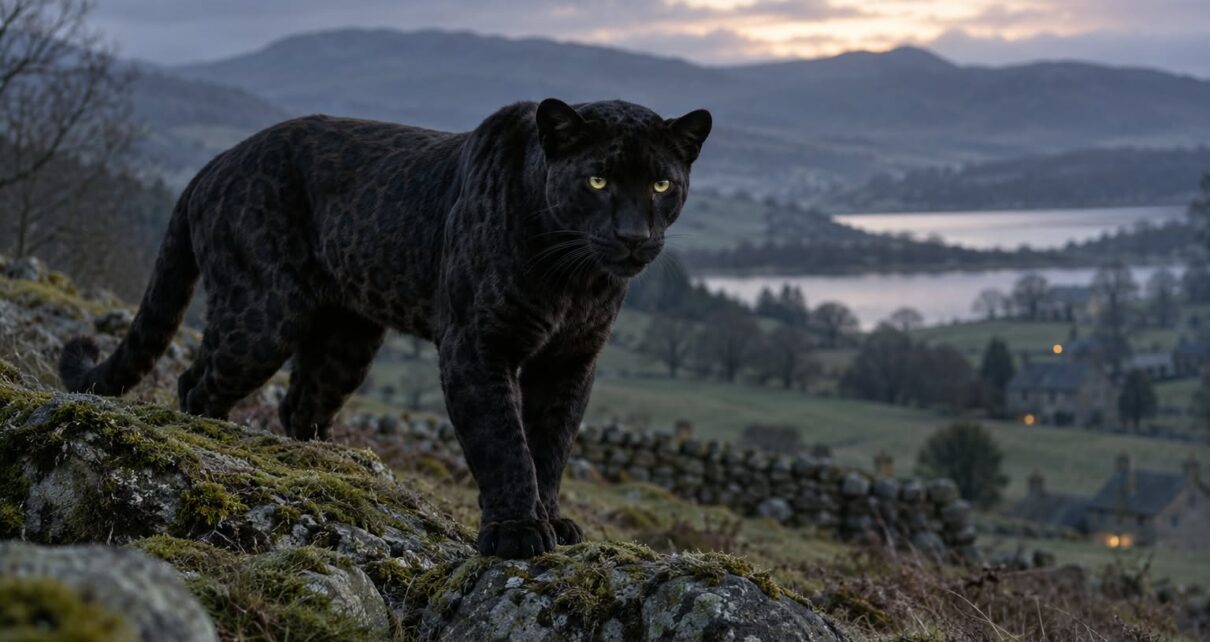
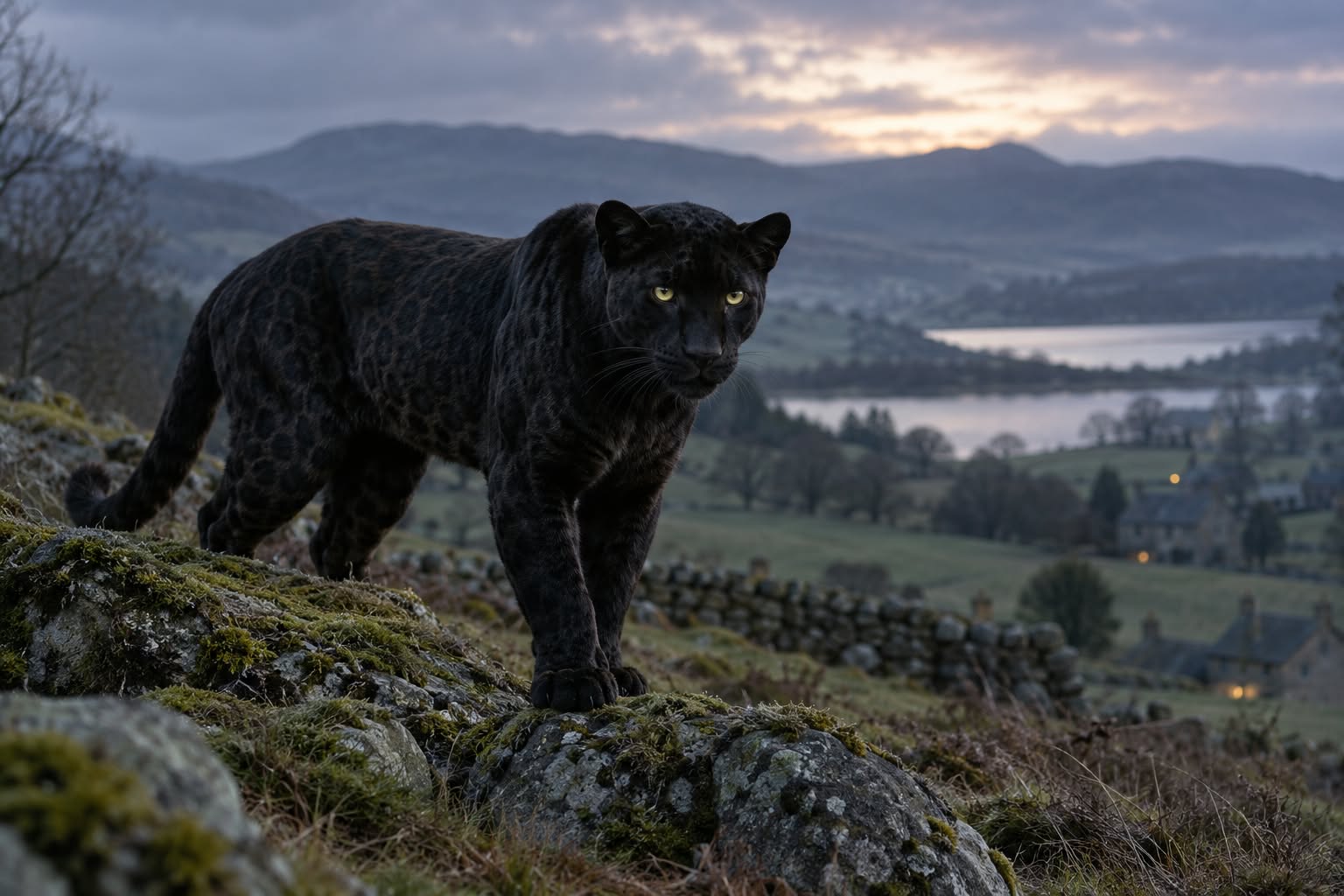
London: Reports of black panthers roaming Britain’s countryside have renewed debate over whether non-native big cats could be surviving undetected in the wild, following reported DNA findings, eyewitness accounts and footage of suspected animals.
Black panthers are not a separate species. The term usually refers to leopards or jaguars with melanism, a genetic condition that gives their coats a predominantly black appearance. Neither species is native to Britain.
One of the most significant recent developments came from Cumbria, where a swab collected from a sheep carcass discovered in October 2023 was analysed by Professor Robin Allaby of the University of Warwick. The results reportedly detected DNA from the Panthera genus, which includes leopards and jaguars. However, the limited genetic material did not establish the exact species, and the finding has not demonstrated that a breeding population exists.
In Gloucestershire, another reported DNA finding from hair recovered near a sheep carcass in 2022 was also linked to a leopard. These results have added scientific interest to a mystery that has persisted for decades.
Footage of suspected big cats has circulated in Britain, including a black cat-like animal filmed near Blackdog, north of Aberdeen, in November 2023. Wildlife experts have cautioned that distant or low-resolution recordings can make domestic cats appear much larger than they are. Some witnesses and investigators have also described clearer footage that has not been made publicly available. Such privately held recordings cannot be independently assessed unless they are released for expert examination.
How could these animals be present? One explanation is that exotic cats escaped or were deliberately released by private owners, animal collections or unregulated facilities. Britain’s history of keeping exotic animals makes this plausible for individual escapees, although it does not prove that any particular sighting represents a leopard. The Dangerous Wild Animals Act 1976 introduced licensing requirements for keeping certain dangerous species, while the Wildlife and Countryside Act 1981 restricts releases of non-native animals.
There is historical precedent for exotic cats appearing in the British countryside. A scientific study published in 2013 examined the remains of a Canadian lynx killed in Devon around 1903, providing physical evidence of a non-native wild cat outside captivity.
Despite the accumulating reports, the central question remains unresolved. DNA findings and historical specimens show why the subject merits investigation, but convincing, independently verified images, further genetic samples and evidence of related animals would be needed to establish whether black leopards are living and breeding in modern Britain.
Sources: University of Warwick, School of Life Sciences; BBC News reporting on the Cumbrian DNA finding (2024); Historical Biology (2013), “Multidisciplinary investigation of a ‘British big cat’: a lynx killed in southern England c. 1903”; Discover Wildlife (2023, 2026).