Dr. Shweta Deepti, Himalini Online | Hindi–English Edition, October 21, 2026. Kathmandu, Nepal
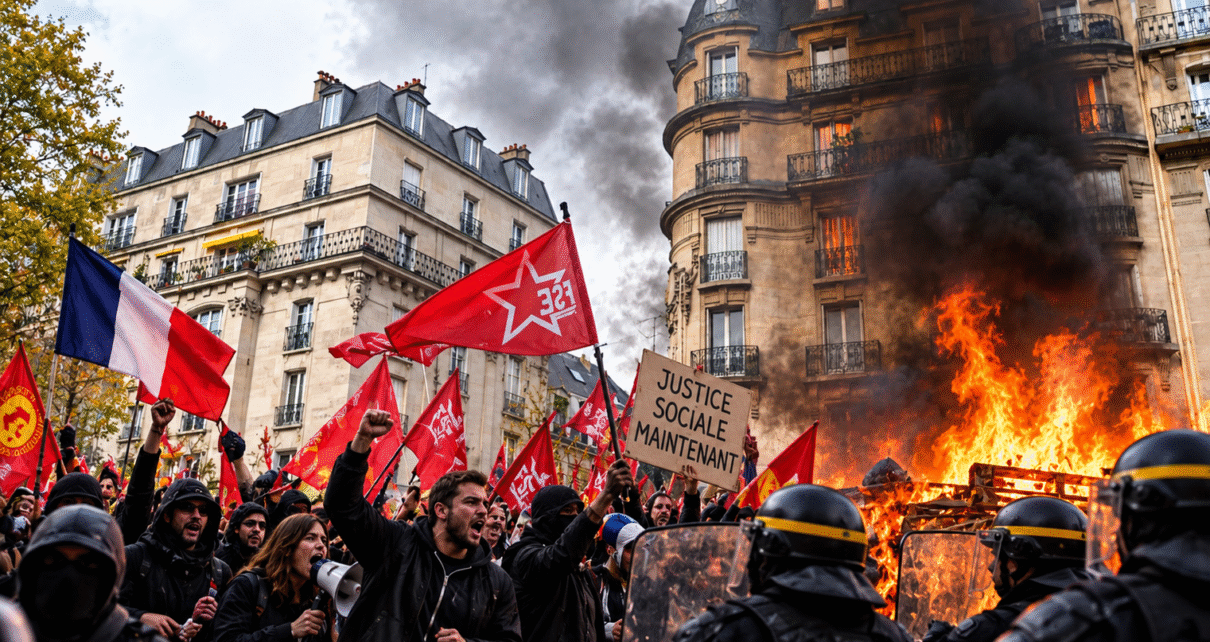
Europe has long been regarded as a symbol of democracy, civil liberties, human rights and the rule of law. Whenever democratic governance, social security and citizens’ rights are discussed around the world, European nations are often cited as examples. However, when incidents of violence, arson, vandalism and looting emerge during protests in various European cities, serious questions arise. Is democratic dissent losing its sense of responsibility? Are genuine public grievances being transformed into instruments of political opportunism and mob fury? Most importantly, when does the right to protest become a means of creating anarchy?
Protests are a natural and essential part of democracy. Citizens have the right to express disagreement with government policies, raise their voices against economic hardship, demand social justice and hold the administration accountable. In a democracy, people are not merely voters; they are also an active force that questions those in power. Therefore, it would be unjust to view every protest with suspicion or label every dissatisfied voice as hostile to the system.
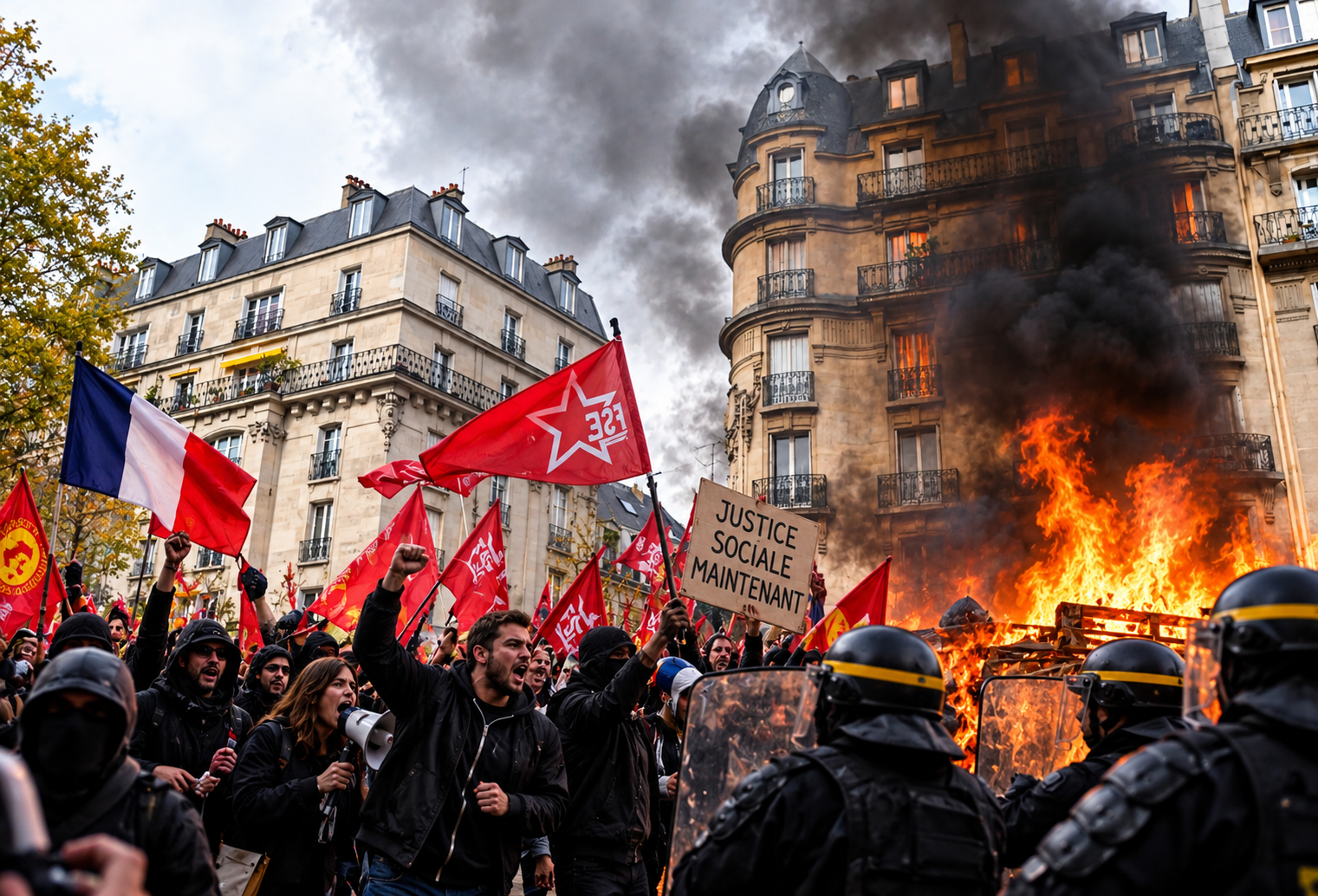
However, there is a clear distinction between democratic rights and violent disorder. When public transport is damaged, vehicles are set on fire, shops are looted and ordinary citizens are terrorised in the name of protest, questions about the movement’s original purpose become inevitable. The legitimacy of a demand does not make violence acceptable. Democracy guarantees the right to dissent, but it does not grant anyone the right to deprive others of their safety, property or freedom.
Beyond Law and Order: The Roots of Public Discontent
The current challenges facing Europe cannot be understood merely as law-and-order problems. They are also rooted in a range of economic, social and political factors. The rising cost of living, expensive housing, employment challenges for young people, social inequality and declining trust in governments have contributed to public dissatisfaction in several European countries.
France has witnessed major demonstrations at different times over pension reforms, economic policies and the cost of living. In the United Kingdom, economic pressures and social tensions have contributed to protests, while violent incidents in some locations have posed challenges for the authorities. Italy and other European countries have also seen citizens take to the streets over a variety of concerns. Housing shortages, inflation, migration policies, public services and dissatisfaction with political leadership remain significant issues in these debates.
Yet it is important to recognise that the situation is not identical across Europe, nor does every protest turn violent. Millions of people express their demands peacefully. Violent incidents are often confined to particular locations, groups or circumstances. Nevertheless, when violence becomes part of a protest, images of destruction can overshadow the wider movement and, at times, damage perceptions of an entire country.
This is where the distinction between public anger and anarchy becomes essential. Governments must listen to genuine public grievances, but protesters must also understand that destroying public property does not solve the problems affecting society.
When Peaceful Protests Are Hijacked by Violence
A large demonstration may include many people who are genuinely distressed by a particular issue and have come to make their voices heard. However, opportunistic and antisocial elements may also become active within a crowd. Their objective may not be to advance the movement’s demands but to exploit disorder for their own purposes.
As tensions escalate, incidents of looting, arson, attacks on public buildings and violent confrontations with the police may follow. Opportunistic criminals can also use the cover of a crowd to carry out unlawful activities. Such incidents silence peaceful protesters and undermine the credibility of the movement itself.
A fundamental question must therefore be asked: if people are protesting against a government policy, why should the shop of an ordinary trader, who has no connection with that policy, be looted? How will burning a public bus improve anyone’s life? What social problem can be solved by damaging hospitals, schools or transport infrastructure?
In reality, the greatest burden of such violence often falls on people who are already struggling economically. Small business owners lose their investments, workers face disruptions to their livelihoods, and ordinary citizens begin to feel increasingly insecure. Ultimately, the cost of repairing public infrastructure is often borne by public funds that could otherwise support education, healthcare and development.
Before supporting any movement, therefore, it is necessary to distinguish between its objectives, leadership and methods. Public grievances may be genuine, but crimes committed under the cover of those grievances do not automatically become legitimate.
The Psychology of Crowds and the Role of Social Media
Crowd behaviour can differ significantly from individual behaviour. A person who would normally avoid violence may act recklessly under peer pressure, emotional excitement, a desire for revenge or the belief that they can escape punishment. When a group begins to believe that law-enforcement institutions are weak or that unlawful actions will go unpunished, the risk of violence can increase.
Social media can further influence these circumstances. Incomplete videos, unverified information, inflammatory messages and old photographs presented as images of current events can intensify tensions. Rumours can spread so rapidly across digital platforms that it becomes difficult for authorities and news organisations to establish the facts and communicate them effectively.
At the same time, digital platforms offer opportunities to monitor events, collect evidence and counter misinformation. The problem lies not in technology itself but in its irresponsible use.
It would therefore be incorrect to conclude that every violent protest is the result of an organised conspiracy, foreign interference or political manipulation. Such possibilities may be investigated where evidence warrants it, but allegations must be assessed on the basis of credible inquiries and verifiable facts. Treating rumours as established truth only makes an already difficult situation more complicated.
Migration, Social Integration and the Politics of Division
Migration and the question of refugees have remained subjects of intense political debate across Europe. In several countries, some citizens believe that pressure on housing, employment, public services and social security is increasing. On the other hand, important arguments are also made concerning the rights of refugees and migrants, humanitarian obligations and their contributions to the economy.
Differences of opinion on these matters are natural. The purpose of democracy is to resolve such disagreements through dialogue, public debate and policy decisions. However, when economic hardship and social dissatisfaction are transformed into hostility against a particular community, the situation can become dangerous.
It is contrary to the principles of justice to presume that someone is a criminal simply because of their nationality, religion, language or migrant background. Equally, those who commit violence should not receive protection merely because they claim to represent a particular political or social group. The law must respond to individual conduct, not identity.
Europe’s challenge is to maintain a practical balance between social integration, public safety, migration management and human rights. Failures in these areas can deepen public dissatisfaction, but political leaders must offer constructive solutions rather than inflame existing anxieties.
Governments Must Be Accountable, but Violence Cannot Be Excused
Blaming protesters alone does not absolve governments of their responsibilities. If large sections of society are struggling with economic hardship, unemployment, inflation or inequality, governments must take concrete steps to address these problems.
Ignoring public grievances, failing to maintain dialogue and making decisions without adequate transparency can erode public trust. When citizens feel that nobody is listening to their concerns, frustration may intensify. Democratic governments must therefore understand public sentiment in time, accept criticism and introduce necessary policy reforms.
However, government accountability does not mean that violence must be tolerated. The police and administration have a duty to protect citizens’ lives and property. Those involved in violence, looting and arson must face action in accordance with the law. At the same time, the use of police force must remain necessary, proportionate and accountable.
Maintaining a clear distinction between peaceful demonstrators and violent offenders is an essential requirement of democratic governance.
If the administration suppresses peaceful voices, civil liberties are threatened. If it fails to control violent crimes in time, public confidence in the rule of law is weakened. Protecting citizens’ rights and enforcing the law impartially are therefore equally necessary for the survival of democracy.
The Human and Economic Cost of Violence
Discussions of riots and looting often focus on burnt vehicles, damaged shops and destroyed buildings. Yet the consequences of violence extend far beyond physical destruction.
When people become afraid to walk through their own neighbourhoods, when shopkeepers hesitate to open their businesses because of security concerns, and when families worry about allowing their children to visit public places, a crisis of trust begins to emerge within society.
Businesses and tourism may suffer. Investors may become concerned about uncertainty. Transport networks and public services may face disruption. Most importantly, suspicion and social divisions can grow among different sections of the population. These psychological consequences can persist long after the physical damage has been repaired.
In regions such as Europe, where economies are closely interconnected and many countries depend significantly on trade, tourism and services, prolonged instability can have wider implications. However, the extent of these consequences must be assessed using reliable data and taking individual national circumstances into account.
The real strength of democracy lies not only in its institutions but also in the trust citizens place in one another. Once that trust is weakened, rebuilding it can take considerable time.
Europe Is Facing Challenges, Not Necessarily Decline
Violent incidents in Europe are undoubtedly a matter of serious concern, but they should not automatically be interpreted as evidence of the collapse of the entire continent. European countries continue to have established judicial institutions, independent media, civil society organisations and democratic processes. In many places, public authorities, community groups and citizens work together to reduce tensions and restore peace.
Nevertheless, an important question remains: how can democratic systems be strengthened when trust in institutions begins to decline, political polarisation increases and economic insecurity deepens?
Increasing police deployment alone will not eliminate the roots of public dissatisfaction. Political speeches alone will not resolve social tensions. Nor will simply criticising protesters address the underlying problems that bring people onto the streets.
A comprehensive response is required. This must include expanding economic opportunities, improving public services, ensuring easier access to justice, strengthening transparent governance, encouraging social dialogue and enforcing the law impartially.
Citizens, too, must recognise that the right to dissent becomes meaningful only when it is exercised with respect for the rights of others.
Lessons for Democracies Across the World
The developments in Europe raise questions that extend far beyond the continent. Countries across Asia, Africa and other regions can also draw important lessons from these experiences. In the digital age, an incident in one country can reach audiences across the world within minutes. Protest tactics, political slogans and crowd behaviour can influence public discourse well beyond national borders.
However, conclusions drawn from events in another country must be approached carefully. Every society has its own history, political system, economic conditions and social structure. Europe’s experiences cannot simply be applied to other countries without considering their specific circumstances.
Even so, certain principles are universal. Governments must not ignore genuine public grievances. Peaceful protest must be recognised as a legitimate part of democratic life. Violence and looting cannot be justified in the name of political objectives. Law-enforcement institutions must act impartially while protecting citizens’ rights.
For South Asian countries, too, the message is important. Governing without understanding public sentiment, or attempting to suppress dissent solely through force, offers no lasting solution. On the other hand, allowing the law to become ineffective under pressure from a crowd can also weaken democratic institutions.
The Real Test of Democracy
The most important question concerning Europe today is not simply why protests occur, but where they lead and how democratic institutions respond to them. Public dissatisfaction is a natural part of any vibrant society. Questioning government policies is not a weakness of democracy; it is evidence of its vitality.
But when dissent turns into violence, when looting replaces demands and when fear takes the place of dialogue, a movement begins to lose sight of its original purpose. In such circumstances, public grievances remain unresolved, government accountability is not strengthened, and society gains no lasting benefit.
Protecting democracy requires sensitivity from governments, impartiality from the administration, responsibility from the media and a clear understanding among citizens that rights must be accompanied by duties.
The right to take to the streets is a democratic freedom, but surrendering the streets to violence is not. Opposing a government is an exercise of democratic liberty, but looting an innocent citizen’s shop, setting fire to their vehicle or putting their life at risk is a crime.
This must remain the guiding principle for Europe and every democratic society in the world: the voice of the people must be heard, space for peaceful dissent must be protected, and those who commit violence must be brought within the ambit of the law.
For the true victory of democracy lies not in the power of the mob, but in justice, dialogue, responsibility and respect for the rule of law. From Hindi Edition.
— Dr. Shweta Deepti
Himalini Online | English Edition
Kathmandu, Nepal