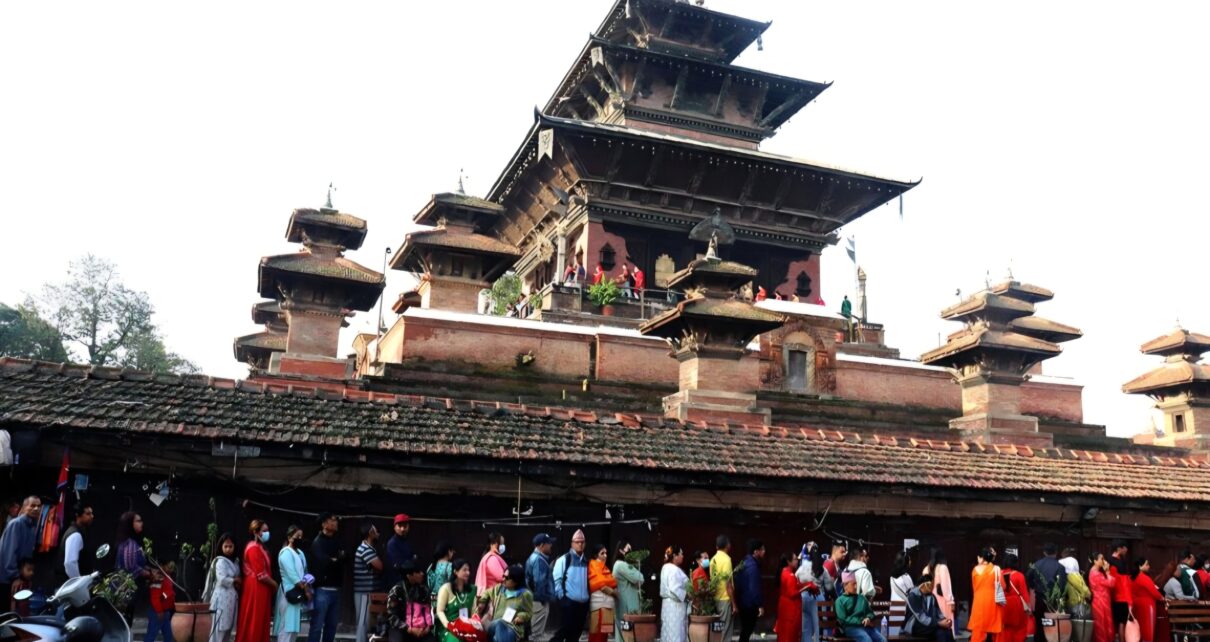
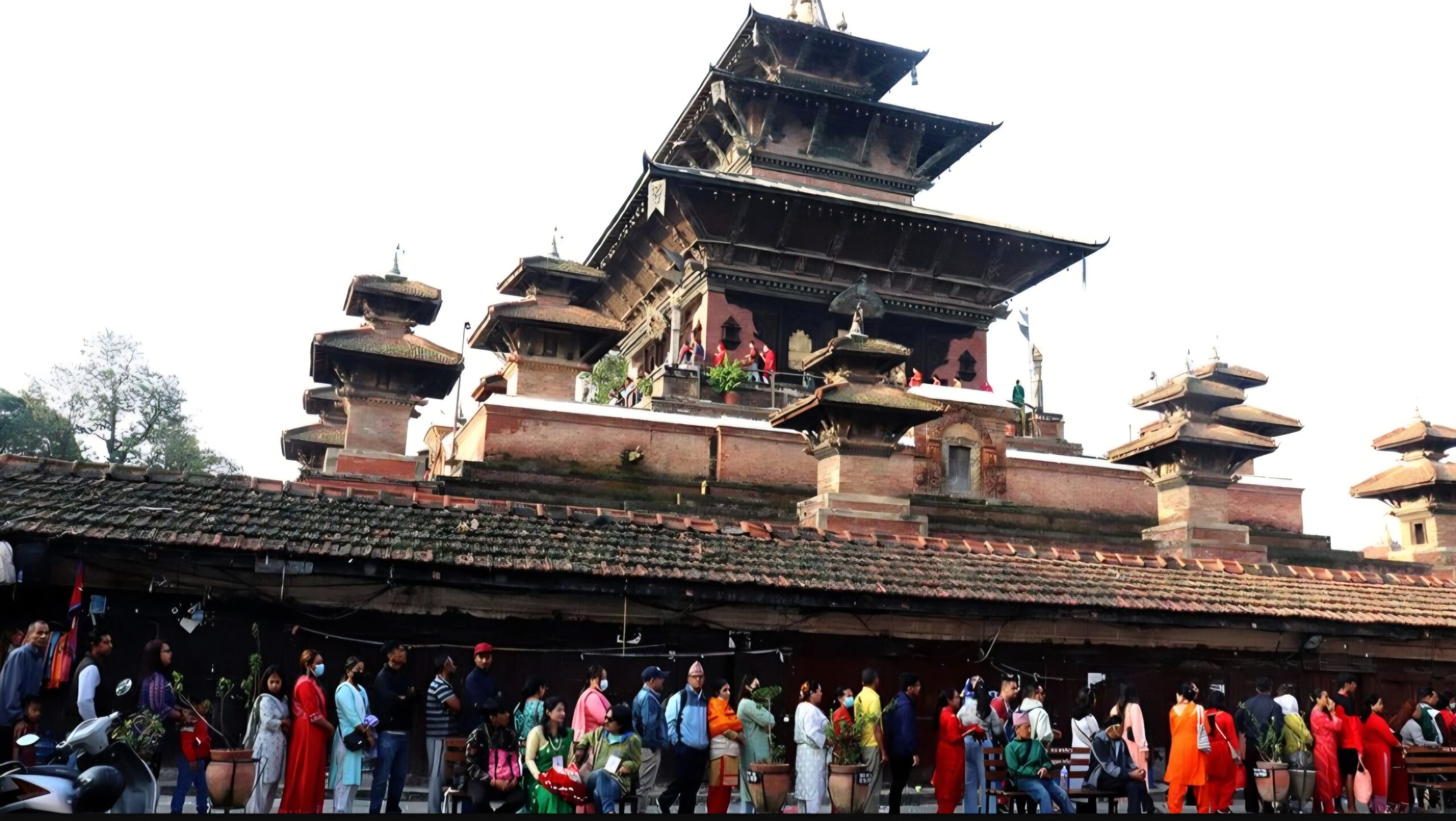
Kathmandu, October 20: Long queues of devotees gathered outside the historic Taleju Bhawani Temple in Kathmandu early Tuesday morning as the shrine opened its doors to the general public for its annual darshan on the occasion of Mahanavami.
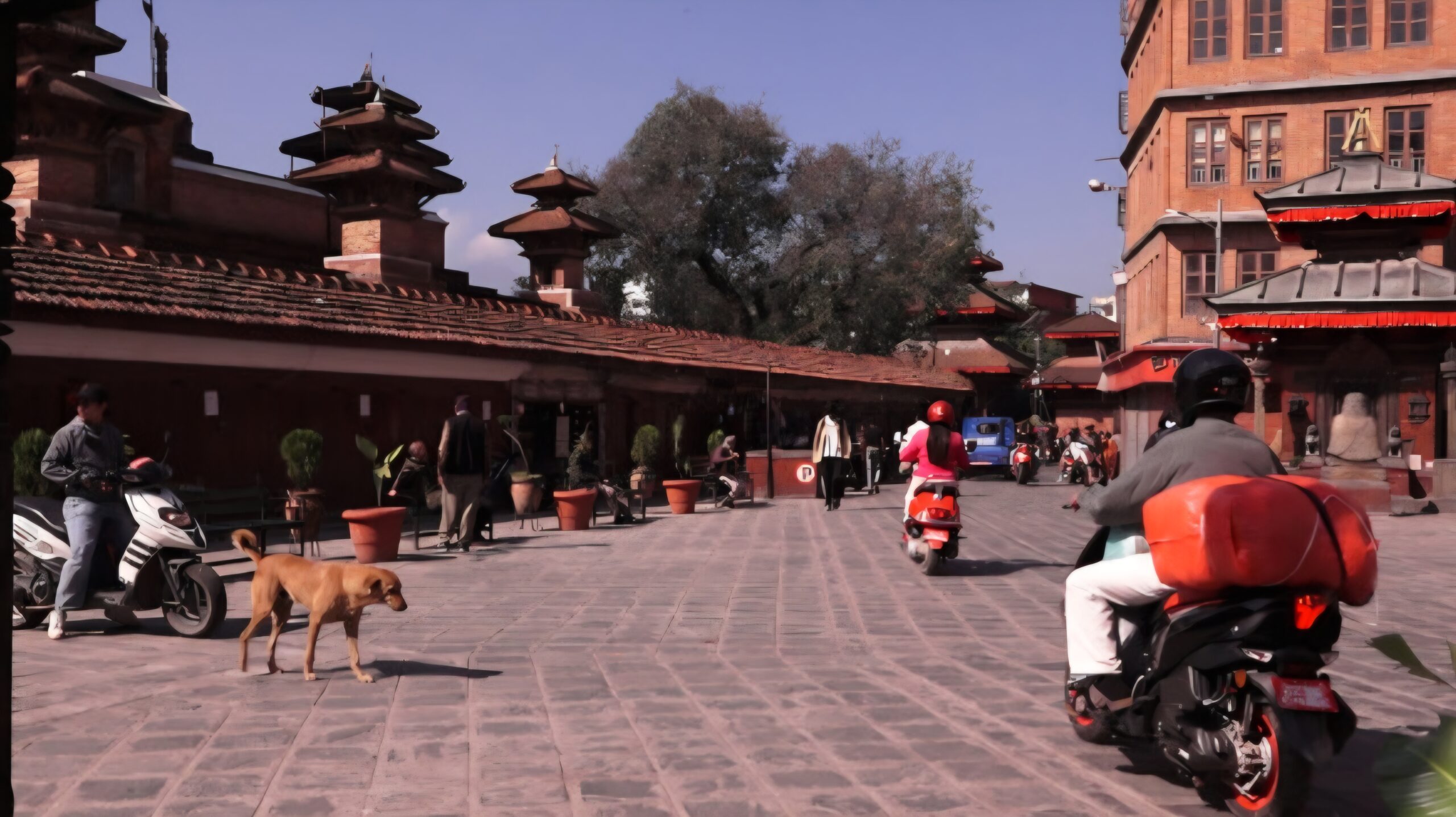
Located within the Hanuman Dhoka Durbar Square, a UNESCO World Heritage Site, the temple was opened to devotees at 5 am on Tuesday, Kartik 3, with many worshippers arriving well before the opening to offer prayers and seek the blessings of Goddess Taleju Bhawani.
Jayanti Shrestha Pradhan, chief of the Hanuman Dhoka Durbar Conservation Office, said that arrangements had been made for worship and public darshan from 5 am to 6 pm.
The temple is traditionally opened to the general public only once a year, on Mahanavami, the ninth day of the bright fortnight of Ashwin during the Dashain festival. Thousands of devotees visit the shrine on this auspicious occasion. However, public darshan was not permitted in 2077 BS due to the COVID-19 pandemic.
Religious Rituals and Traditional Ceremonies
According to the auspicious timings prescribed by the Nepal Panchang Nirnayak Bikas Samiti, the ceremonial procession of Goddess Taleju Bhawani was conducted at Mul Chowk within the Hanuman Dhoka Durbar complex at 7:37 am on Saturday, Ashwin 31. The goddess was subsequently installed in a stationary position at 10:39 am on the same day.
The worship of Taleju Bhawani will continue at Mul Chowk until Vijayadashami, the main day of Dashain celebrations.
On Wednesday, Kartik 4, the ceremonial procession of the goddess is scheduled for 10:51 am, followed by her installation at the original temple at 11:52 am, in accordance with the auspicious timings determined by the committee.
A Sacred Symbol of Kathmandu’s Cultural Heritage
Taleju Bhawani holds a special place in Nepal’s religious and cultural traditions, particularly in the Kathmandu Valley. The temple is closely associated with the country’s medieval royal history and longstanding traditions of goddess worship.
Its annual opening during Dashain is both a significant religious occasion and an important expression of Kathmandu’s living cultural heritage. For devotees, the opportunity to visit the shrine is a cherished part of the festival, bringing together faith, tradition and community.
The annual darshan also highlights the enduring significance of the Hanuman Dhoka Durbar complex, where centuries-old architecture, religious practices and cultural traditions continue to shape Kathmandu’s identity.