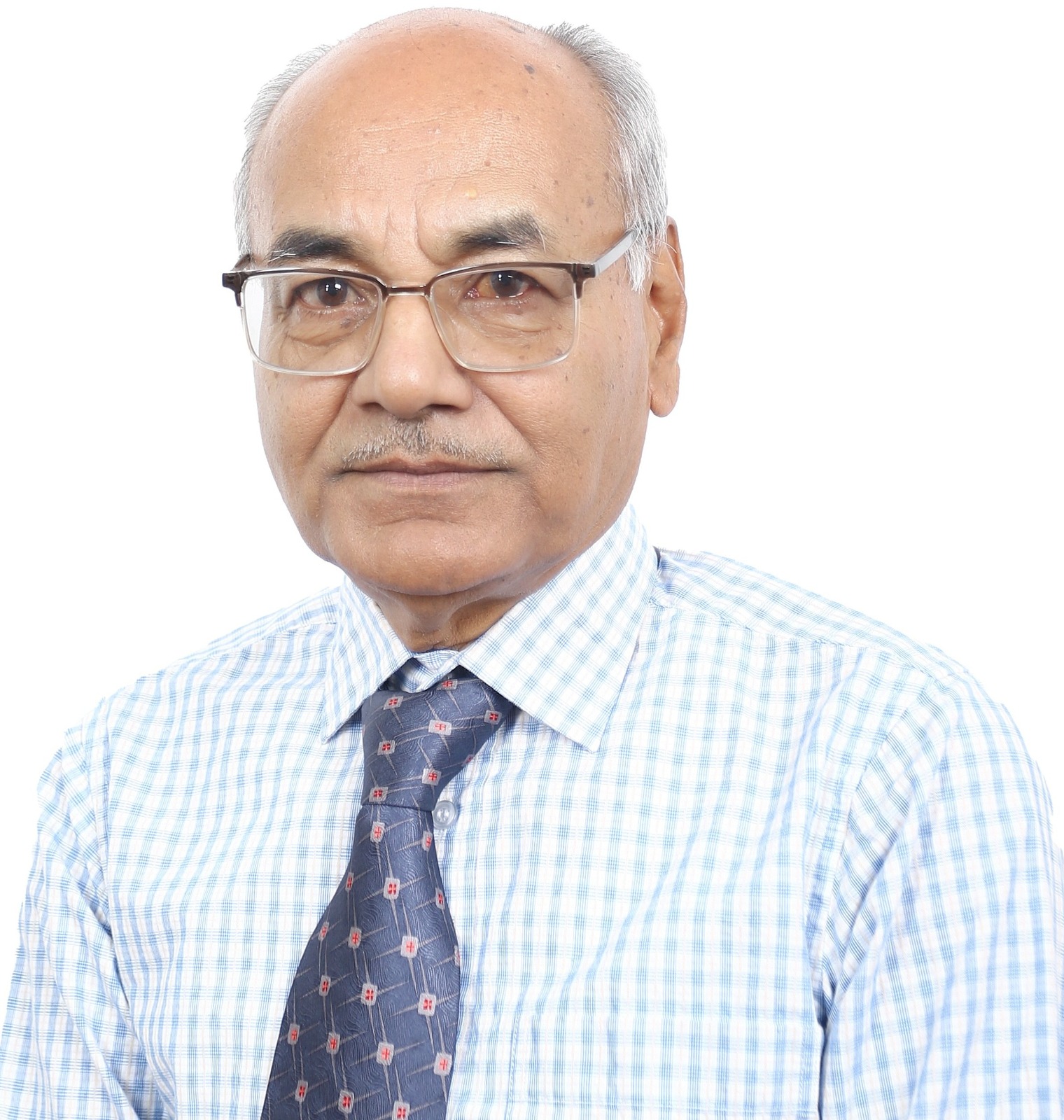
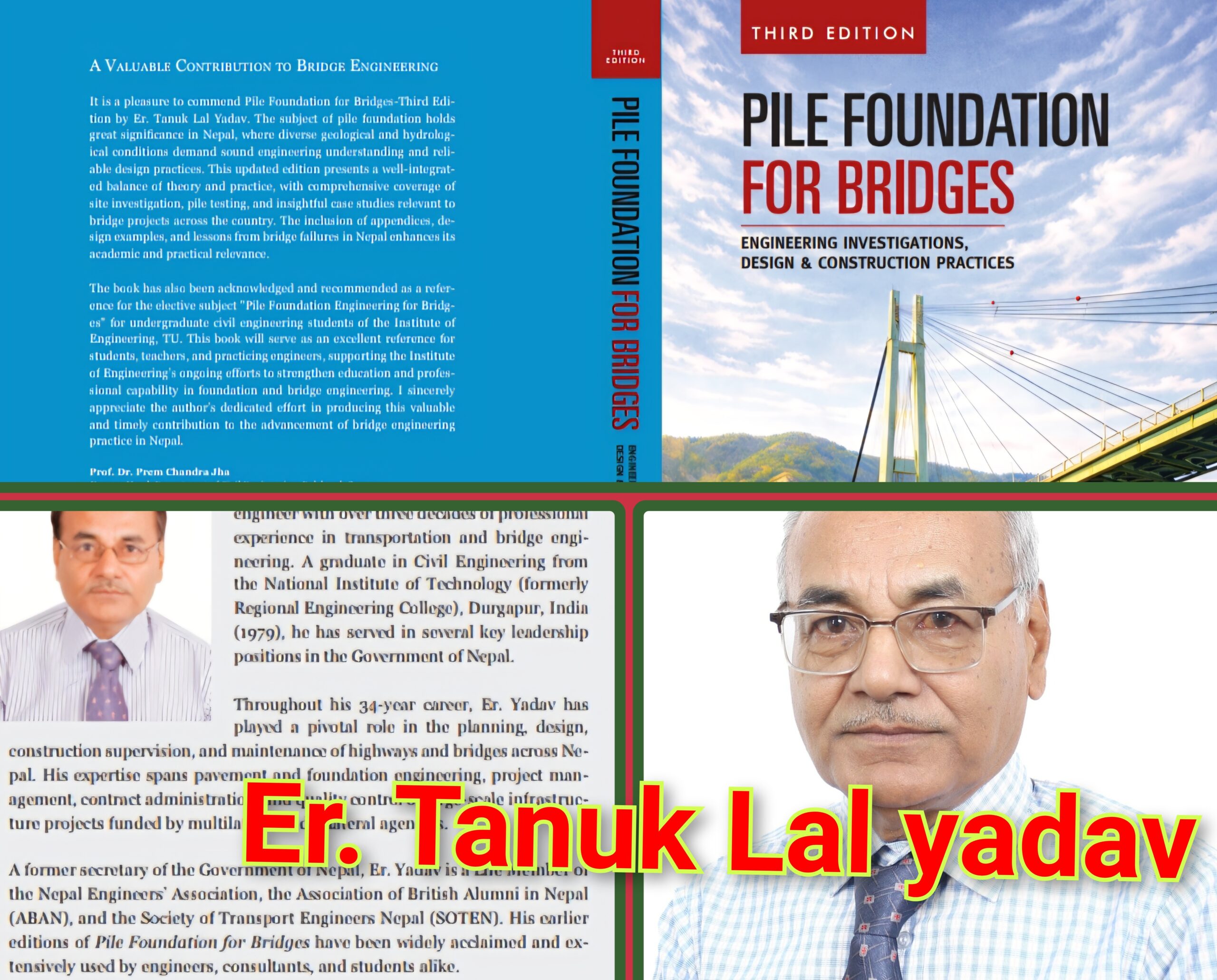
Er.Tanuk Lal Yadav, 22 Sept. kathmandu. The recent catastrophic flood in the Bhotekoshi-Trishuli corridor has once again exposed the extraordinary vulnerability of Nepal’s infrastructure to extreme mountain hazards. The August 26, 2026, deluge caused widespread destruction to settlements, roads, bridges, and hydropower facilities. Preliminary government assessments report damage to 55 kilometers of roads, 37 motorable bridges, 68 suspension bridges, and 13 hydropower projects.
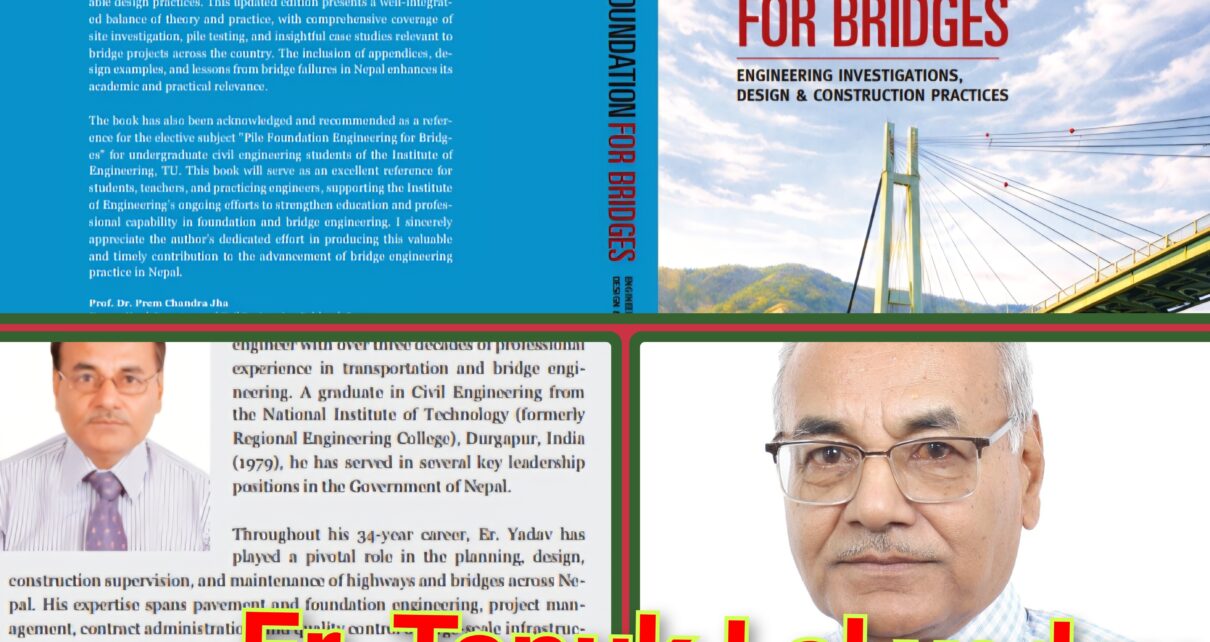
Against this backdrop, the release of the third edition of Pile Foundation for Bridges by Er. Tanuk Lal Yadav, Former Secretary to the Government of Nepal, carries urgent relevance. The book addresses one of the least visible but most critical aspects of bridge engineering: the foundation on which the safety, stability, and service life of a structure ultimately depend.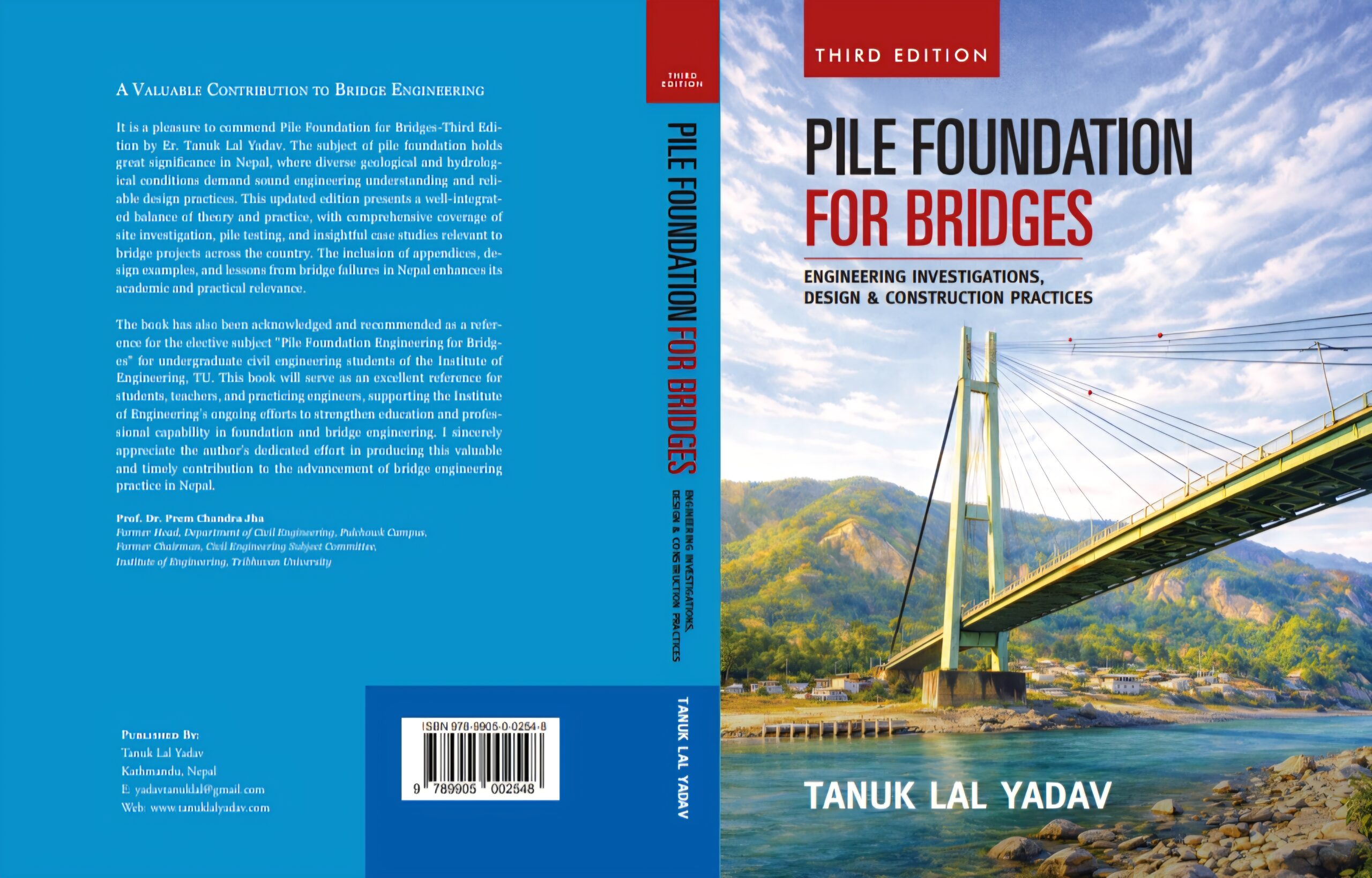
Nepal’s bridges are built in some of the world’s most demanding geological and hydraulic environments. Steep terrain, seismic activity, unstable slopes, rapidly changing river morphology, and severe scour create challenges that cannot be solved by applying standard formulas or computer-based calculations alone. Sound engineering in the Himalayas requires careful site investigation, professional judgment, and a deep understanding of local conditions.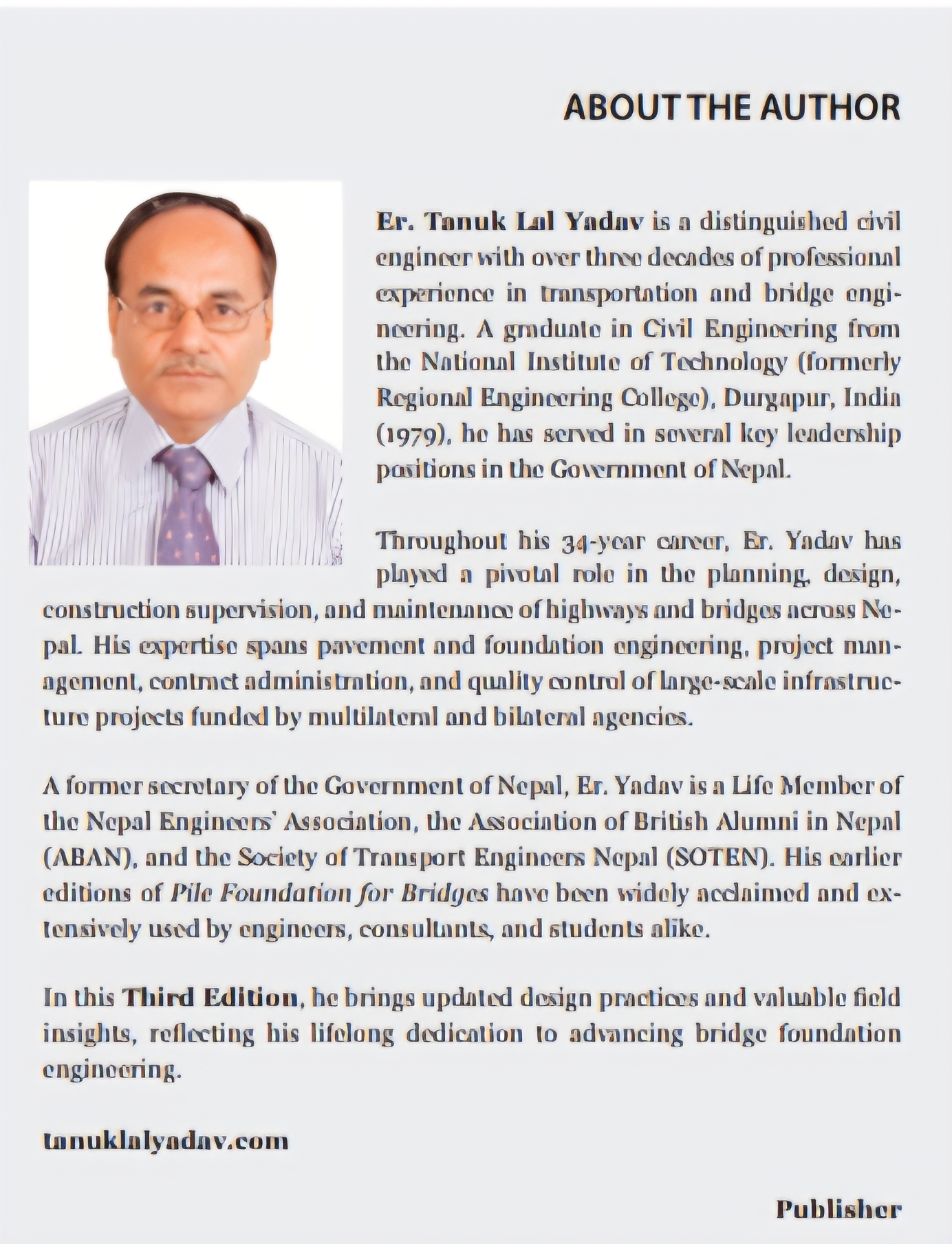
Yadav’s book seeks to bridge this exact gap between engineering theory and field practice. It covers the complete lifecycle of bridge foundation engineering—from engineering investigations, design and pile load testing to construction quality assurance. Crucially, it also features in-depth case studies of national and international bridge failures. These post-mortems are invaluable, providing engineers the opportunity to examine deficiencies in hydrological and hydraulic assessments, design assumptions, and construction supervision.
The timing of this publication is significant. A preliminary scientific analysis of the Bhotekoshi disaster indicates the event was triggered by a cascade of upstream hazards—including climate-driven factors and seismic activity—resulting in an ice-rock mass failure. The highly destructive, debris-laden flood that followed proved how a hazard originating high in the mountains can obliterate infrastructure far downstream.
Such events reinforce the absolute necessity of adequate hydrological assessment, proper foundation depth, and continuous site inspection. While international engineering standards provide an essential baseline, their application must be heavily adapted to account for Nepal’s unforgiving terrain and climate. By blending established global principles with indigenous practical experience, Yadav’s work serves as a vital translation of theory into local reality.
Recognizing its value, the Institute of Engineering at Tribhuvan University has already adopted the text for Bachelor’s-level education. However, its comprehensive scope makes it equally relevant to consultants, contractors, and government professionals.
Ultimately, the Bhotekoshi disaster must prompt a broader reckoning with Nepal’s institutional engineering knowledge. The country has accumulated extensive field experience through decades of infrastructure projects, yet much of this wisdom remains dispersed among isolated projects and individuals. There is a growing need to systematically document this experience, study our structural failures, and translate these hard-won lessons into improved national standards.
In this respect, a book written by an experienced Nepali engineer—and grounded entirely in the realities of Nepal’s environment—represents more than an academic milestone. It is a vital contribution to the nation’s technical literature and a tool for transferring survival-critical knowledge to a new generation of engineers.
Infrastructure must be designed not only for normal conditions but for the extreme and changing hazards of the modern climate. Strong foundations, rigorous quality assurance, and learning from past failures are the bedrock of resilient engineering. Pile Foundation for Bridges serves as an essential guide for that continuing professional effort.
More information about the book is available at www.tanuklalyadav.com