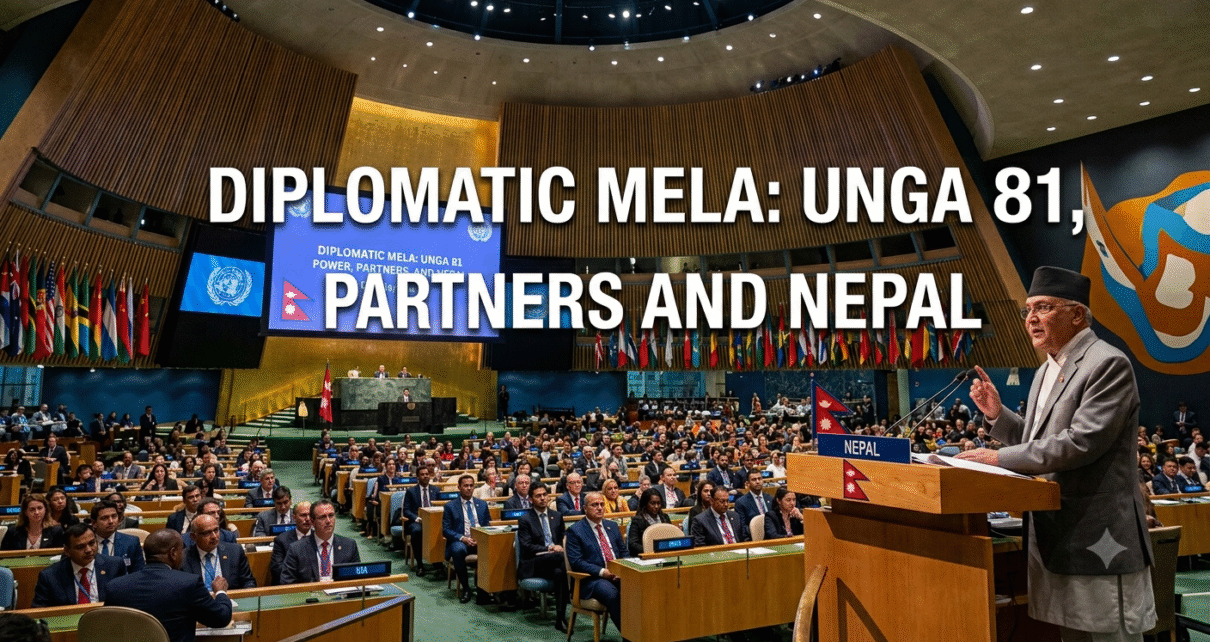
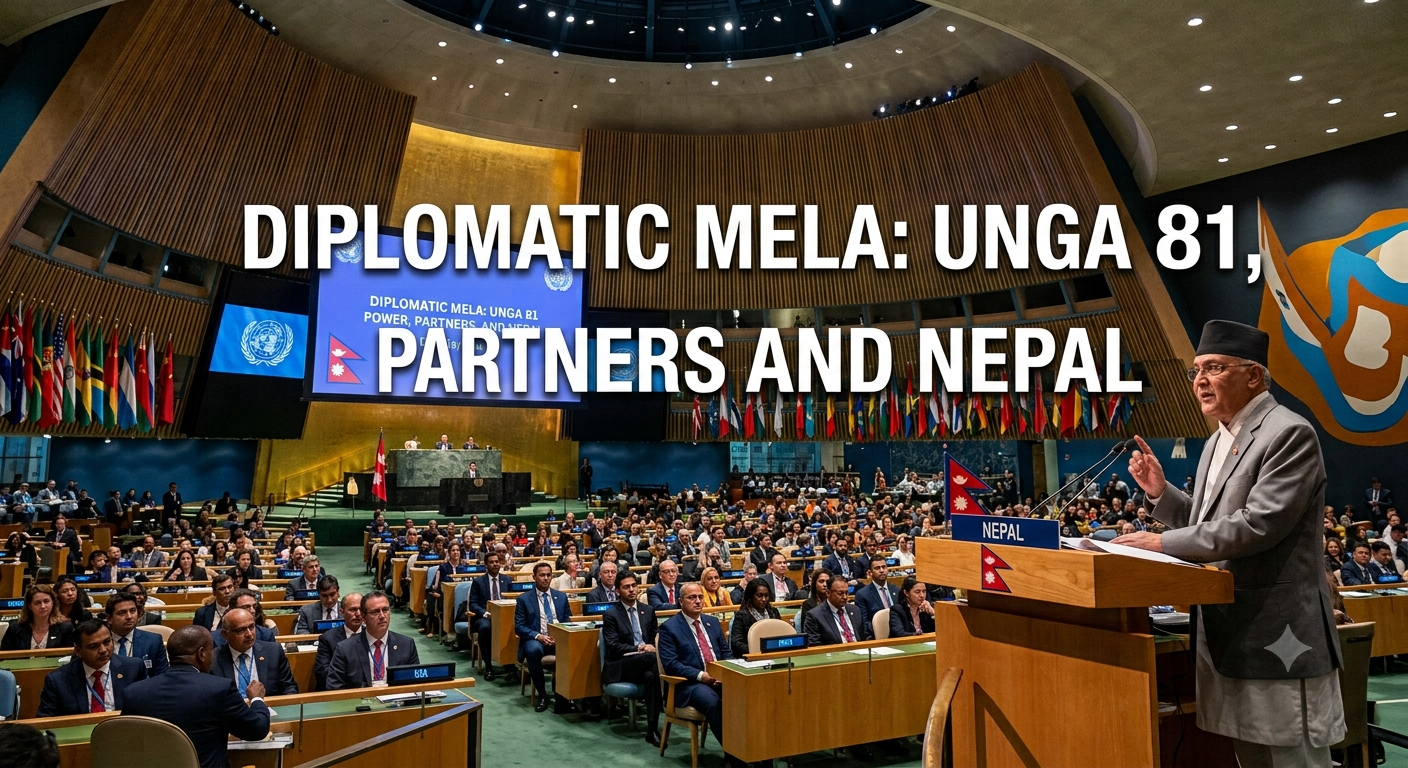
Dr. Vijay Datta, 24 Sept.There are 183 countries and among them more them 130 state representatives are in diplomatic carnival-festival. Every September, New York City transforms into the undisputed epicenter of global statecraft. As world leaders, diplomats, observers, and civil society actors converge along First Avenue, the annual gathering of the United Nations General Assembly takes on the character of an international political carnival,a diplomatic mela.
While physical geography places this event in the United States, the United Nations Headquarters operates under a unique international legal framework established by the 1947 Headquarters Agreement. Under this arrangement, the site is granted extraterritorial administration, making it international territory governed directly by the United Nations rather than local federal authority. Within this sovereign enclave, delegates from across the UN’s member states assemble, with over a hundred heads of state and government gathering in Manhattan to conduct global diplomacy.
The 81st Session of the UN General Assembly (UNGA 81) comes at a pivotal juncture in modern geopolitical history. It provides an essential window into the mechanics of soft power, multilateral consensus-building, and the stakes facing developing nations in an increasingly complex world order.
1. *Background:* The Evolution of “Diplomatic Capital” and the UN Fair
The concept of “diplomatic capital” refers to the soft power, goodwill, network leverage, and institutional trust a nation or international body accumulates over time. Much like financial resources, diplomatic capital can be invested to forge strategic alliances, negotiated to resolve long-standing disputes, or spent to advance vital national interests.
UNGA as a Diplomatic Mela
The annual UN General Assembly is frequently likened to a mela,a vast cultural, political, and economic fair,because of its sheer scale, diversity, and informal negotiations. Behind the formal addresses delivered from the green marble podium lies a dynamic marketplace of ideas and state-level transactions. Thousands of bilateral side meetings, high-level dialogues, multi-stakeholder forums, and closed-door negotiations occur simultaneously across New York.
Historically created as a postwar mechanism primarily designed to prevent global conflict, the General Assembly has evolved into a comprehensive arena tackling contemporary challenges such as:
Sustainable development and global economic inequality
Climate change mitigation, adaptation, and environmental finance
International security, non-proliferation, and conflict mediation
Digital governance, artificial intelligence regulation, and cybersecurity
2. *Present Situation: Contextualizing UNGA 81*
The 81st Session unfolds within a highly fragmented global landscape. Traditional frameworks of global governance face severe strain due to multipolar rivalries, economic fragmentation, lingering climate vulnerabilities, and ongoing gridlock within major multilateral institutions.
Key Dynamics Shaping the Current Session
Multipolar Realignment: The international system is no longer unipolar or strictly bipolar; it is defined by flexible coalitions, rising middle powers, and an insistence on strategic autonomy across the Global South.
The SDG Midpoint Crisis: With the 2030 Agenda deadline fast approaching, progress on key Sustainable Development Goals has stalled or regressed due to global economic shocks, rising inflation, and severe debt distress across developing states.
Institutional Reform Pressure: Demands to reform the UN Security Council and international financial institutions have reached a high point, driven by non-represented regions across Africa, Asia, and Latin America seeking equitable decision-making power.
3. *Comparative Analysis: Opportunities vs. Structural Limitations*
While the mega-forum model of the UN General Assembly provides unprecedented access, it also presents distinct structural limitations that shape its effectiveness.
The Strategic Advantages
The primary strength of the General Assembly lies in its ability to offer a level playing field. It grants small and developing nations direct access to superpowers without the heavy financial and diplomatic costs of multiple bilateral overseas trips. The global spotlight of the forum allows small states to elevate urgent regional priorities—such as mountain ecosystem degradation or sea-level rise—into mainstream global policy debates. Furthermore, informal corridor diplomacy during the summit frequently breaks long-standing diplomatic deadlocks faster than formal negotiations, while providing a venue to consolidate voting blocs like the G77+China and the Least Developed Countries (LDCs).
The Structural Disadvantages
Conversely, the summit faces significant institutional constraints. The sheer volume of parallel sessions and side events can create information overload, frequently overwhelming smaller diplomatic delegations with limited personnel. Speeches from the podium can lean toward grandstanding for domestic audiences rather than engaging in constructive negotiation. Most importantly, General Assembly resolutions carry moral and political weight but lack binding enforcement mechanisms, leaving implementation largely reliant on voluntary compliance. Additionally, deep-seated rivalries between major global powers often spill over into the Assembly, stalling broad consensus on urgent global issues.
4. *Expectations and Strategic Imperatives of Nepal*
For a landlocked, developing nation situated between two nuclear-armed Asian powers, UNGA 81 represents a critical platform to project foreign policy, secure development finance, and advocate for vulnerable ecosystems.
Navigating LDC Graduation
Nepal is actively transitioning out of the Least Developed Country category. At UNGA 81, Nepal’s diplomatic mission focuses heavily on securing extended transition support to ensure that the smooth withdrawal of preferential market access and trade waivers does not cause economic instability. Additionally, Nepal continues to advocate for concessional financing mechanisms, ensuring access to grant assistance and low-interest development loans post-graduation.
*Climate Justice and Mountain Ecology*
As home to the central Himalayas, Nepal experiences disproportionate climate impacts, including rapid glacial retreat, unpredictable monsoon cycles, and destructive flash flooding. Nepal’s diplomatic agenda at the summit emphasizes operationalizing the Loss and Damage Fund to ensure direct, non-debt-creating climate finance. Simultaneously, Nepal works to elevate the “Mountain Agenda,” positioning Himalayan ecosystem preservation as an urgent global commitment alongside ocean conservation.
*Safeguarding Non-Alignment and Multilateralism*
Nepal relies on a stable, rules-based international order to protect its sovereignty. Through the UN system, Nepal reinforces its traditional commitment to non-alignment, peaceful settlement of disputes, and the UN Charter. This platform also allows Nepal to highlight its standing as one of the top peace-contributing nations to UN Peacekeeping operations worldwide.
5. *The Roles of Geopolitical Giants: China and India*
As key regional neighbors and prominent actors on the international stage, China and India exert significant influence over the proceedings and strategic direction of UNGA 81.
*China: Global Initiatives and Multilateral Engagement*
Beijing utilizes the General Assembly stage to advance its broad multilateral frameworks, including the Global Development Initiative and the Global Security Initiative. Through these platforms, China promotes alternative models for international development and security cooperation. Furthermore, Beijing highlights its cross-border infrastructure initiatives and South-South economic partnerships as key instruments for regional stabilization and economic growth across Asia, Africa, and Latin America.
*India: Voice of the Global South and Institutional Reform*
India leverages the UN stage to position itself as a champion of the Global South, pushing for comprehensive reforms of international bodies—most notably advocating for permanent representation for developing nations on the UN Security Council. Additionally, New Delhi champions the expansion of Digital Public Infrastructure, climate-resilient agriculture, and inclusive economic frameworks as practical, scalable solutions for developing economies.
*The Strategic Balance for Nepal*
Nepal maintains a balanced, non-aligned foreign policy with both neighboring powers. By engaging constructively with both Beijing and New Delhi within the UN framework, Nepal can leverage regional economic connectivity, trade access, and cross-border energy integration while preserving its sovereign autonomy and foreign policy independence.
*Conclusion: Capitalizing on the Multilateral Stage*
The 81st Session of the UN General Assembly demonstrates that despite the complexities and gridlock of modern international relations, a unified global forum remains indispensable. The diplomatic mela in New York serves as an essential arena where nations of all sizes negotiate the evolving terms of global governance.
For Nepal, translating high-level diplomatic participation into concrete national results requires clear strategic focus. By advocating for climate justice, securing sustainable terms for LDC graduation, maintaining principled non-alignment, and engaging productively with regional partners like India and China, Nepal can effectively leverage its diplomatic capital on the world stage. Ultimately, the measure of success at UNGA 81 lies not in the speeches delivered from the podium, but in the durable partnerships and actionable commitments secured within its halls.