
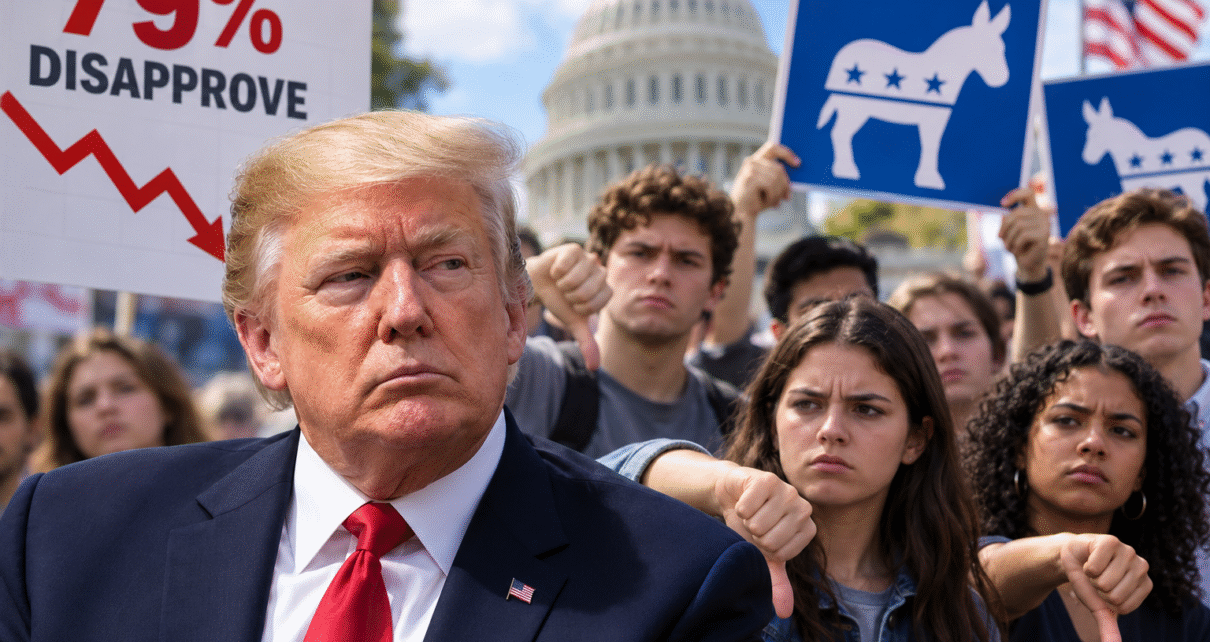
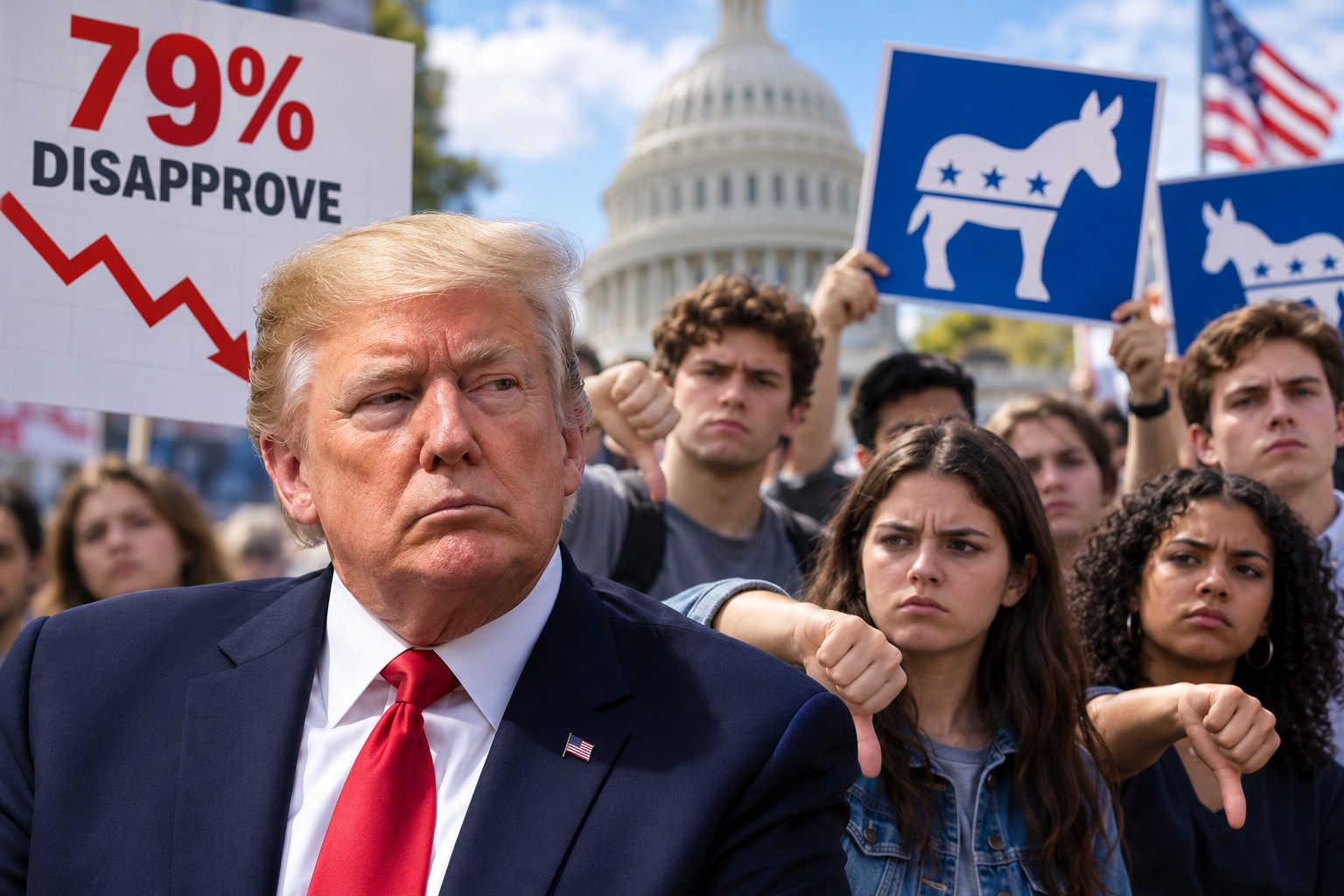
Economic concerns, rising living costs and dissatisfaction with government policies are driving young voters away from the Republican Party ahead of the US midterm elections.
WASHINGTON, October 23, 2026: US President Donald Trump is facing growing dissatisfaction among young American voters ahead of the upcoming midterm elections, with a new survey indicating widespread disapproval of his performance and a significant shift in political preferences toward the Democratic Party.
According to a survey by The New York Times and Siena University, 79 per cent of voters aged 18 to 29 disapprove of Trump’s performance as president, while only 16 per cent express approval. The survey also indicates that 70 per cent of young voters identify with or lean toward the Democratic Party, up from 55 per cent before the 2024 presidential election.
The findings point to a substantial change in the political mood among younger Americans, with economic pressures and dissatisfaction with the administration emerging as major factors behind the shift.
Economy and Cost of Living Fuel Discontent
Economic concerns remain at the centre of young voters’ dissatisfaction. Rising living costs, expensive housing and higher fuel prices have added pressure to household budgets, particularly for younger Americans entering the workforce.
According to the survey, 94 per cent of young respondents described the country’s economic situation as poor or below average, while 86 per cent expressed dissatisfaction with Trump’s handling of the economy.
The findings suggest that economic expectations played an important role in shaping the political preferences of younger voters. Many who hoped that Trump’s policies would improve their financial circumstances are now questioning whether the administration has delivered on those expectations.
The ongoing conflict involving Iran and its impact on energy prices have added to concerns about the economic outlook.
Democrats Gain a Significant Advantage
The survey indicates that Democratic candidates enjoy a substantial advantage over Republicans among younger voters in congressional elections. According to the figures cited in the survey, Democratic candidates lead Republican candidates by 44 percentage points among young voters, compared with a 10-point advantage two years earlier.
Other polling has also pointed to weakening support for Trump among younger Americans. A recent Harvard Youth Poll, reported by Axios, found that 77 per cent of young respondents disapproved of Trump’s handling of the economy, with rising living costs emerging as a major concern.
However, the shift toward Democrats does not necessarily indicate complete confidence in the party. While 54 per cent of young respondents said Democrats were focusing on the right issues, 41 per cent believed the party’s priorities were misplaced.
The findings suggest that young voters remain critical of both major political parties, even as dissatisfaction with the Republican administration grows.
Voters Reconsider Their 2024 Choices
Individual experiences illustrate the changing political mood.
Isaac Juarez, a 27-year-old truck driver from California who voted for Trump in 2024, reportedly expected the president’s policies to improve the economy. However, rising petrol prices and stricter immigration enforcement have changed his perception of the administration.
“I don’t even know anymore why I voted for Trump,” he said, according to the report.
In Athens, Georgia, 21-year-old medical assistant Kaylin Hitchcock is struggling with rising monthly expenses. Earning $17 an hour, she cites expensive housing, higher fuel costs and insufficient wage growth as major financial challenges.
Although she did not vote in the 2024 presidential election, she plans to support the Democratic Party in the upcoming midterms.
Such accounts reflect the concerns of younger Americans who are increasingly judging political leadership through the lens of everyday economic realities.
Republican Party Faces Broader Challenges
The survey also suggests that dissatisfaction extends beyond Trump’s personal popularity. Many young respondents believe the Republican Party is concentrating on the wrong issues and is becoming increasingly aligned with wealthy and influential interests.
At the same time, the Democratic Party faces its own challenge in converting dissatisfaction with Republicans into sustained public confidence.
For Democrats, the midterm elections present an opportunity to demonstrate that they can offer practical solutions on inflation, housing affordability, employment and other issues affecting younger generations.
What If Republicans Lose Control of Congress?
The outcome of the midterm elections could significantly influence the remainder of Trump’s presidency.
If Democrats secure a majority in the House of Representatives, the administration could face greater scrutiny of its policies, spending decisions and executive actions. Congressional committees could intensify investigations, while passing budgets and legislation could require greater political compromise.
However, a Democratic majority in the House would not remove Trump’s presidential powers. He would retain his constitutional executive authority and veto power, while the Senate would continue to play an important role in legislation and certain appointments.
A Republican defeat could also intensify internal debates over the party’s leadership and its future direction ahead of the 2028 presidential election.
For Democrats, electoral gains would provide an opportunity to advance their policy priorities and strengthen their position nationally.
A Crucial Test Ahead
The latest findings underline the importance of young voters in determining the political direction of the United States. Their concerns over affordability, economic opportunity and government priorities could become decisive factors in the upcoming congressional elections.
While polling does not guarantee an electoral outcome, the apparent shift among younger Americans presents a challenge for Trump and the Republican Party as they seek to retain congressional support.
The central question is whether Republicans can restore confidence among younger voters before election day, or whether growing economic frustration will translate into stronger support for Democratic candidates.
Source: The New York Times, Siena University and other polling reports, as cited in the supplied report and recent coverage.
Himalini Online English Edition