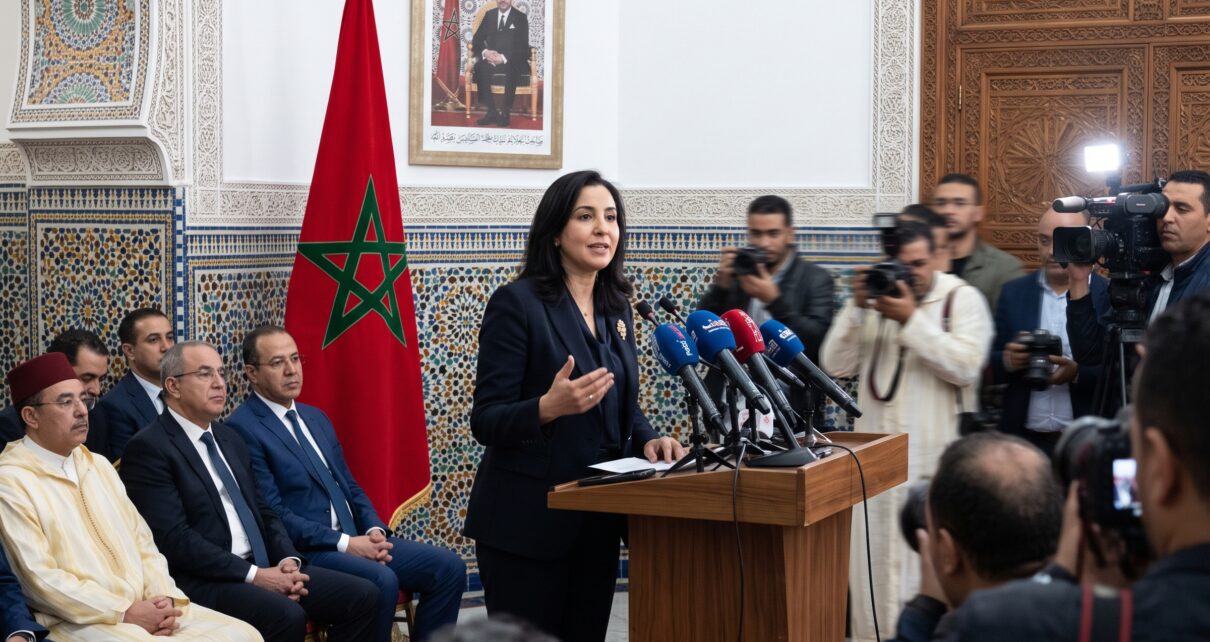
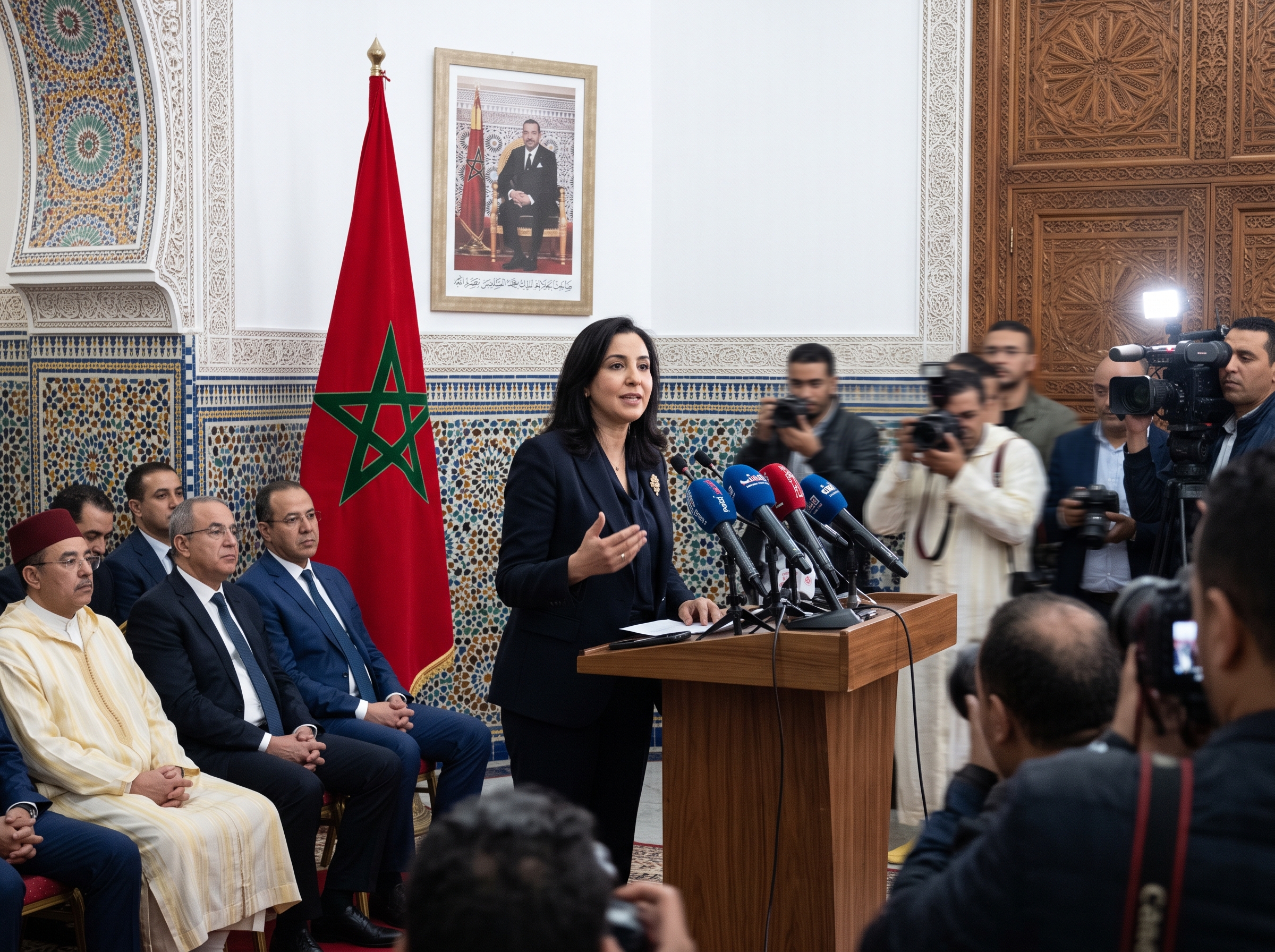
Kathmandu, 22 Oct8. The appointment of Fatima-Zahra Mansouri as Morocco’s first female Prime Minister by King Mohammed VI has ignited a nationwide debate regarding women’s capabilities and rights in securing the highest political offices. While many celebrate the move as a historic milestone for female political representation, conservative and religious groups have raised objections, and activists emphasize that her tenure will be judged by tangible actions rather than mere symbolism.
Following the September parliamentary elections, where Mansouri’s Authenticity and Modernity Party (PAM) secured the most seats, a four-party coalition was formed, holding 207 of the 395 parliamentary seats. The 50-year-old’s elevation in the constitutional monarchy—where the 63-year-old King Mohammed VI retains extensive executive influence—has exposed underlying societal tensions regarding women in power.
Conservative Backlash and Public Unease
The historic appointment has met resistance from traditionalist factions. Mustafa Ramid, former Justice Minister who previously served in an Islamist-led government, published a lengthy Facebook post questioning the suitability of a woman for the country’s top political role. Citing Islamic traditions, Ramid argued that communities entrusting leadership to women would not succeed, further asserting that the nation’s absolute highest position—that of the King—is inherently reserved for a man.
Public reactions remain mixed. Local television channel Chouf TV captured hesitant responses from older men on the streets. While some accepted the decision simply because it was made by the King—whom criticizing carries severe legal risks under Moroccan penal code—others expressed active discomfort. Social media also saw a wave of political satire, with some users circulating videos of women fighting to mock how parliamentary debates might look under female leadership.
Despite this, a large segment of young Moroccans, particularly women, have enthusiastically welcomed the appointment.
The Feminist Agenda: Family Law, Inheritance, and Education
While societal mindsets in Morocco are evolving, religious doctrines hold strong sway, particularly concerning family law (Mudawana), which governs marriage, divorce, and child custody. Mansouri faces immediate pressure from rights groups to address several critical disparities:
-
Inheritance Laws: Under current laws, a daughter generally inherits half the share of a son. The Supreme Council of Religious Scholars has vehemently opposed equal inheritance, citing Islamic jurisprudence, and refused to abolish the Ta’sib rule, which forces women without brothers to share their inheritance with distant male relatives. The National Human Rights Council noted in 2022 that these unequal laws significantly contribute to female poverty.
-
Polygamy: While legal under specific conditions, proposed amendments suggest allowing women to stipulate in marriage contracts that their husbands cannot take another wife. However, rights groups worry that proposed exceptions—such as a first wife’s illness or inability to have children—could violate women’s privacy and health rights.
-
Rural Girls’ Education: According to the High Commission for Planning (2025 data), only 55% of girls aged 15 to 17 in rural areas attend school, compared to 100% in urban centers. Youth advocate Chifae Lazouzi highlights that poverty, lack of safe transport, and period poverty (inability to afford menstrual hygiene products) force early dropouts.
Political Realities and “State Feminism”
Mansouri is a seasoned politician with over two decades in public life. A former Mayor of Marrakech, she previously served for five years as the Minister of National Territorial Planning, Urban Planning, Housing, and City Policy under Aziz Akhannouch’s government.
However, her elite background—as the daughter of a former Pasha and diplomat—has prompted some scrutiny. Feminist activist Yasmina Benslimane acknowledges the shattered glass ceiling but notes that Mansouri’s privileged upbringing and political networks afforded her opportunities unavailable to most Moroccan women.
Furthermore, experts urge viewing the appointment through a broader political lens. Dr. Irene Fernandez-Molina, a Global South expert at the University of Exeter, connects the historic appointment to the record-low 38% voter turnout in the recent elections. She describes the move as an example of “authoritarian state feminism,” a strategy where the establishment adopts select feminist agendas from the top down to project a modern image and legitimize its authority, without necessarily guaranteeing systemic democratic reform.
Actions Over Symbolism
Upon her appointment, Mansouri declared it a moment of pride for all Moroccan women. Yet, her historical public stance on women’s rights and the highly debated Mudawana reforms remains largely ambiguous.
Operating within a system where the King dictates crucial domains like defense and foreign policy, and facing a predominantly male council of religious scholars, Mansouri’s legislative path will be complex.
“I don’t think Mansouri should be evaluated solely on being a woman,” young Moroccan Sara Zuiten remarked. “A woman in power doesn’t automatically mean she will be a champion for women’s rights.”
While Mansouri has undeniably made history, her true legacy will depend on whether she can translate this symbolic victory into concrete advancements in economic independence, educational equality, and legal rights for the women of Morocco.