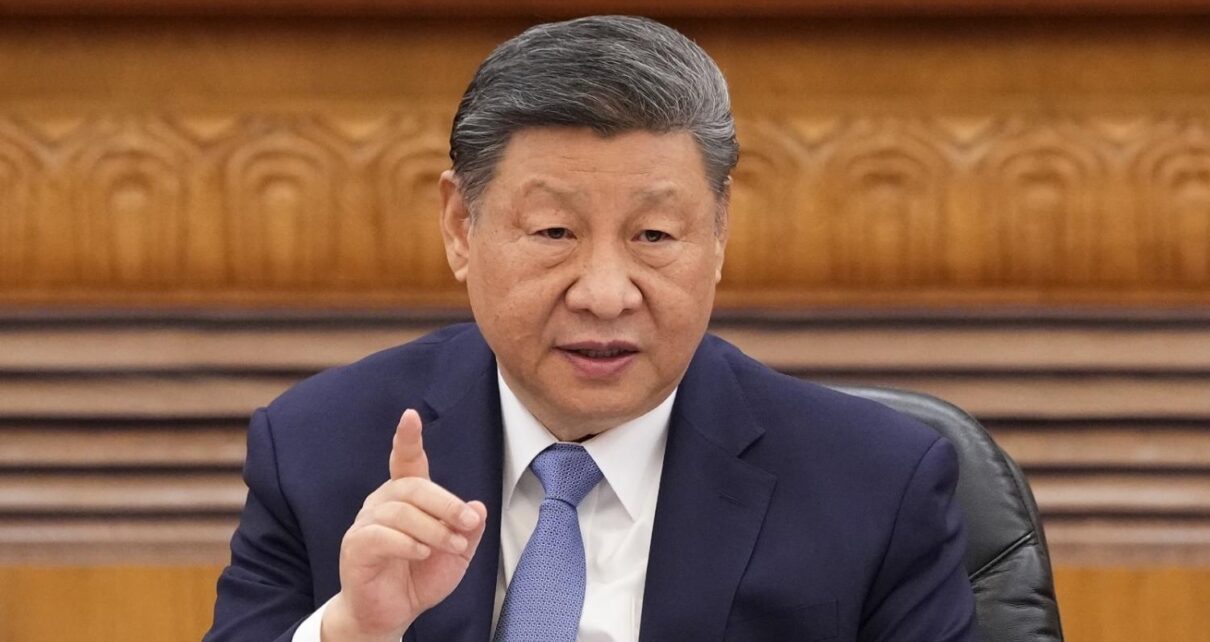

A significant shift appears to be underway within the Chinese Communist Party (CCP), hinting at possible changes in China’s leadership dynamics. After more than 12 years of consolidating power and ruling with an iron grip, President Xi Jinping is now seen delegating certain responsibilities to his close aides.
According to a report by Hong Kong-based South China Morning Post (SCMP) and China’s state-run Xinhua News Agency, the Communist Party is moving towards formalizing the way it makes decisions. On June 30, the powerful 24-member Politburo approved new regulations governing the party’s “coordinative institutes”—bodies responsible for policy coordination among various government agencies.
Political analysts believe this could be the beginning of a new chapter in China’s political machinery. These institutes, as per Xinhua, will now focus more on “planning, discussion, and supervision of major matters.” The development comes shortly after Xi Jinping remained out of the public eye for more than two weeks—fueling speculation about internal shifts in the power structure.
Dali Yang, a political scientist at the University of Chicago, views this as an effort to make China’s administrative processes more standardized and rule-based. Given that Xi Jinping chairs a large number of key committees overseeing the party, government, and security apparatus, his time and attention have become increasingly stretched.
However, not all experts agree on the depth of this transition. Victor Shih, an expert from the University of California, argues that the changes may be more superficial than they appear. In his view, ultimate power still revolves firmly around Xi. Nonetheless, it is clear that Xi is beginning to distance himself from day-to-day administrative work, with a robust monitoring system being put in place to ensure effective policy implementation.
In summary, while real power still rests with Xi Jinping, the recent moves may mark the start of a more coordinated and institutionalized governance model in China—possibly laying the groundwork for future leadership adjustments.