nepal-media-article
Himalini report, 3 April 026.
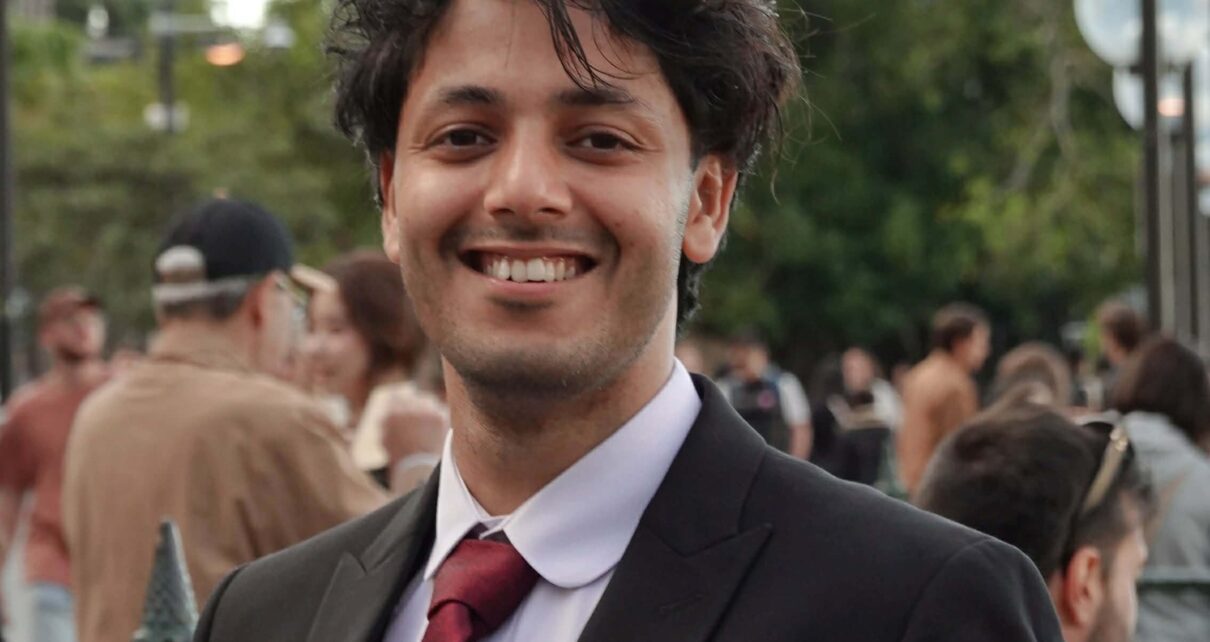
Saurav Jha’s journey from a small town in eastern Nepal to leading international AI research institutions offers an inspiring blueprint—and a sobering lesson about Nepal’s untapped potential.
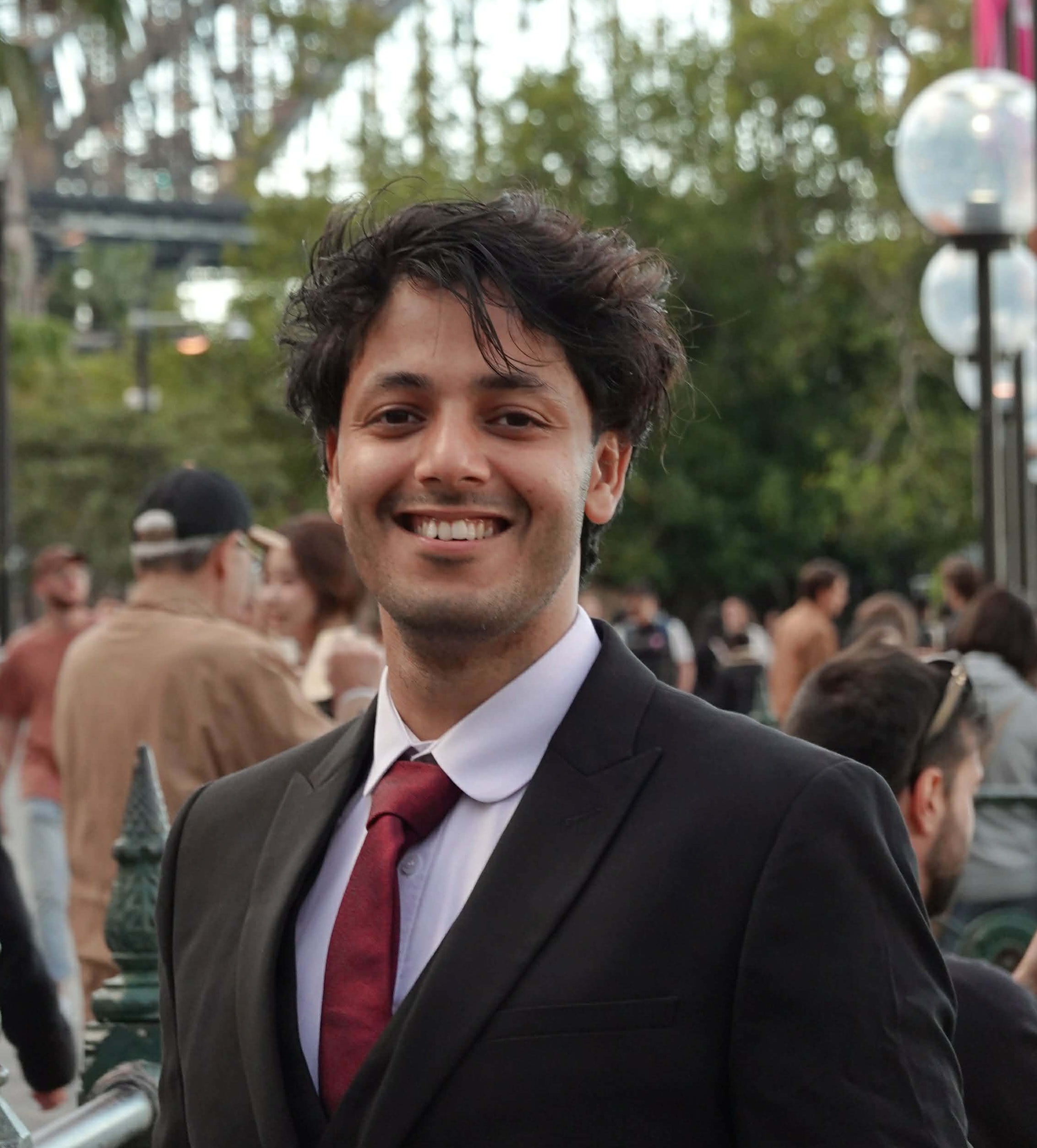
Decades ago, a seven-year-old boy in Jhumka, Sunsari, spent his days living with his grandparents and riding his first bicycle beside the East-West highway. Today, at just 28 years old, that same boy is pushing the frontiers of Artificial Intelligence as an IVADO postdoctoral researcher at the world-renowned Mila – Quebec Artificial Intelligence Institute in Montreal, where he works alongside some of the brightest minds on the planet.
Saurav Jha’s journey, from the classrooms of Rajbiraj to the top Artificial Intelligence (AI) conferences, is not just a story of personal academic excellence. It is a blueprint for how Nepalese talent can transcend geographical boundaries to make a global impact, and more importantly, how that expertise can be channeled back to nurture the next generation of innovators at home.
Early life and studies
Jha moved from Jhumka to live with his parents in Rajbiraj, Saptari, where he attended Happyland Secondary School. While there, young Saurav stood out: he ranked 4th in his School Leaving Certificate (SLC) batch, a distinction that hinted at the extraordinary trajectory ahead. Like many aspiring students from the provinces, Jha eventually moved to Kathmandu, completing his high school (+2) at United Academy in Kumaripati. But his ambitions stretched far beyond the valley.
Saurav’s academic journey began in India, where he completed his B.Tech in Computer Science from Motilal Nehru National Institute of Technology in Allahabad. It was back then when Saurav first got the taste of artificial intelligence research through a summer internship at the Indian Institute of Technology at Banaras Hindu University (IIT-BHU). His command over his subject matter was immediately recognized by Factset, a multi-national fintech branch in Hyderabad, where Saurav worked for a year after completing his bachelor studies. But his breakthrough came through Europe. In 2019, he won the prestigious Erasmus Mundus scholarship (€49,000) to pursue a joint Master’s degree in Advanced Systems Dependability from the University of St Andrews in the UK and l’Université de Lorraine in France. He completed his thesis with a First Class Honours degree while conducting research at INRIA Nancy, one of Europe’s leading AI research institutes.
A Global Research Odyssey
Jha’s academic trajectory is a tour of the world’s leading research hubs. After his master’s, he pursued his PhD at the University of New South Wales (UNSW) Sydney, one of Australia’s top universities, where his work on continually learning AI earned him a recommendation for the Dean’s Award for outstanding PhD theses.
His PhD research focuses on “continually learning AI” – a field of machine learning algorithms designed to help AI methods to be trained continuously on evolving real-world data – and “multimodal generative models”—complex AI systems that can understand and generate content across different types of data, such as text, images, and audio. These are both cutting-edge fields that sit at the heart of the current AI revolution.
His contributions have been significant. As a PhD student, Jha has published at top-tier conferences like NeurIPS (Conference on Neural Information Processing Systems) and ICLR (International Conference on Learning Representations), venues that are widely considered the “Olympics” of AI research. His work, including the notable “CLAP4CLIP” paper presented at NeurIPS 2024, has garnered attention for its technical depth and innovation.
“Presenting at NeurIPS is a milestone for any AI researcher,” Jha notes. “But for me, it was also validation that a student from Nepal belongs on the same stage as researchers from top North American institutes.”
Now as a postdoctoral researcher at Mila, Saurav is expanding his horizons into “World Models” and “AI for Science.” He explains world models as a kind of AI that can reliably imagine a photo or a video of what the world would look like if an agent were to take a specific action—for example, predicting the visual outcome of turning left by 5 degrees. This capability is crucial for building more intelligent and autonomous systems. Simultaneously, his work in AI for science aims to leverage these advanced models to accelerate scientific discovery, bridging the gap between computational power and experimental research.
His expertise has also taken him to industrial research giants, having completed internships at Sony in Tokyo and Tencent in Sydney, where he applied theoretical concepts to real-world problems. His ability to bridge the gap between academic theory and practical application was recently recognized with the Best Student Presentation award at the Sydney AI meetup in 2024, sponsored by TikTok.
Earlier this year, Saurav was selected as one of only 11 researchers worldwide to receive the IVADO postdoctoral fellowship, a CAD $200,000 award that recognizes the most promising early-career researchers in AI to help advance Canada’s Robust, Reasoning, and Responsible (R3AI) initiative. Simultaneously, he received a CSE Writing Fellowship from UNSW Sydney in recognition of his strong PhD publication record—an honor rarely bestowed on postdoctoral researchers.
He has served as a reviewer for the world’s most selective AI conferences—ICLR, CVPR, NeurIPS—a responsibility entrusted only to researchers recognized as peers within the field. His work has been collaborative and global, conducted across six countries: India, the UK, France, Spain, Australia, Japan, and now Canada.
The Vision: Decentralizing Innovation
But there is another side to Saurav’s story that speaks to his commitment to Nepal. Last May, he made the journey back to Kathmandu to deliver a mentoring talk at NAAMII (Nepal Applied Mathematics and Informatics Institute) in Patan. There, he spent time with Dr. Bishesh Khanal’s research group, sharing insights on continual learning and discussing the frontier challenges in modern machine learning with Nepal’s emerging researchers.
This visit was not a ceremonial homecoming. For Saurav, it represented something more: a recognition of Nepal’s potential and a willingness to invest in it. “When I came back and met with the researchers at NAAMII,” he reflected, “I realized just how many brightest minds in Nepal are ready to compete in the global research ecosystem.”
“Just like the global AI community is realizing that real innovation comes from democratizing the science and resources behind frontier AI models—consider how in early 2023, you had ChatGPT alone, but now you have DeepSeek, Gemini, Claude, and others—in Nepal, the same innovation would mean providing equal opportunities to students from each province,” Saurav explains.
“Nepal has managed to provide high-quality medical colleges in pretty much every part of the country,” he continues, citing institutions like B.P. Koirala Institute of Health Sciences, Nobel Medical College, and others in Biratnagar, Dharan, Chitwan, and Nepalgunj. “But the same cannot be said about engineering colleges yet. A major reason behind that is the limited resources and network students get exposed to.”
Provincial universities often lack the infrastructure and institutional connections to global research networks that are concentrated in Kathmandu. This creates a vicious cycle where students from provincial backgrounds must migrate to the capital to find opportunity. “A long-term vision of mine,” Saurav says, “is to help facilitate world-class AI research collaborations for students at top provincial universities in Nepal. Technical education should not be centralized. Nepal has the talent; what we lack is infrastructure and institutional commitment.”
The Untapped Reservoir
Saurav’s journey from Sunsari to international AI research prominence serves as a powerful beacon of possibility. It demonstrates that world-class talent isn’t confined to global metropolises—it exists in classrooms across Nepal’s provinces.
Saurav sees his trajectory as a proof of concept for what Nepalese students can achieve when given the right tools. His success suggests that Nepal sits on a goldmine of technical potential waiting to be activated. By fostering research collaborations and mentorship networks that connect global experts like Saurav back to provincial universities, Nepal can transform its “brain drain” into “brain circulation.”
“We have the talent,” Saurav emphasizes. “The next breakthrough in AI could come from a student in Kathmandu, Biratnagar or Pokhara, provided they have access to the same guidance and resources that I was fortunate to find abroad.”
This vision extends beyond universities. To truly democratize opportunity, Saurav advocates for integrating AI literacy into the curriculum as early as primary school. Across the globe, nations are already making AI education compulsory at the school level to prepare their workforce for the future. “I have personally witnessed how schools in Tokyo, Montreal and Sydney are inviting world-class researchers to help infuse AI literacy and inspiration into children,” says Saurav.
“It is time for Nepal to do so without delay,” he urges. “By introducing AI concepts early in schools across all provinces, we ensure that students from every corner of the country have the foundation to rise and contribute to the global AI community.”
As artificial intelligence reshapes the global economy—from healthcare to finance to environment preservation—Nepal is uniquely positioned to leapfrog developmental stages by empowering its tech-savvy youth. Saurav Jha’s achievements are not just a personal milestone; they are an invitation to the nation to reimagine its educational infrastructure.
His recent visit to NAAMII and his ongoing commitment to mentorship signal a new model of engagement: one where global success strengthens local roots. For Saurav, the goal is not just to advance the frontiers of AI in Montreal, but to ensure that the path he blazed becomes a highway for the next generation of Nepalese innovators, nurturing them right here at home.