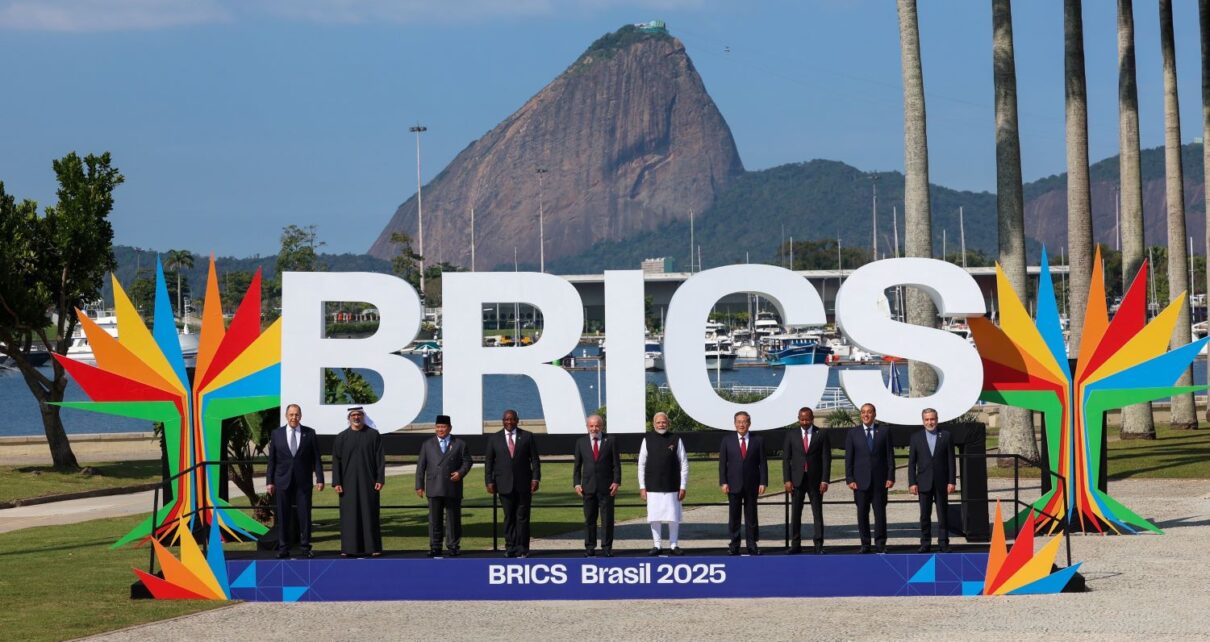
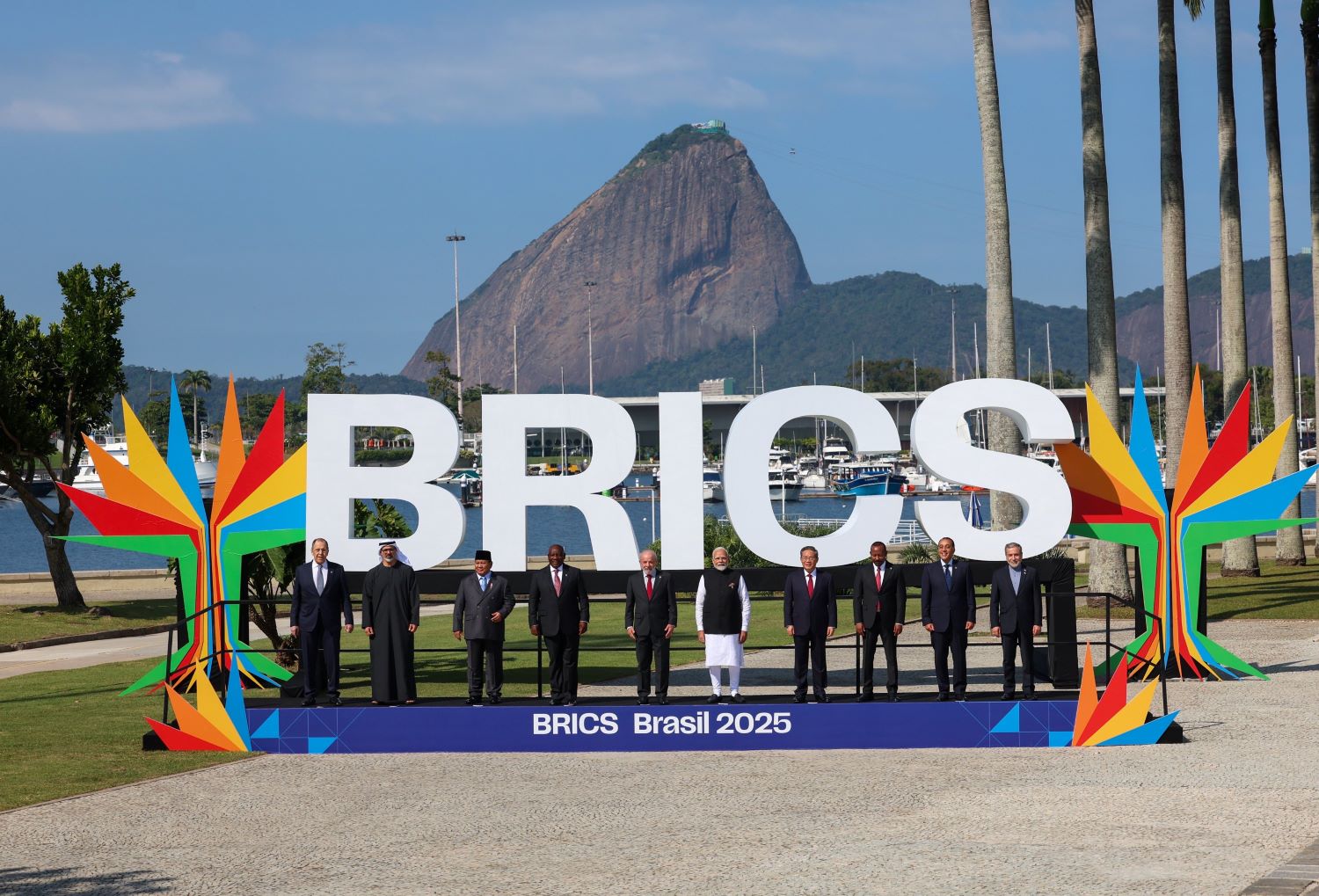
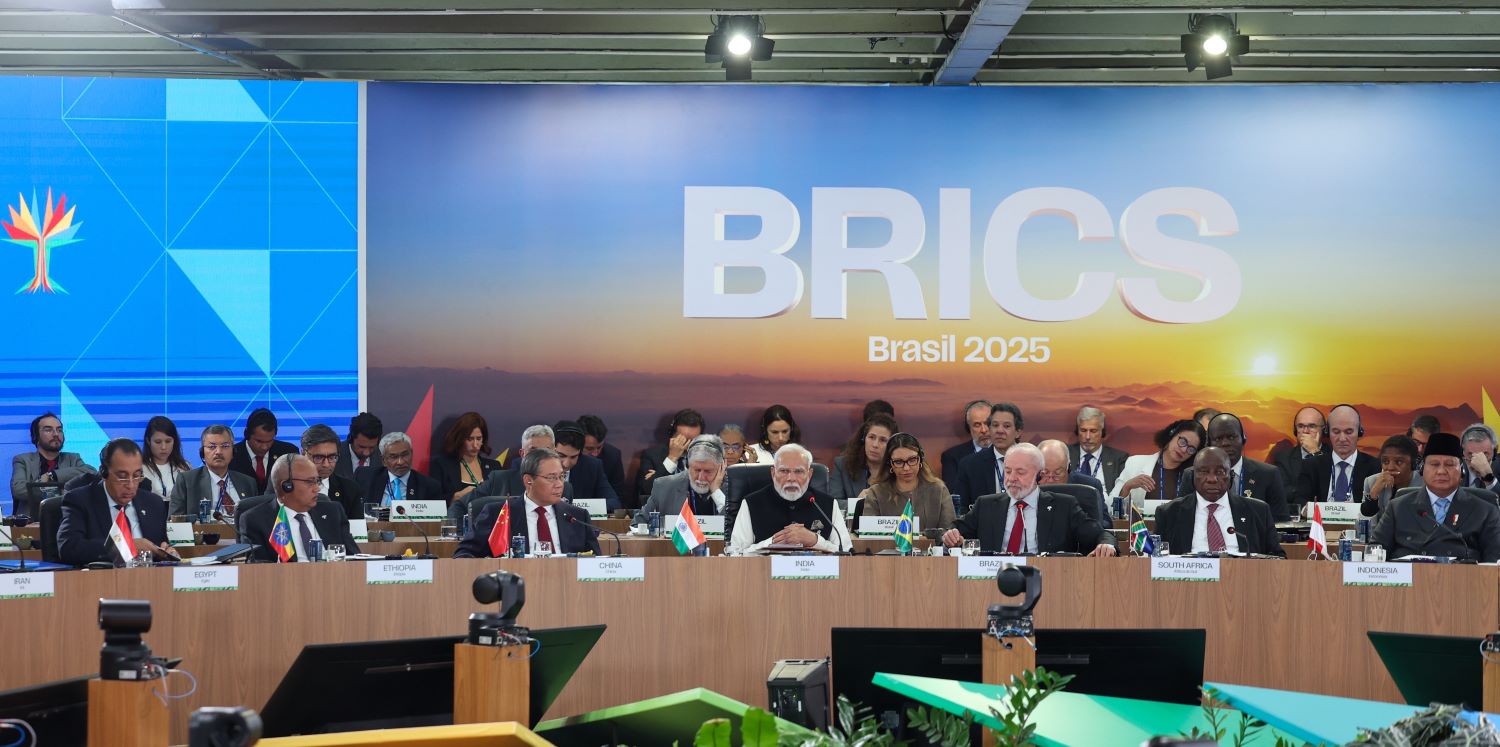
In a watershed moment that underscores the tectonic shifts in global geopolitics, BRICS leaders—representing Brazil, Russia, India, China, South Africa, and newly inducted members—unanimously condemned the April 22 terror attack in Pahalgam, Jammu and Kashmir, and issued a resounding call for fundamental reforms in global governance systems. Against a backdrop of intensifying geopolitical fragmentation, Prime Minister Narendra Modi emerged as a forceful voice for the Global South, demanding that the international community abandon hypocrisy and act decisively against terrorism in all its forms.
Held in Rio de Janeiro, the 17th BRICS Summit not only reaffirmed the grouping’s commitment to multilateralism but also revealed a newly assertive posture on issues of terrorism, Middle East violence, and structural reform of outdated global institutions.
The emotional and political gravity of the Pahalgam terror attack cast a long shadow over the summit. On April 22, a heinous assault in the scenic valley of Jammu and Kashmir took the lives of 26 innocent civilians, prompting shockwaves across India and condemnation from allies.
In an unprecedented move, the BRICS Leaders’ Declaration explicitly referenced the attack and condemned it in the “strongest terms.” Such direct acknowledgment of a terror incident in a member nation marks a milestone in BRICS diplomacy, breaking from past hesitations and signaling increasing convergence on counterterrorism.
“We condemn in the strongest terms the terrorist attack in Jammu and Kashmir on 22 April 2025, during which 26 people were killed,” the declaration stated, setting the tone for a broader conversation on terrorism.
This was followed by a comprehensive reaffirmation of the bloc’s commitment to combat terrorism, including its most difficult aspects: cross-border infiltration, financing, and harboring of terror networks. The declaration insisted on “zero tolerance for terrorism” and explicitly rejected the practice of “double standards” in counterterror efforts—a veiled but pointed reference to state actors who tacitly support terror groups.
Delivering one of his most impassioned addresses on the global stage, Prime Minister Narendra Modi called out the duplicity of nations that provide “direct or indirect” support to terrorism.
“There is no room for double standards. If any country provides direct or indirect support to terrorism, it must pay the price,” Modi said, drawing applause and a visible nod of support from several leaders.
Calling the Pahalgam attack a “blow to the soul of India and to humanity itself,” Modi expressed gratitude to countries that had stood by India in its moment of grief, but cautioned that “moral clarity” was the need of the hour—not performative diplomacy.
In what could be interpreted as a challenge to Pakistan and its alleged support to cross-border militancy, Modi stated that “silent approval or political justification” of terrorism must no longer be tolerated.
“We cannot weigh the victims of terrorism and its supporters on the same scale. Condemning terrorism must be a principle—not a convenience,” he said, slamming what he called “selective or symbolic” counterterrorism policies by global powers.
Modi’s strong words were not merely symbolic; they found concrete expression in the BRICS declaration, which used its most assertive language to date on the topic of terrorism. For the first time, the declaration openly called for:
Targeted sanctions against terrorists and their sponsors
Dismantling of safe havens
Crackdown on cross-border terror movement
Adoption of the Comprehensive Convention on International Terrorism under the UN framework
An end to political shielding of proscribed groups
These statements, viewed together, represent a major policy victory for India, which has long pushed for global recognition of the multifaceted nature of terrorism and for a codified international approach under the United Nations.
In another significant departure from past practice, BRICS leaders strongly condemned recent Israeli airstrikes on Iran and warned of escalating tensions across the Middle East.
“We condemn the military strikes against the Islamic Republic of Iran since 13 June 2025, which constitute a violation of international law and the Charter of the United Nations,” read the declaration.
Furthermore, the summit expressed grave concern over Gaza and the ongoing Israeli-Palestinian conflict. BRICS urged unimpeded humanitarian access to Gaza, while calling out what it described as “continued Israeli attacks” and obstruction of aid.
These remarks are politically charged, particularly in the context of growing criticism of Western handling of the Middle East crisis. BRICS’s unified voice presents a challenge to the unipolar narrative and reflects its growing confidence as a geopolitical counterweight.
Shifting from security to governance, the summit pivoted to a topic close to India’s heart: the reform of global institutional architecture. Modi, speaking at the session on Reform of Global Governance, lamented the tokenism and neglect faced by the Global South.
“Whether it’s about development, distribution of resources, or security-related matters, the interests of the Global South have not been given due importance,” Modi said.
In a powerful metaphor, he likened the current global system to “running 21st-century software on 20th-century typewriters.”
The message was clear: incremental changes are insufficient. Real reform must involve:
Redistribution of voting rights in institutions like the IMF and World Bank
Permanent representation for Global South powers like India and Brazil in the UN Security Council
Equity in leadership positions across multilateral organizations
Democratization of decision-making in the WTO and climate finance frameworks
The Rio Declaration went further than ever before in supporting Security Council reform, stating:
“We reiterate our support for a comprehensive reform of the United Nations Security Council, with a view to making it more democratic, representative, effective and efficient.”
This is seen as a direct endorsement of India’s long-pending bid for a permanent seat at the UNSC, and an acknowledgment that current governance models no longer reflect geopolitical realities.
The 2025 summit also marked the first full-scale participation of newly inducted members, following BRICS’s historic expansion last year. Countries from Africa, Latin America, and the Middle East joined as observers or full partners, underscoring the platform’s broadening appeal.
Modi welcomed the new entrants and said their inclusion reflects the world’s trust in BRICS as a constructive, reform-oriented, and inclusive platform.
“Now, we must demonstrate the same determination to reform institutions like the UN Security Council, the WTO, and Multilateral Development Banks,” he said.
Modi’s emphasis on multipolarity resonated with the wider theme of the summit: Decentering Western hegemony in favor of a more balanced, inclusive world order.
As the curtains fell on the Rio Summit, one thing was clear: BRICS is no longer content to be a passive observer in global affairs. From standing firmly against terrorism to advocating equitable governance, the grouping has shown its readiness to challenge the status quo.
India, under Modi’s leadership, emerged as both a moral compass and strategic anchor in this transformation. By pushing for principled stands on terrorism and sustainable development, while also calling out hypocrisy and delay, India positioned itself as a leader of the Global South and a steward of a fairer world order.
The Rio Declaration, with its clear-eyed focus on justice, reform, and solidarity, may well be remembered as a turning point—not just in BRICS history, but in the evolving contours of international relations.