Special Editorial
Dr. Shweta Dipti (English translation of the special editorial from Hindi)
Nepal’s mountain ranges have been the foundation of life, culture, and civilization for centuries. The rivers originating from these Himalayas have provided the country with energy, agriculture, and prosperity. However, when these same rivers take on a terrifying form, they swallow development, dreams, and lives in an instant. The devastating floods in Rasuwa, Nuwakot, and Dhading are not just a natural disaster; they are a test of the empathy, systems, and collective responsibility of all of Nepal.
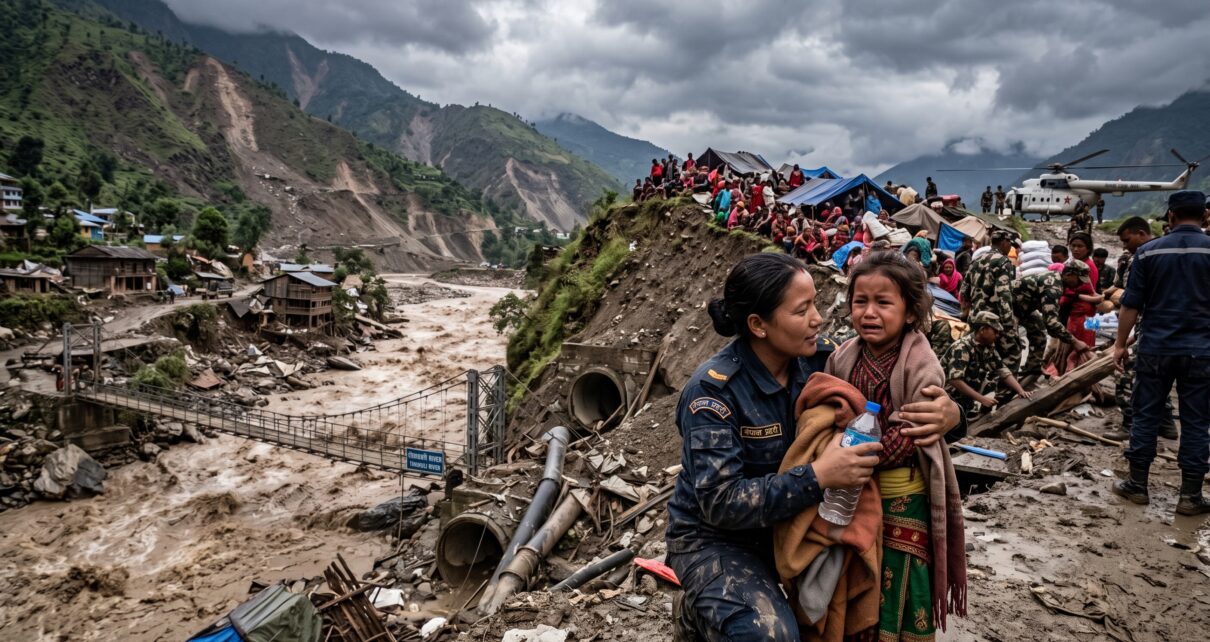
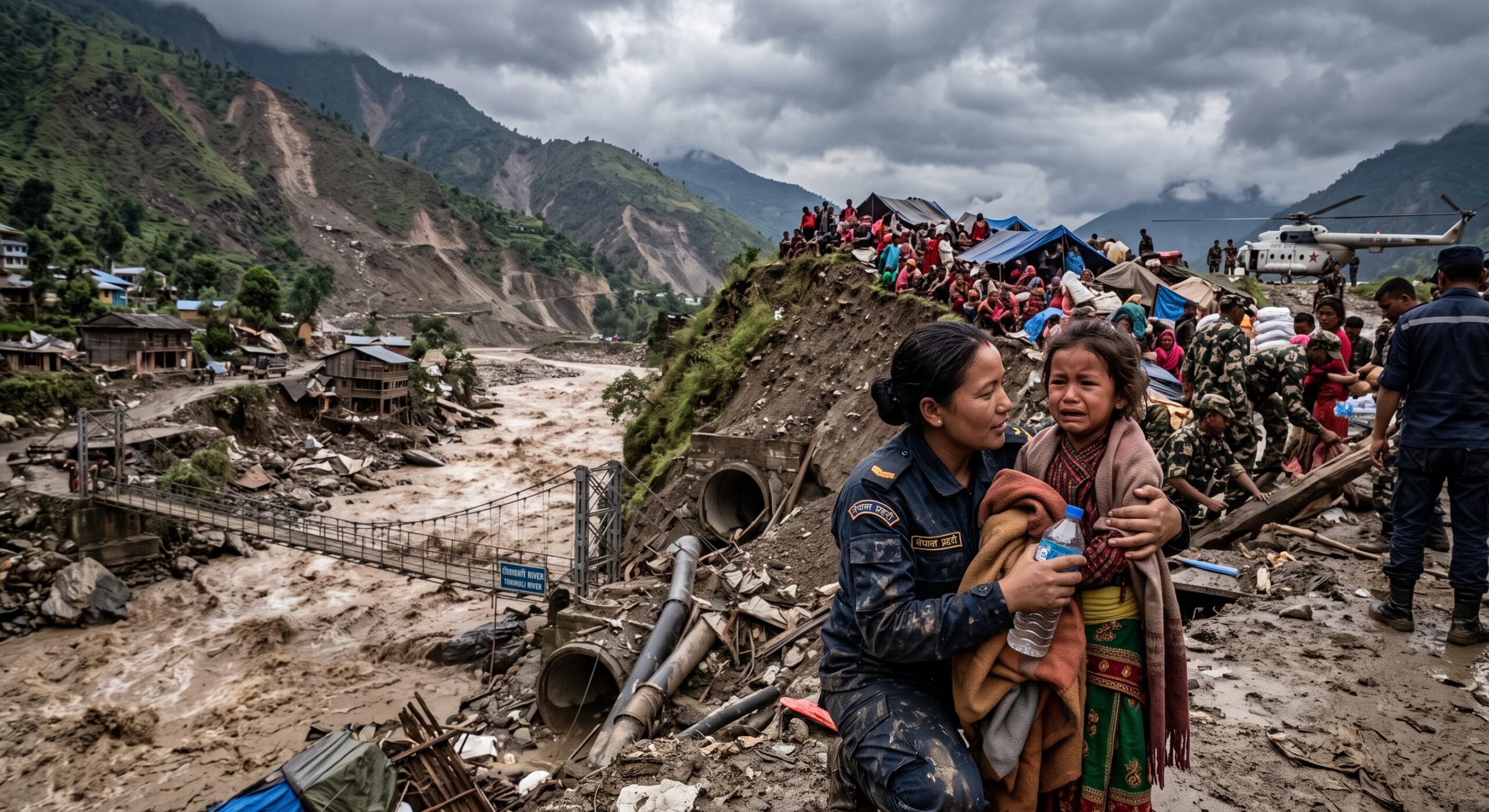
Following a glacial lake outburst in China on Wednesday morning, the ensuing floods in the Bhotekoshi and Trishuli rivers washed away decades-old settlements, bridges, roads, hydropower projects, and human lives in mere seconds. Many families have been separated, several people are still missing, and thousands of citizens are waiting for help under the open sky. Today, the only question in the eyes of those taking refuge in the mountains is—is anyone listening to our plea?
The most heartbreaking aspect of this tragedy is that those who built homes with their hard work, cultivated fields, and wove dreams for the future, now do not even have the certainty of clothes to wear or a morsel of food to eat. Children, the elderly, and women are looking toward relief camps. Laborers are trapped in the tunnels of several hydropower projects, and with every passing moment, their families are oscillating between hope and fear.
This tragedy in Rasuwa is not merely a local crisis. It is a severe blow to the economic and energy security of the entire nation. Hundreds of megawatts of electricity production have come to a halt, bridges have been washed away, road connectivity has been severed, and cross-border trade has been severely affected. It reminds us that climate change and the escalating natural risks in the Himalayan regions are no longer a future threat, but a present reality.
At such a time, the greatest need is not politics, but humanity. The government, the army, the Nepal Police, and the Armed Police Force are actively engaged in relief operations, but the scale of the disaster is so vast that government efforts alone will not be sufficient. Every section of society—citizens, social organizations, industries, the Nepali diaspora, and international aid agencies—must step forward.
It is Time to Extend a Helping Hand
Today, Rasuwa needs not just sympathy, but concrete support. Every capable citizen can contribute according to their capacity:
-
Financial Assistance: Contributing to official relief funds.
-
Essential Supplies: Provisioning food, clean water, clothes, blankets, and essential medicines.
-
Safe Shelter: Ensuring safe refuge and health assistance for affected children and women.
-
Active Participation: Blood donation, volunteering, and assisting in the collection and distribution of relief materials.
Even a small contribution can become a lifeline for a struggling family.
Our Collective Responsibility
This disaster leaves us with another crucial message. Making hydropower, road, and settlement construction plans in the Himalayan region safer and more scientifically aligned with climate risks is no longer an option, but a strict necessity. Early warning systems, cross-border information sharing, and disaster management capabilities must be strengthened to minimize the impact of such tragedies in the future.
Let Us Stand with Rasuwa
Today, Rasuwa is weeping, but this is not just Rasuwa’s sorrow; it is the sorrow of all of Nepal. In this hour of crisis, if we hold each other’s hands, a lamp of hope can be lit even amidst the rubble.
Let us all come forward together for Rasuwa. Let us try to provide food to a family, medicine to a child, shelter to an elder, and reassurance to a victim. This is our culture, this is our humanity, and this is our greatest duty in these difficult times.
Rasuwa needs our participation more than our prayers. Let us help—right here, right now.
Dr. Deepti is the Cheif Editor of Himalini