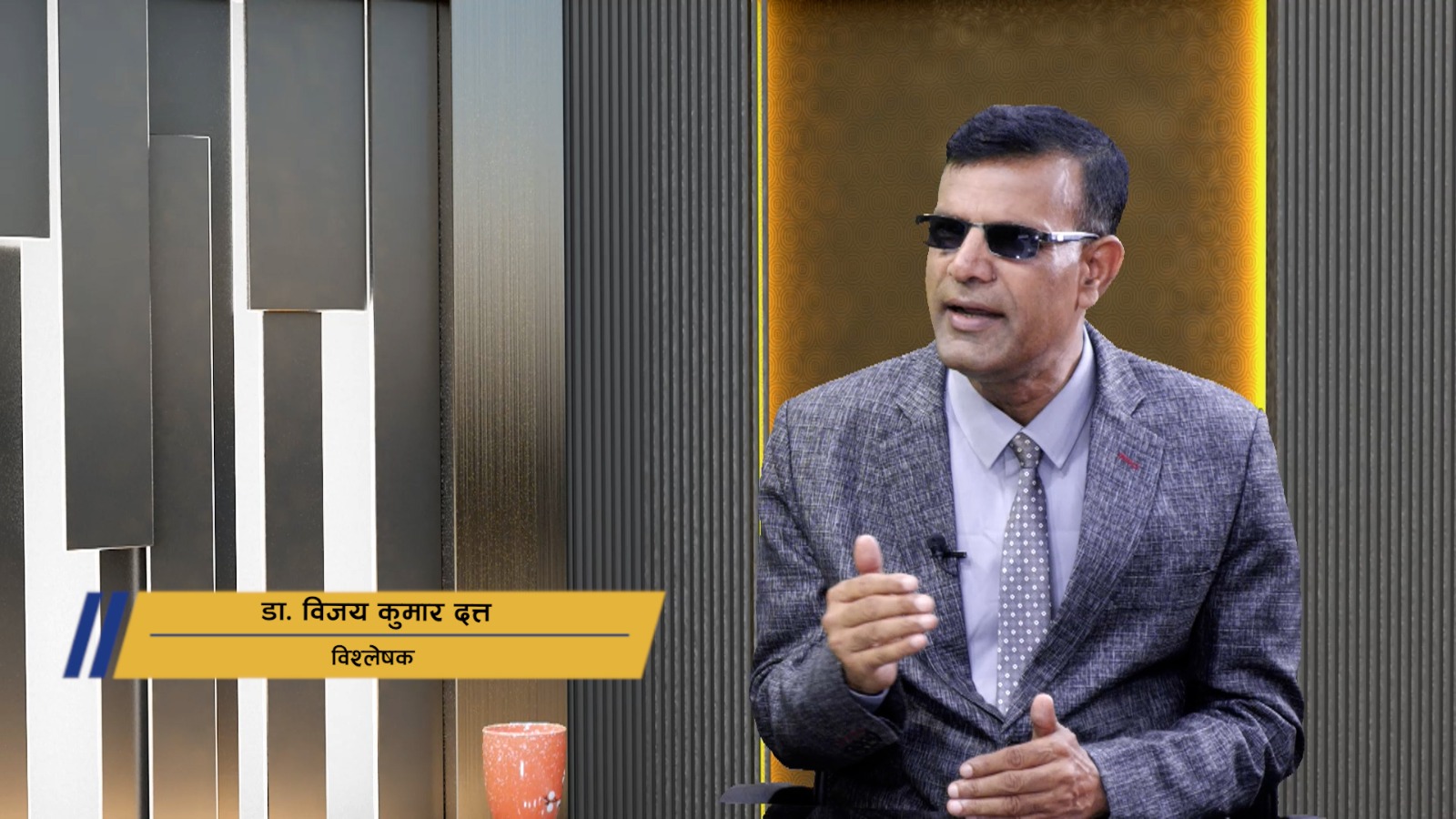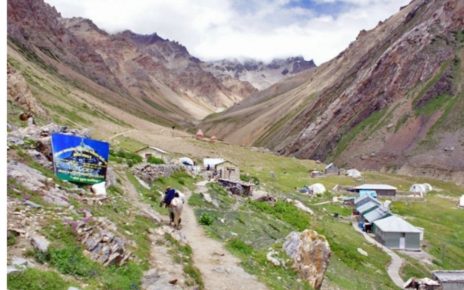

Dr.Vijay Datta, Kathmandu, 1 September, 2026. The devastating natural disaster on August 26, 2026, which inflicted unimaginable and irreparable loss of life and property across the northern Himalayan districts of Nepal and claimed the lives of hundreds of foreign tourists, served as a stark reminder of our foreign policy vulnerabilities. Even during such a dire crisis, Nepal’s foreign policy lacked stability. The government’s inconsistent stance; initially rejecting foreign aid, only to accept it later; demonstrates a clear lack of stability in current diplomacy. The 12-to-72-hour window following a disaster represents the “Golden Hours,” where swift action directly determines the survival of human lives. While political figures and ruling parties change, the state remains a continuous entity that must demonstrate policy stability and institutional maturity.
A nation’s foreign policy forms its primary foundation. This policy must function not merely as a *passive buffer*, but as an *active bridge*, inspiring a genuine “Nation First” ethos. It is within this context that this analytical critical perspective is presented.
Foreign policy is the official approach, plan, and strategy adopted by a country to protect and promote its national interests, security, development, and international relations. It guides a country’s behavior and decision-making in dealing with other nations (Hill, C., The Changing Politics of Foreign Policy, 2016).
*Core Elements of Foreign Policy*
Safeguard National Sovereignty and Interests: Protecting the country’s independence, territorial integrity, and existence.
*Expand International Relations*: Fostering cooperation with other nations through friendship, trade, diplomacy, and cultural exchange.
Promote Peace and Stability: Steering clear of war or conflict while resolving international disputes through dialogue and diplomacy.
Encourage Economic Growth: Creating an environment conducive to securing foreign investment, trade opportunities, technical cooperation, and employment.
*Participate in Global Forums*: Amplifying the nation’s voice in international bodies such as the United Nations.
In essence, foreign policy is a nation’s “*outlook and conduct toward the outside world*,” designed to secure national interest, security, and long-term development.
*Is Nepal’s Foreign Policy Anchored in Non-Alignment ?*
Nepal’s foreign policy is rooted in non-alignment, sovereign equality, pacifism, and mutual benefit. Its distinct orientation has been shaped by its unique geopolitical position between two powerful neighbors (India and China), its historical traditions, and the dynamics of global politics.
*Fundamental Pillars of Nepal’s Foreign Policy*
Non-Aligned Foreign Policy: Nepal maintains a policy of remaining unattached to any military alliances or strategic power blocs, ensuring its independence and neutrality.
*Panchsheel Principles:* Foreign relations are governed by the Five Principles of Peaceful Coexistence:-
Sovereign equality
Mutual non-interference in internal affairs
Mutual benefit and cooperation
Peaceful coexistence
Non-aggression and non-threat of force
Special Relations with Neighbors: Balancing geopolitical, cultural, trade, and political ties with both India and China through a policy of “neither tilting toward nor distancing from” either side.
*Commitment to the United Nations:* Active contribution to global peace, climate action, human rights, and UN Peacekeeping Missions, underpinned by strict adherence to international law.
*Economic Diplomacy:* Aligning foreign policy with economic priorities such as tourism, water resources, foreign employment, foreign direct investment, and mobilization of international aid.
Pacifism: Prioritizing dialogue, diplomacy, and negotiation over conflict or military aggression.
While Nepal’s foreign policy is theoretically balanced, maintaining perfect balance in practice remains an ongoing challenge.
*Theoretical Balance vs. Practical Asymmetry*
The Theoretical Framework
Rooted in non-alignment, Panchsheel, pacifism, and sovereign equality.
Maintains an official stance of “*Amity with all, enmity with none*” regarding neighbors.
Seeks engagement with Western nations through partnerships in human rights, democracy, and development cooperation.
*Practical Realities*
Over-reliance on India: Heavy dependency on trade routes, transit, employment, and political dynamics often results in a visible tilt toward India.
Unequal Engagement with China: A lack of policy transparency and execution challenges in initiatives like the Belt and Road Initiative (BRI) hinder a truly balanced partnership with China.
Complex Ties with Western Nations: Domestic political fragmentation surrounding major aid agreements (such as the MCC) complicates consistent strategic decision-making.
*Internal Political Instability:* Frequent changes in government, coupled with partisan interests and individual political ambitions, undermine foreign policy continuity.
On paper, Nepal’s foreign policy is seen balanced, non-aligned, and principled. In practice, however, navigating the space between India and China often leaves the country appearing neither fully balanced nor entirely independent. Nepal’s foreign policy remains sound in intent, but immensely challenging in execution.
Impacts of an Unbalanced Foreign Policy
1. *Economic Consequences*
Over-dependence on India: Exposure to trade deficits and transit vulnerabilities (as seen during past blockades) highlights the risks of failing to diversify supply routes and energy resources.
Missed Opportunities with China: Inabilities to execute infrastructure and trade frameworks clearly under initiatives like the BRI leave potential investments unrealized.
Controversies Over Western Aid: Internal political polarization over frameworks like the MCC and SPP (State Partnership Program) risks politicizing international developmental assistance.
2. *Political Consequences*
External Influence in Governance: Frequent changes in domestic governments often invite allegations of external leverage from regional or global actors.
Partisan Polarization: The absence of a national consensus leads to political division over major foreign policy decisions.
Policy Instability: External actors exploiting domestic political rifts to advance their own interests prevents the formulation of a unified long-term strategy.
3. *Social and Cultural Consequences*
Exploitation of Nationalism: Political rhetoric surrounding relations with India, China, or the US is frequently weaponized for short-term emotional appeal, deepening social divides.
Erosion of Public Trust: Deepening skepticism among citizens that external forces dictate internal decision-making processes.
4. *Security Consequences*
Geopolitical Vulnerability: Failing to maintain strict neutrality amidst India-China tensions and US-China rivalry increases security risks for Nepal.
Strategic Pressures: Constant exposure to competing strategic demands, including India’s security concerns, China’s border-trade interests, and the US Indo-Pacific Strategy.
5. *Global Image*
Internal division and inconsistent stances undermine Nepal’s reputation as a reliable international partner. While Nepal’s peacekeeping contributions earn high praise, its predictability on major strategic projects remains questioned.
An unbalanced foreign policy ultimately results in economic dependence, political instability, social fragmentation, security vulnerabilities, and a compromised global standing.
*Managing the “Deep State*-
The term “Deep State” refers to hidden, non-accountable institutional or informal power networks operating outside the formal government to influence policy and state decisions. In Nepal, this dynamic often involves elements within security organs, bureaucracies, commercial interests, foreign influences, and legacy political networks, shaping both foreign and domestic policies.
*Strategies to Manage and Contain the Deep State*
Constitutional and Legal Oversight: Confining security and intelligence agencies strictly within constitutional boundaries, enforcing mandates, and maintaining zero tolerance for corruption or power misuse.
Institutional Transparency and Accountability: Mandating public audits and parliamentary oversight for budgets, appointments, and high-level policy formulation. Establishing merit-based parliamentary hearings for diplomatic and security appointments to eliminate shadow decision-making.
Political Integrity: Ending political collusions with informal networks and resisting the temptation to use state administrative or security machinery for partisan gain.
*Civic Vigilance* and Media Oversight: Empowering investigative journalism, civil society, and the Right to Information (RTI) framework to audit non-transparent decision-making processes.
Managing Geopolitical Pressures: Formulating balanced, institutionalized foreign policies to reduce covert external influences, ensuring all major international deals are debated transparently in Parliament rather than finalized through closed-door arrangements.
Professionalizing Governance: Ensuring security institutions focus strictly on national defense and national security, while shielding the civil bureaucracy from political patronage to prioritize technical competence.
While eliminating informal power dynamics entirely may be unrealistic, constitutional checks, transparency, political discipline, and strategic neutrality can transform an “invisible regime” into an accountable institution.
Strategic Steps Toward a Truly Nepal-Centric Foreign Policy
Clearly Define National Interests: Document core priorities—sovereignty, territorial integrity, economic independence, and citizen welfare—supported by a non-partisan national consensus.
*Maintain Measured Geopolitical Balance:*
With India: Focus on reducing trade imbalances, developing alternative energy and transit logistics, and engaging in fact-based diplomacy over sensitive political issues.
With China: Ensure transparency and national capacity building when implementing major projects like the BRI, while maintaining strict neutrality on sensitive regional matters.
*With Both: Shift the diplomatic paradigm from a zero-sum game toward mutually beneficial win-win cooperation*.
Engage Western and Global Powers Wisely: Maintain clear, institutional policies on global agreements (such as the MCC or Indo-Pacific Strategy), accepting development assistance while ensuring national decision-making autonomy remains uncompromised.
Strengthen Economic Diplomacy: Position economic growth at the heart of foreign policy by directly linking external relations to tourism, hydropower, agriculture, IT, foreign direct investment, and employment.
Institutional Reform: Professionalize the Ministry of Foreign Affairs by enhancing research capacities, long-term policy forecasting, and institutionalizing parliamentary consensus over party-centric diplomacy.
Position Nepal as a Regional Bridge: Shift Nepal’s identity from a passive “buffer state” to an active “bridge state” facilitating transit, energy trade, and cultural connection between India and China, while remaining aloof from military-strategic alliances.
Maintain Public Transparency: Foster trust through open parliamentary debates and clear public communication, prioritizing practical national outcomes over emotional nationalism.
To build a truly sustainable, Nepal-centric foreign policy, the nation must embrace a unified vision, balanced neighborly relations, transparent economic diplomacy, institutional resilience, and strict geopolitical neutrality.
Only through these measures can Nepal transcend the vulnerabilities of a landlocked buffer state and emerge as a trusted bridge between its neighbors; living by the timeless principle of genuine goodwill, avoiding the double standards of being “Purokse karyahantaram, pratyakse priyavadinam” (one who undermines actions behind your back while speaking pleasantly to your face).
*References*
Hill, C. (2016). The Changing Politics of Foreign Policy. Palgrave Macmillan.
Ministry of Foreign Affairs, Nepal. (2023). Nepal’s Foreign Policy Framework. Kathmandu: MoFA Publications.
Pant, H. V. (2019). Nepal’s Foreign Policy in a Multipolar World. Routledge.
Acharya, A. (2018). Understanding Nepal’s Non-alignment Policy. Journal of International Relations, 12(3), 45–63.
United Nations. (2021). Nepal and UN Peacekeeping Contributions. New York: UN Publications.
Shrestha, R. (2020). Economic Diplomacy and Development in Nepal. Kathmandu: Nepal Economic Forum.