Prof. S. S. Dogra, 11 October. Ramlila is far more than a religious theatrical performance; it is a living expression of India’s cultural heritage, collective faith and enduring moral values. Through the timeless story of Lord Rama, it celebrates brotherhood, social harmony, devotion, sacrifice, righteousness and a profound sense of duty. For generations, Ramlila has brought communities together, reminding society that the ultimate triumph belongs to truth, virtue and justice.
“Lord Rama: The Epitome of an Ideal Personality”
Lord Rama, revered as Maryada Purushottam, embodies the highest ideals of human conduct. The Ramayana portrays him as an exemplary son, devoted brother, loving husband and righteous ruler who consistently placed duty above personal comfort. His life offers enduring lessons in integrity, compassion, courage, patience and self-discipline.
It is these timeless qualities that have earned Lord Rama the devotion of millions of people in India and across the world. His story transcends religious boundaries, offering universal lessons about human relationships, ethical leadership and the responsibilities that accompany every role in life.
In this sense, Ramlila may be viewed as a dramatic chronicle of Rama’s life, bringing the characters and episodes of the Ramayana vividly before audiences. Whether performed in a village square, a traditional open-air theatre or a magnificent urban stage, its central message remains unchanged: righteousness must prevail over arrogance, and duty must triumph over selfishness.
The popularity of Ramanand Sagar’s television serial Ramayan demonstrated the extraordinary appeal of this epic. During its telecasts, countless families would set aside their routine activities to watch the unfolding story. This remarkable response illustrated how deeply the Ramayana is embedded in the collective consciousness of Indian society.
“Ramlila: Where Faith Meets Cultural Heritage”
During Navratri and the Dussehra festivities, Ramlila is performed with devotion and enthusiasm across India and in various parts of the world. These performances combine theatre, music, dialogue, traditional costumes, devotional recitation and spectacular visual presentations to bring the epic to life.
Every character carries a meaningful lesson. Lakshmana represents loyalty and brotherhood; Bharata exemplifies selflessness and devotion to duty; Hanuman symbolises courage, humility and unwavering dedication; and Sita represents resilience, dignity and inner strength. Ravana, despite his knowledge and power, illustrates how arrogance, uncontrolled desire and the misuse of wisdom can lead to destruction.
Together, these characters invite audiences to reflect on their own conduct and relationships. Ramlila is not merely a story to be watched; it is a moral experience that encourages people to distinguish right from wrong and to apply enduring values in everyday life.
Traditionally, the performances unfold over several days, often culminating in the battle between Rama and Ravana, the burning of Ravana’s effigy on Vijayadashami and the celebration of Rama’s return to Ayodhya. The associated fairs, devotional gatherings and community celebrations transform Ramlila into a shared cultural experience for people of all ages.
“The Origins and Evolution of Ramlila”
The origins of Ramlila are associated with several religious traditions and historical accounts. Popular legends connect its development with the devotion of early followers of Lord Rama, while the tradition is also closely associated with Goswami Tulsidas and the widespread popularity of the Ramcharitmanas, his celebrated retelling of the Ramayana in Awadhi.
Tradition attributes an important role in the popularisation of Ramlila to Megha Bhagat, a devotee associated with Kashi. According to popular accounts, a divine vision inspired him to stage the sacred episodes so that devotees could experience the story of Lord Rama through dramatic representation. Such accounts form part of the devotional traditions surrounding Ramlila, although the precise historical origins of the practice remain complex.
Over time, Ramlila developed into a diverse theatrical tradition, shaped by regional languages, local customs, musical forms and community participation. Its continuing popularity demonstrates how an ancient epic can remain relevant while adapting to changing social and cultural circumstances.
“Ramnagar Ramlila: A Living Theatrical Tradition”
Among India’s most celebrated Ramlila traditions is the historic Ramnagar Ramlila in Varanasi. Traditionally associated with the royal patronage of the Kashi Naresh, its origins are commonly traced to Maharaja Udit Narayan Singh in the nineteenth century, often dated to around 1830.
Unlike conventional theatre confined to a single stage, Ramnagar transforms the town and its surroundings into an expansive theatrical landscape. Different locations represent Ayodhya, Janakpur, Chitrakoot, Panchavati, Lanka and other places associated with the epic. Audiences move from one setting to another, following the unfolding narrative as though they were travelling through the world of the Ramayana.
Local performers enact the principal characters, while devotional recitations, especially passages from the Ramcharitmanas, sustain the spiritual atmosphere. The participation of large audiences, pilgrims and local communities makes the event an extraordinary example of living cultural heritage.
The Ramnagar tradition illustrates that Ramlila is not simply a stage production. It is an immersive cultural institution in which geography, storytelling, faith and community memory come together.
“Different Forms of Ramlila”
Ramlila is performed in a variety of formats, depending on local traditions and theatrical practices. Broadly, these include moving performances, often known as Sachal Leela; performances associated with fixed locations, known as Achal Leela; and conventional stage productions.
In traditional forms associated with Kashi, separate locations may represent different settings from the Ramayana, allowing episodes to unfold in spaces symbolically linked with the story. Elsewhere, performances use elaborate stages, modern lighting, sound systems, digital backdrops and spectacular tableaux.
The Bharat Milap celebrations in parts of Uttar Pradesh are especially renowned for their devotional atmosphere and large public gatherings. These different forms demonstrate the flexibility of Ramlila as a theatrical tradition and its capacity to engage audiences across generations.
“Artists: The Heart of Ramlila”
The success of Ramlila depends greatly on the dedication and talent of its performers. Children, adolescents and adults participate in portraying the characters, while experienced directors, musicians, costume designers, technicians and volunteers contribute to the production.
Traditionally, performers are selected with consideration for their suitability for particular roles, including voice, expression, stage presence and the ability to communicate the character’s personality. Actors often memorise verses, chaupais and dohas from the Ramcharitmanas, integrating them into dialogue and dramatic sequences.
In contemporary Ramlila, participation extends across communities and social backgrounds. This inclusiveness strengthens the tradition’s wider social significance. People work together not only as performers but also as organisers, artisans, volunteers and members of the audience.
In this collective effort, Ramlila becomes an example of teamwork, discipline, intergenerational learning and shared cultural responsibility.
“Major Episodes That Bring the Ramayana to Life”
The sequence of episodes varies according to the version of the Ramayana and the local Ramlila tradition. Commonly presented episodes include:
The birth of Rama and Sita, Vishwamitra’s arrival and the slaying of Tadaka.
The liberation of Ahalya, Sita’s Swayamvar and the breaking of Shiva’s bow.
Rama’s proposed coronation, Kaikeyi’s demands and the exile of Rama, Sita and Lakshmana.
The meeting with Nishadraj, the Kevat episode, Bharata’s devotion and the reunion with Rama.
The events at Panchavati, Shurpanakha’s encounter with Rama and Lakshmana, and the abduction of Sita.
Jatayu’s sacrifice, the meeting with Shabari, and Rama’s alliance with Sugriva and Hanuman.
The slaying of Bali, Hanuman’s journey to Lanka, his meeting with Sita and the burning of Lanka.
Vibhishana’s surrender, the construction of the bridge to Lanka and the ensuing battle.
The battles involving Lakshmana, Meghnada and Kumbhakarna, along with Hanuman’s quest for the Sanjeevani herb.
The final confrontation between Rama and Ravana, Ravana’s death and the celebration of Vijayadashami.
Rama’s return to Ayodhya and his coronation, symbolising the restoration of righteous rule.
Through these episodes, audiences witness the consequences of difficult choices, the strength of loyalty, the cost of arrogance and the ultimate victory of righteousness.
“Delhi’s Vibrant Ramlila Tradition”
Delhi has a particularly vibrant Ramlila culture, with performances organised across the capital during the Navratri and Dussehra season. These events combine religious devotion with theatre, public participation, community service and festive celebrations.
Among the capital’s prominent organisers and traditions are the Luv-Kush Ramlila Committee, Ashok Vihar Ramlila Committee, Janakpuri Ramlila and various Ramlila committees in Dwarka, Mayur Vihar, Dilshad Garden, Delhi Cantonment and Surajmal Vihar. The DCM Ramlila also holds a place in the memories of audiences familiar with Delhi’s theatrical traditions of earlier decades.
The Shri Ram Bharatiya Kala Kendra is widely recognised for its stylised theatrical presentation of the Ramayana, combining choreography, music, costumes and dramatic interpretation.
These varied productions demonstrate how Ramlila continues to evolve in a modern metropolis while retaining its connection with devotion, storytelling and community participation.
“Dwarka Shri Ramlila Society: Carrying Forward a Legacy”
Reflecting the continuing popularity of Ramlila in the national capital, the Dwarka Shri Ramlila Society (Regd.) is preparing to present the fifteenth edition of its annual celebration on a grand scale.
According to Akash Rajesh Gahlot, Chairman and Chief Patron of the society, he feels honoured to carry forward the legacy of his father, Late Shri Rajesh Gahlot, the founder of the organisation, with the support of its dedicated members. The production features a magnificent stage inspired by the revered Somnath Temple, creating an impressive setting for the epic’s dramatic presentation. The live Ramlila performances are scheduled to commence on 11 October, welcoming thousands of devotees and spectators.
Such initiatives reflect the dedication of community organisations that invest their time, resources and collective effort in preserving India’s traditional performing arts. By combining devotion, theatrical presentation and public participation, the society’s annual event contributes to the cultural life of Dwarka and helps introduce younger generations to the enduring legacy of the Ramayana.
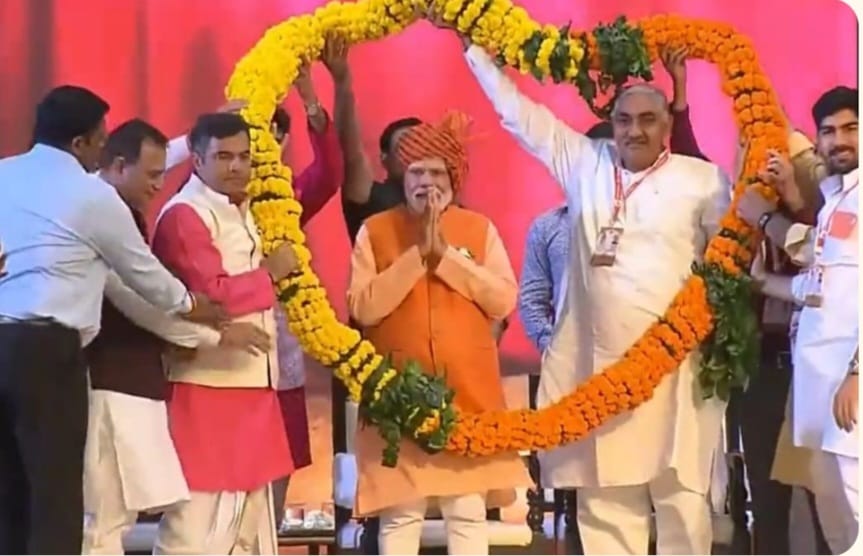
We feel truly honoured and privileged to have been graced by the esteemed presence of our Hon’ble Prime Minister, Shri Narendra Modi Ji, on two previous occasions, and we eagerly look forward to welcoming him once again this year.
“Ramlila Beyond India”
The influence of the Ramayana extends well beyond India’s geographical boundaries. Ramayana traditions, including dramatic performances and adaptations of Rama’s story, have flourished in Nepal, Indonesia, Thailand, Cambodia, Sri Lanka, Mauritius and other countries, each reflecting its own cultural identity.
In Indonesia, for example, Ramayana performances form part of a rich artistic tradition, including celebrated dance and theatre presentations in Java and Bali. In Nepal, the Ramayana is deeply connected with religious and cultural life, while Mauritius has preserved significant elements of Indian devotional and performance traditions.
These traditions differ in language, costume, choreography and interpretation, but share a common engagement with the epic’s central themes of duty, devotion, courage and the struggle between good and evil.
Their international presence highlights the Ramayana’s remarkable capacity to cross geographical and linguistic boundaries while acquiring distinctive regional expressions.
“Ramlila in the Modern Era: A Message for Every Generation”
In an age characterised by rapid technological change, digital distractions and increasingly individualised lifestyles, Ramlila has acquired renewed social significance. Children and young people, in particular, can discover through its stories the importance of honesty, empathy, respect, patience, courage and responsibility.
However, the real value of Ramlila lies not merely in remembering the characters or witnessing the spectacular burning of Ravana’s effigy. Its deeper purpose is to encourage people to examine their own conduct.
Rama’s commitment to duty invites reflection on responsible leadership. Bharata’s sacrifice challenges selfish ambition. Lakshmana’s loyalty highlights the importance of standing by loved ones. Hanuman’s devotion demonstrates that strength becomes meaningful when guided by humility and service. Ravana’s downfall reminds us that knowledge, power and achievement cannot compensate for arrogance and unethical conduct.
These lessons are relevant in homes, educational institutions, workplaces and public life. Parents and teachers can use the stories to encourage thoughtful discussions about moral choices, while community organisations can use Ramlila as a platform for cooperation, volunteerism and cultural education.
Equally important is the spirit of togetherness that surrounds its organisation. People from different backgrounds join hands to construct stages, prepare costumes, manage crowds, support performers and welcome visitors. This shared effort demonstrates how a cultural celebration can strengthen mutual respect and social cohesion.
“Let the Message of Rama Live Within Us”
Ramlila is one of India’s enduring cultural traditions because it connects faith with human experience and entertainment with ethical reflection. Its message is not confined to a particular season or a theatrical stage; it invites us to practise righteousness, compassion, discipline and responsibility throughout the year.
The true triumph of Rama over Ravana occurs not only when an effigy is set ablaze on Vijayadashami, but whenever truth overcomes falsehood, humility defeats arrogance, compassion replaces hatred and duty takes precedence over selfishness.
In a society seeking greater understanding and harmony, Ramlila reminds us that cultural heritage becomes meaningful when its values are reflected in our actions.
Ultimately, Ramlila is not merely the enactment of Lord Rama’s life; it is an invitation to bring the ideals of Rama into our own lives. Its greatest success lies not in the grandeur of its stage or the size of its audience, but in its ability to inspire a more compassionate, responsible and harmonious society.
(Prof. S. S. Dogra is an
Author | Senior Journalist | Media Advisor-Dwarka Shri Ramlila Society,
Delhi Bureau Chief, Himalini Magazine, Nepal
Member, Foreign Correspondents’ Club of South Asia)