
Jerusalem | Himalini Desk
Israel’s latest election projections point to a fragmented parliament, leaving Prime Minister Benjamin Netanyahu facing a difficult challenge in securing the support needed to form a stable government.
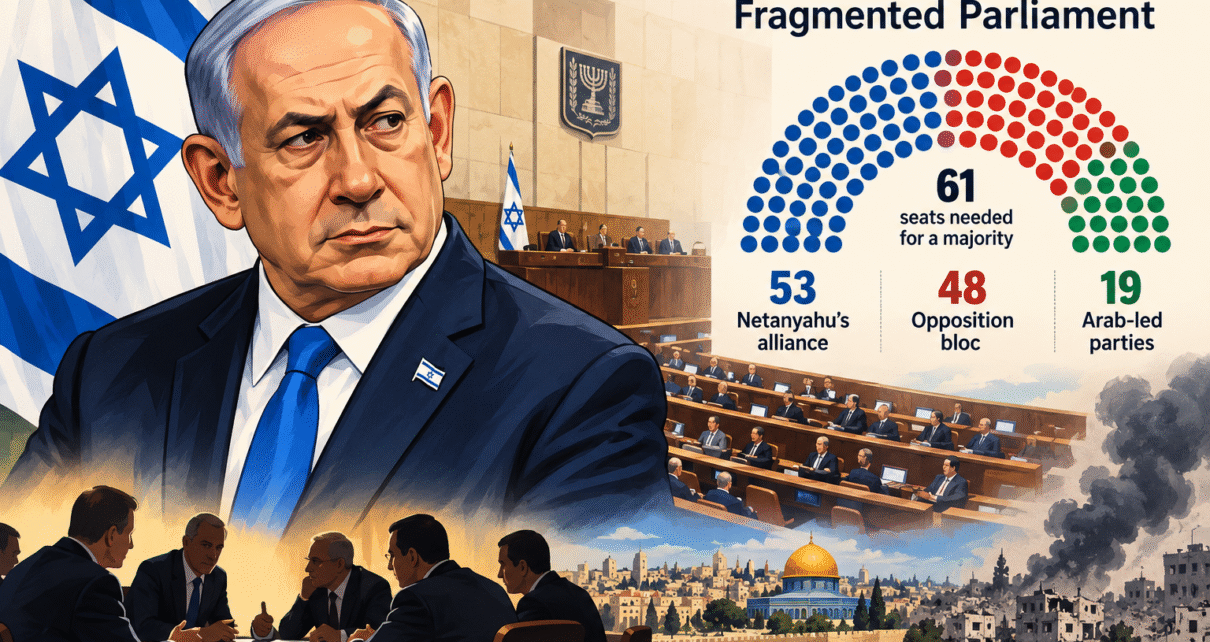
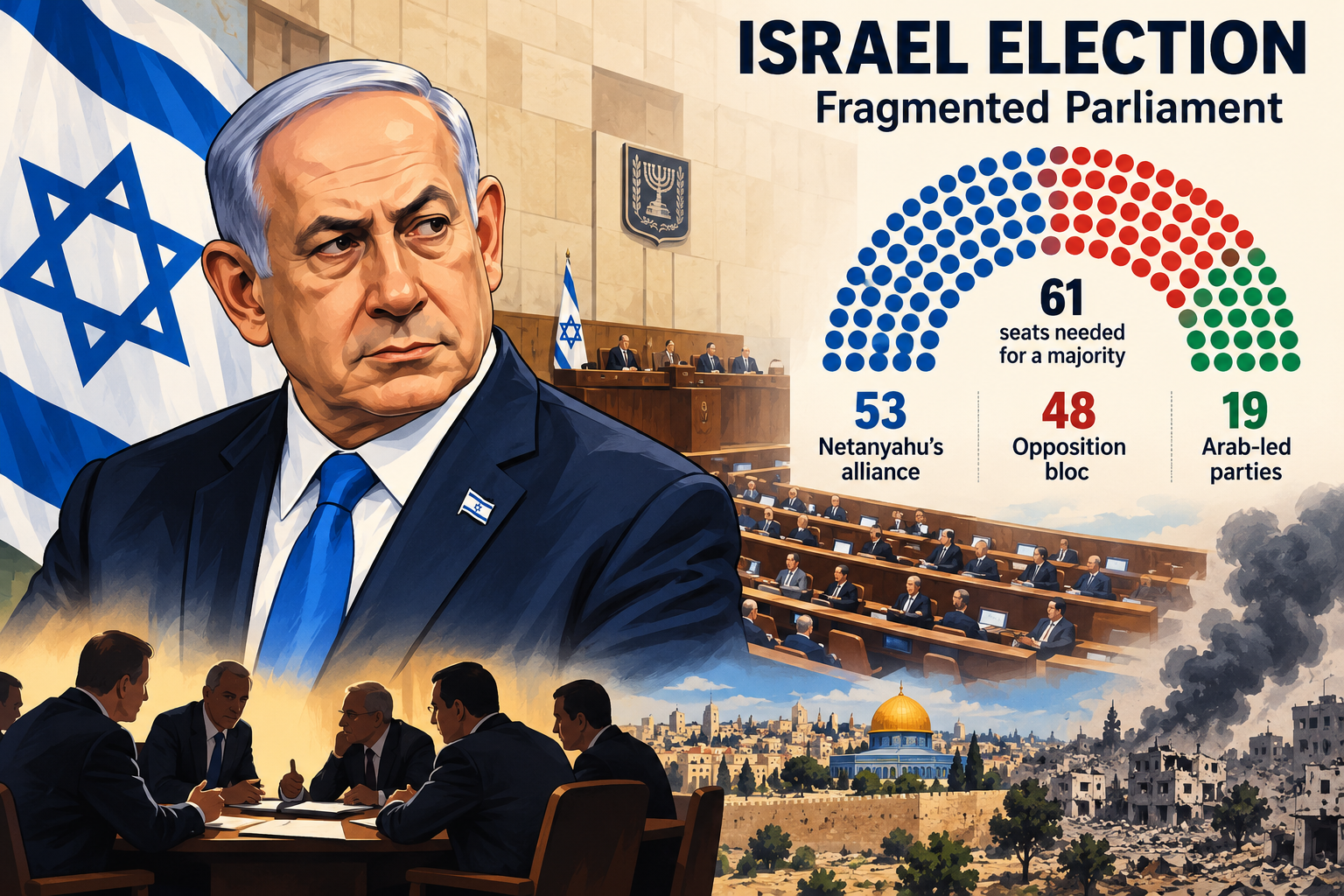
According to projections, Netanyahu’s alliance is expected to win 53 seats, while the opposition bloc is projected to secure 48 seats. Arab-led parties are forecast to hold 19 seats, potentially making them an important factor in the political negotiations that follow.
With 61 seats required for a parliamentary majority, neither of the two main blocs appears to have enough support to govern independently. The outcome is likely to trigger complex coalition negotiations as political parties seek to assemble the numbers necessary to form a government.
Coalition Talks Could Decide Netanyahu’s Political Future
The coming negotiations could prove decisive for Netanyahu’s political future. If his alliance succeeds in securing the backing of additional parties, he could remain in power. However, if the negotiations fail, Israel could face another election, prolonging political uncertainty.
The fragmented result also highlights the challenges of building a durable governing coalition in Israel, where differences over security, domestic policy, religious interests and relations with the Palestinian territories can complicate political alliances.
Implications for Gaza and Regional Diplomacy
The political outcome carries significance beyond Israel’s domestic affairs. The composition of the next government could influence the country’s approach to the conflict in Gaza, negotiations concerning regional security and diplomatic engagement with neighbouring countries and international partners.
A government led by Netanyahu would face continued scrutiny over its policies towards Gaza and the wider Middle East. A change in governing arrangements could also reshape the political calculations surrounding ceasefire efforts, humanitarian concerns and regional diplomatic initiatives.
However, the direction of Israeli policy will depend not only on who leads the government but also on the coalition agreements, political compromises and parliamentary support secured during negotiations.
For now, the projected distribution of seats leaves Israel facing a period of political uncertainty. The outcome of the coalition talks will determine whether Netanyahu can assemble a governing majority or whether voters will be called upon to return to the polls.