Kathmandu, November 1: Motorists using Nepal’s Nagdhunga Tunnel must now pay toll charges, with the new system coming into effect on November 1. The move introduces an additional travel expense for commuters, transport operators and businesses travelling between Kathmandu and the western approaches of the capital.
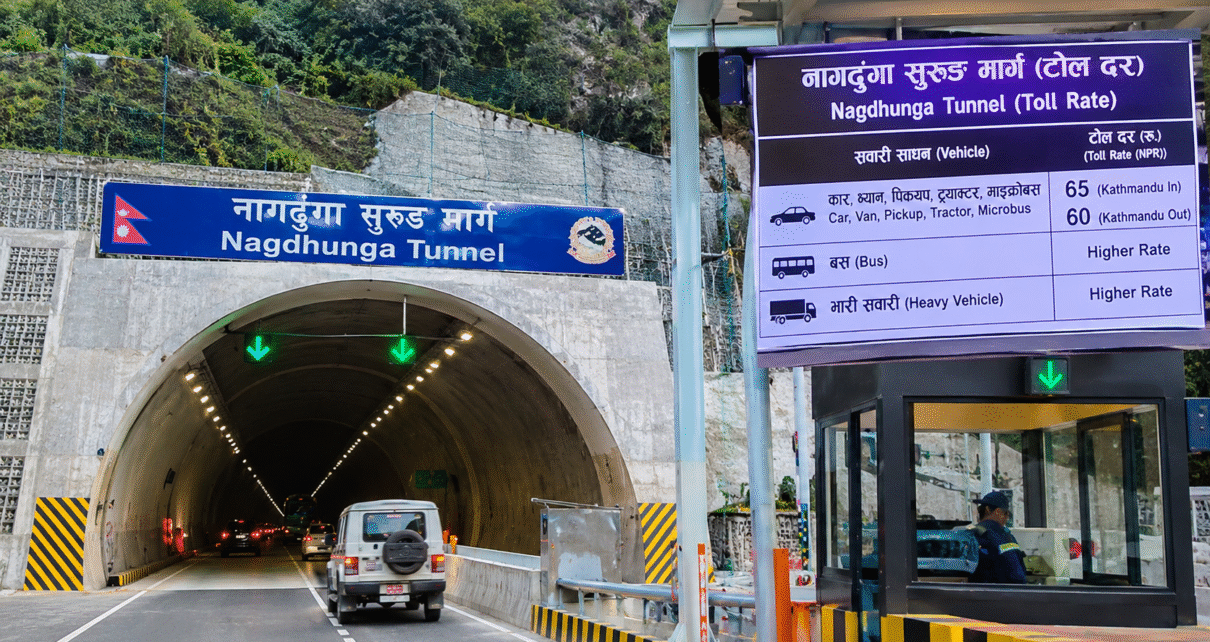
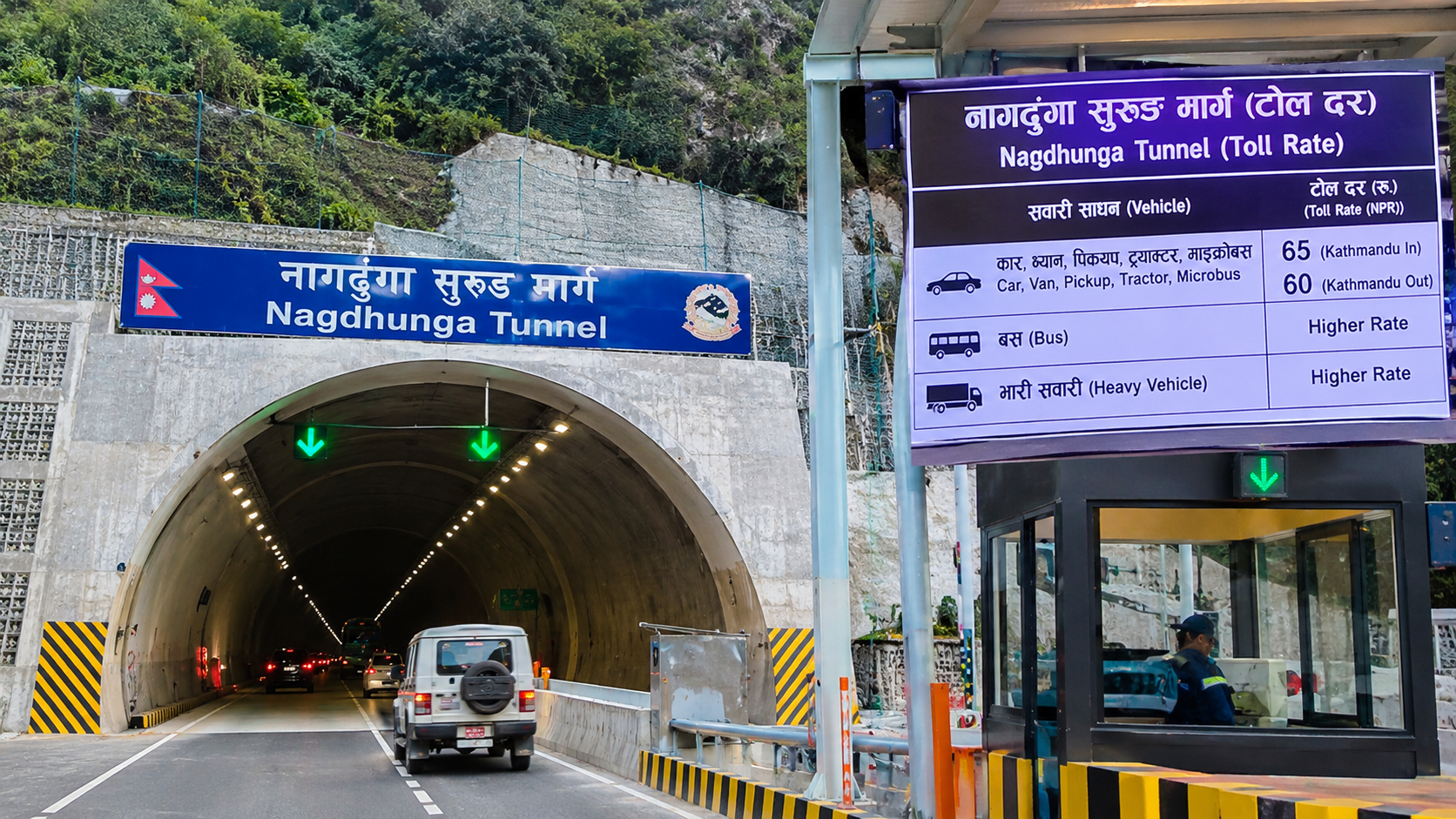
According to the announced toll rates, cars, vans, pickup trucks, tractors and microbuses will be charged NPR 65 when entering Kathmandu and NPR 60 when exiting through the tunnel.
Buses and heavy vehicles will face higher toll charges, depending on their vehicle category.
The introduction of toll collection marks a new phase in the operation of the Nagdhunga Tunnel, a major infrastructure project designed to improve connectivity and ease travel through the busy Nagdhunga corridor, which serves as one of the principal road links to Kathmandu.
Additional Cost for Commuters and Transport Operators
The new charges are expected to affect daily commuters, commercial transport operators and businesses that regularly travel between Kathmandu and areas to the west of the capital. Transport companies may need to account for the additional expense when calculating operating costs, while private motorists will also have to factor the toll into their travel budgets.
For businesses, schools and service providers making frequent trips through the corridor, the cumulative cost could become a consideration in routine travel planning.
Travellers Advised to Plan Ahead
Motorists are advised to check the applicable toll category for their vehicles before travelling through the tunnel. Those who regularly use the route may also consider the cost and travel time associated with alternative routes when planning their journeys.
The Nagdhunga Tunnel is intended to provide an important alternative to the traditional road passage through the Nagdhunga area. With toll collection now in effect, travellers will need to consider both convenience and cost when deciding whether to use the tunnel.
Himalini Desk | himalini.com