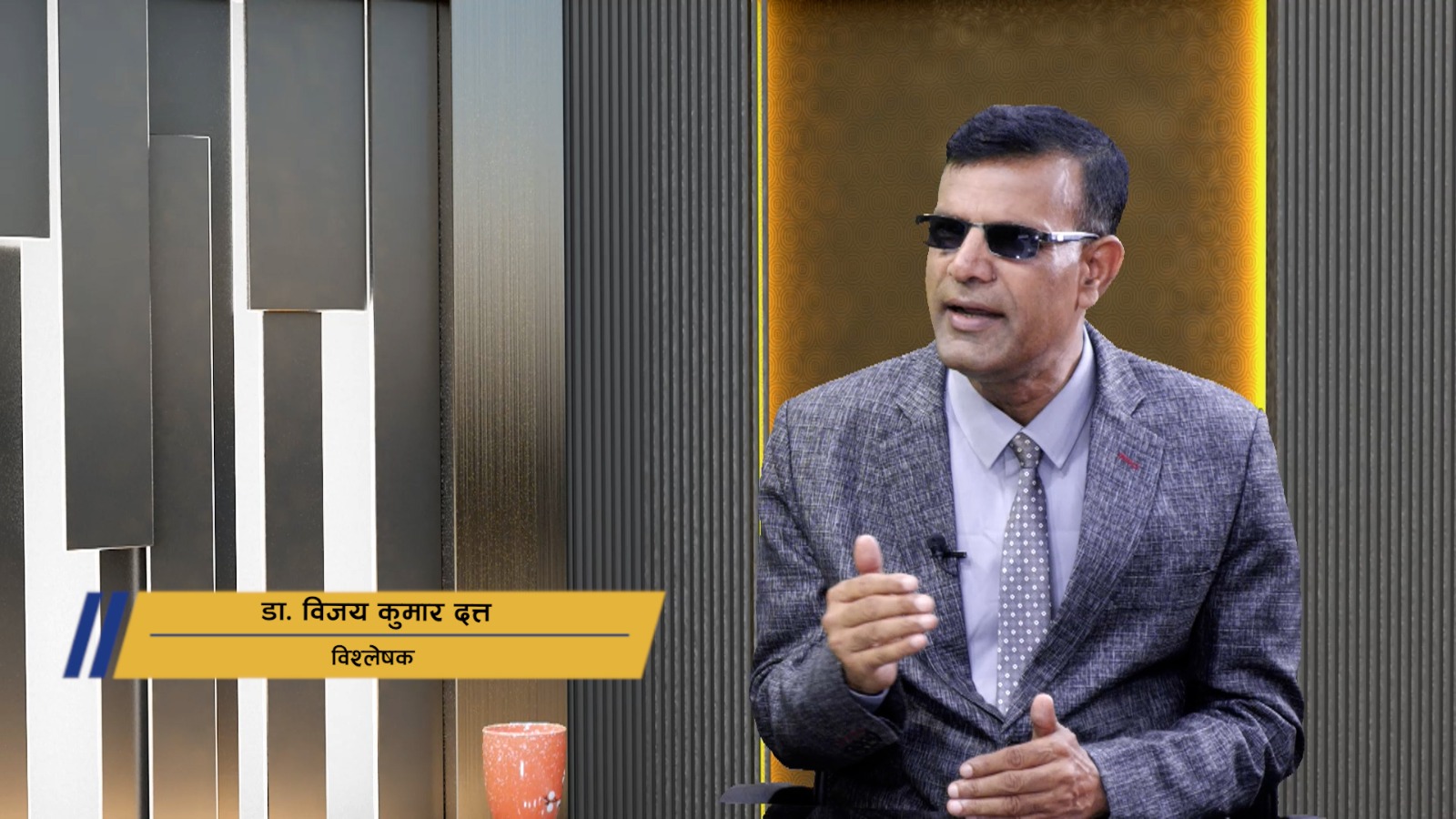

- Dr. Vijay Datta, Kathmandu.6 July.
*Background:*
The literal meaning of Sanatana is “that which has always existed, that which will always remain, and which has neither a beginning (origin) nor an end.” In a broader context, it is not merely a religion or a sect, but an eternal philosophy of living and a universal law that demonstrates the path of living in truth, non-violence, compassion, duty, and balance with nature. It is based on the immortality of the soul and the natural laws of the universe (Ṛta), connecting human beings with the noble sentiment of rising above narrow-mindedness to regard the entire world as one single family (“Vasudhaiva Kutumbakam”).
Sanatana is considered ‘Anadi’ (without a beginning) and ‘Ananta’ (endless). Its origin is believed to coincide with the creation of the universe and the emergence of natural laws (Ṛta), when human consciousness began to comprehend the fundamental principles of truth, duty (dharma), and existence. According to Eastern philosophy, the eternal realizations and non-material truths that ancient sages (Rishi-Munis) attained through profound meditation and spiritual practice were compiled through the Vedas and flowed as the Sanatana tradition. Thus, it is not a thought system established by any specific individual, but a living path that evolved naturally alongside the consciousness of creation and the natural balance of life.
1. Mythological and Religious Beliefs (From the Beginning of Creation)
According to Vedic and Puranic literature (such as the Vishnu Purana, Srimad Bhagavatam, and Brahmanda Purana), Jambudvipa is the central landmass of the Earth, which also includes ‘Bharatvarsha’.
Chronology: According to mythological beliefs, the existence of the Sanatana tradition in Jambudvipa dates back to the creation of the universe (Satya Yuga). From the time of Svayambhuva Manu and his son Priyavrata, Vedic life values, the Yajna tradition, and the conduct of eternal Sanatana Dharma have been practiced in Jambudvipa. The mantra used during the ritual pledge (Sankalpa), “Jambudvipe Bharatkhande…”, highlights this very eternal continuity.
2. Historical and Archaeological Perspective (5000–2500 BCE or earlier)
From a historical and scientific viewpoint, a gradual evolution of Sanatana culture is visible in Jambudvipa (primarily the Indian subcontinent and Central Asia):
Indus-Saraswati Civilization (3000–1500 BCE): Archaeological evidence includes statues seated in yogic postures, Shiva Lingas, Pashupatinath, worship of the Peepal tree, and Swastika symbols, which confirm the early form of the Sanatana tradition.
Vedic Period (1500–500 BCE or earlier): With the composition of the Rigveda and the compilation of the Vedas, a systematic Sanatana philosophy, the Ashrama system, and Dharma-sutras were established and propagated across the vast region of Jambudvipa (from the Sapta Sindhu region to the whole of Bharatvarsha).
Thus, religiously speaking, Sanatana has existed in Jambudvipa since eternal time (the beginning of Manvantaras and Yugas), while historically, it has been continuously flowing in the Indian subcontinent alongside human civilization and the origin of Vedic sages.
The World’s Ten Major Religions (Which originate from Sanatana Dharma):
1. Sanatana Dharma (Hinduism)
Anadi / Prehistoric Period (From the beginning of civilization)
The world’s oldest living religion, whose origin did not stem from a single founder or date, but evolved gradually along with the Indus-Saraswati civilization and the Vedic tradition (3000 BCE or earlier).
2. Judaism
Approximately 1500–1200 BCE
The first monotheistic Abrahamic religion, established through Prophet Abraham (Hazrat Ibrahim) and Moses.
3. Zoroastrianism
Approximately 1500–1000 BCE
Founded by Prophet Zoroaster (Zarathustra) in ancient Persia (present-day Iran), which regards Ahura Mazda as the supreme God.
4. Jainism
6th Century BCE (Approximately 599 BCE)
Reorganized and propagated by Lord Parshvanatha (23rd Tirthankara) and Lord Mahavira (24th Tirthankara), emphasizing non-violence (Ahimsa) and Anekantavada.
5. Buddhism
6th Century BCE (Approximately 563 BCE)
Established by Siddhartha Gautama (Lord Buddha), born in Lumbini, Nepal, teaching the Four Noble Truths and the Eightfold Path.
6. Confucianism
6th–5th Century BCE
A moral and philosophical system established in China by the philosopher Confucius, focusing on social order and familial values.
7. Taoism
6th–5th Century BCE
A philosophy and religion established in China by Laozi, showing the path of living in harmony with ‘Tao’ (the natural law and flow of nature).
8. Christianity
1st Century CE (Approximately 30 CE)
An Abrahamic religion based on the teachings and sacrifice of Jesus Christ in Jerusalem (Bethlehem), currently the world’s largest religion.
9. Islam
7th Century CE (610 CE)
A monotheistic Abrahamic religion established in Mecca (Saudi Arabia) with the divine message (Quran) received by Prophet Muhammad.
10. Sikhism
15th Century CE (1469 CE)
Founded in Punjab by the first Guru, Guru Nanak Dev Ji, based on the principles of ‘Ik Onkar’ (One God), chanting the Name (Naam Japna), honest labor (Kirat Karo), and sharing with others (Vand Chhako)
Sanatana Hinduism being the oldest does not mean that all religions established later necessarily emerged through conversions from Hinduism. According to history and sociology, as human civilization evolved, independent perspectives on understanding God and life developed across different geographical regions, cultures, and linguistic groups. For instance, in the Middle East, Judaism, Christianity, and Islam arose out of local conditions and prophetic traditions, while Confucian and Taoist philosophies in China were born from their own thought systems.
However, religions born in the Indian subcontinent—such as Jainism, Buddhism, and Sikhism—have a direct relationship with the Sanatana tradition and evolved or were refined out of this very cultural and philosophical background. Therefore, the global emergence of new religions occurred not merely through conversion, but as a result of independent philosophical revolutions, novel social needs, and teachings of different prophets or thinkers in various regions.
The origin of Islam took place in the 7th century CE in the city of Mecca on the Arabian Peninsula through Prophet Muhammad as a message of God (Allah), based on concepts of monotheism, social equality, and justice. Its expansion into the Indian subcontinent occurred primarily in three phases: first, in the 7th–8th centuries through peaceful trade and cultural contacts by Arab traders and sailors along the Malabar (Kerala) coast of India; subsequently, from the 8th to 12th centuries through military campaigns by Central Asian rulers like Muhammad bin Qasim, Mahmud Ghaznavi, and Shihabuddin Ghori, followed by the establishment of political power during the Sultanate and Mughal periods; and most influencefully, through the humanitarian approach of Sufi saints (such as Khwaja Moinuddin Chishti and Nizamuddin Auliya), their hospices (khanqahs), their message of brotherhood, and their harmony with local culture, leading various sections of society, especially marginalized groups, to gradually adopt it.
According to the ancient, medieval, and modern history of Nepal, it has always been a Hindu nation—where the churning of Vedas, Upanishads, Puranas, and mantras took place. This nation, Nepal, is also referred to as the initial origin of civilization. However, disregarding the mandate of 93.15% of the population, it was declared a secular nation.
The decision to turn Nepal from a Hindu nation into a secular state was primarily an international politically pressured situation that arose after the 2006 (2063 BS) People’s Movement-2, rather than just a result of a specific document like the 12-point agreement. Although the 12-point agreement signed between the Maoists and the Seven Party Alliance (SPA) did not explicitly mention the word “secularism,” framing only the end of autocratic monarchy, restoration of democracy, and overall progressive change, immediately following the success of the People’s Movement, the reinstated House of Representatives declared Nepal a secular nation on May 18, 2006, through the “Declaration of Jestha 4″—whether by good fortune or misfortune. This was later institutionalized in the 2007 Interim Constitution and ultimately in the 2015 (2072 BS) Constitution of Nepal under Article 26, though the protection of Sanatana Dharma and culture has also been explicitly defined.
In Nepal, several major organizations are active at constitutional, socio-religious, and political levels regarding the rights, religious-cultural affairs, education, and social welfare of the Muslim community:
Religious Commission – Muslim Commission (According to popular perception): It is perceived by the general public to incite Muslims toward conflict rather than working for their educational and socio-economic advancement.
Major Religious, Educational, and Social Organizations:
Islami Sangh Nepal: A large and old socio-religious organization in the country (established in 1985), active primarily in religious education, social service, relief work, and public awareness.
Al-Hira Educational Society: An institutional network working mainly in educational reforms, operating madrasas, orphanages, and integrating Islamic-modern education.
Nepal Jame Masjid Committee (Kathmandu): Connected with the historical Jame Masjid and Ghantaghar area in the capital, serving as a key center for religious activities and inter-religious dialogue.
Ahl-e-Sunnat Wal-Jamaat and Tablighi Jamaat: Active local networks in the Terai region and urban centers for managing religious education, social reform, and religious gatherings (Ijtema).
Major Political Sister Organizations:
Nepal Muslim Sangh: A Muslim sister organization affiliated with the Nepali Congress party, working for political representation and social rights.
Nepal Muslim Ittehad Organization: Affiliated with the CPN (UML), advocating for Muslim rights alongside a leftist background.
All Nepal Muslim Sangh: A sister organization affiliated with the CPN (Maoist Centre).
Furthermore, “Deobandi” and “Bareilvi” entities or madrasas (instructing to stop worshiping Hindu deities) are legally “unregistered/illegal” if operating without registration under the Ministry of Education of Nepal or the Social Welfare Council (SWC), lacking curriculum approval, and operating without financial transparency. Primary security concerns include anonymous charitable trusts operating in Terai border regions with unauthorized foreign (Gulf country) funding, as well as international extremist/criminal sleeper networks exploiting the open India-Nepal border, which both Nepali and Indian security agencies continuously monitor.
The general sentiment among the public is that all these entities project one image outwardly while internally fostering conflict.
Regarding “illegal institutions” or unregistered entities operating in Nepal and the India-Nepal border areas, security agencies and local administration reports primarily highlight the following:
1. Unregistered / Illegal Madrasas
According to Nepal Government rules, all religious educational institutions/madrasas operating in the country must have official registration with the District Education Coordination Unit (DECU) or local bodies. There are over 4,000 in the Madhesh districts alone.
Reason for Illegality: In the border districts of the Terai (such as Banke, Kapilvastu, Rupandehi, Parsa, Rautahat, Siraha, Jhapa, etc.), hundreds of madrasas operate without any government approval, curriculum oversight, or financial audit. In review reports by security agencies (such as Nepal Police, Armed Police Force, and Indian Security Forces/SSB), these unregistered madrasas are administratively classified as “unlawful/illegal.”
2. Unregistered NGOs / Trusts Operating Without Authorization
Trusts Run on Foreign Funding: Many local trusts funded by Gulf countries (such as Saudi Arabia, Qatar, UAE) or other international charities are not registered with the Social Welfare Council (SWC) of Nepal or keep their financial details (Tax Audit & SWC clearance) secret. Illegal funds are brought into Nepal arbitrarily.
Hundi / Hawala and Illegal Funding Networks: Anonymous local committees in Nepal receiving foreign funds without financial transparency and engaging in structural developments (construction of mosques/madrasas) in border areas ought to be under security scrutiny, though strict action has unfortunately not taken place.
3. Internationally Banned Radical / Extremist Organizations
Although no organization operates directly under registered banners doing such work within Nepal, security analysts and international investigative bodies state that sleeper cells or networks of certain banned international extremist groups attempt to exploit the open Nepal border:
Proxy Networks Linked to Lashkar-e-Taiba (LeT) and Jaish-e-Mohammed (JeM): It is reported that these groups do not run institutions under valid names in Nepal, but face accusations of using Nepali territory for illegal activities by taking advantage of criminal/hawala networks, Fake Indian Currency Notes (FICN), and the open Nepal-India border.
Former Networks of Indian Mujahideen (IM): In the past, Indian security agencies tracked certain suspicious individuals hiding in border areas of Nepal who disguised their identities with the help of local populations or proxy business entities.
Common citizens express that all these illegal institutions are involved in unlawful activities. These institutions:
Are not registered with Nepal’s Ministry of Education or Social Welfare Council (SWC).
Do not submit transparent accounts of foreign aid to the government.
Violate rules regarding national security and border sensitivity.
Constitutional Demand for a Hindu Nation in Hindugadh Janakpurdham –
Following the extremely tragic incident involving Bol Bam Kanwariya pilgrims in Janakpurdham and eastern Madhesh districts, public outrage has erupted, and claims regarding the Home Minister’s presence and statements have taken center stage in political and social debates.
Following the killing of 5 Hindu pilgrims and injuries to dozens in Nepal, public anger demanding the restoration of a Hindu nation has been evident. Although an oral commitment was made by the Home Minister in the presence of Madhesh Province officials to reinstate Nepal as a Hindu nation within three months, confirmation of this constitutional commitment is nowhere to be found on paper, in official media, or in government records.
In Nepal, constitutional amendments strictly require a two-thirds majority in Parliament—which the government possesses. If the government’s willpower is strong, it is achievable not in three months, but in three days. Furthermore, strong voices have also been raised demanding the annulment of more than four thousand madrasas.
*Conclusion*–
Looking at current circumstances, the upcoming period in Nepal requires maintaining a balance between constitutional dignity, administrative alertness, and social harmony. Following the events in Janakpurdham and across Madhesh, although the government held talks with Hindu religious bodies and assured all-party dialogue on the demands within a three-month period, the entire Nepali public must firmly hold the government accountable to this commitment. This is because a weak/unstable government might preach peace while holding a hidden weapon (“Rama on the lips, a knife under the armpit”).
May the country become a Hindu state once again so that multi-dimensional development can flourish by leaps and bounds. However, immediate action against criminal-terrorist organizations and individuals remains a mandatory demand from the streets to the parliament; how much longer will the government remain a silent spectator?
(Dharma protects those who protect it! Duty and Dharma protect those who protect them!)