Suman Tiwari, 2 Oct. For people living along the Nepal–India border, driving across the border for cheaper fuel may not seem unusual. But Nepal is part of a much wider pattern. From Portugal and Spain to the Republic of Ireland and Northern Ireland, motorists ask the same basic question: which side of the border has the cheaper pump?
This is often called “fuel tourism”. When prices differ sharply, a filling station across the border can become a destination in itself. Nepal is a revealing example because the direction of travel can reverse.
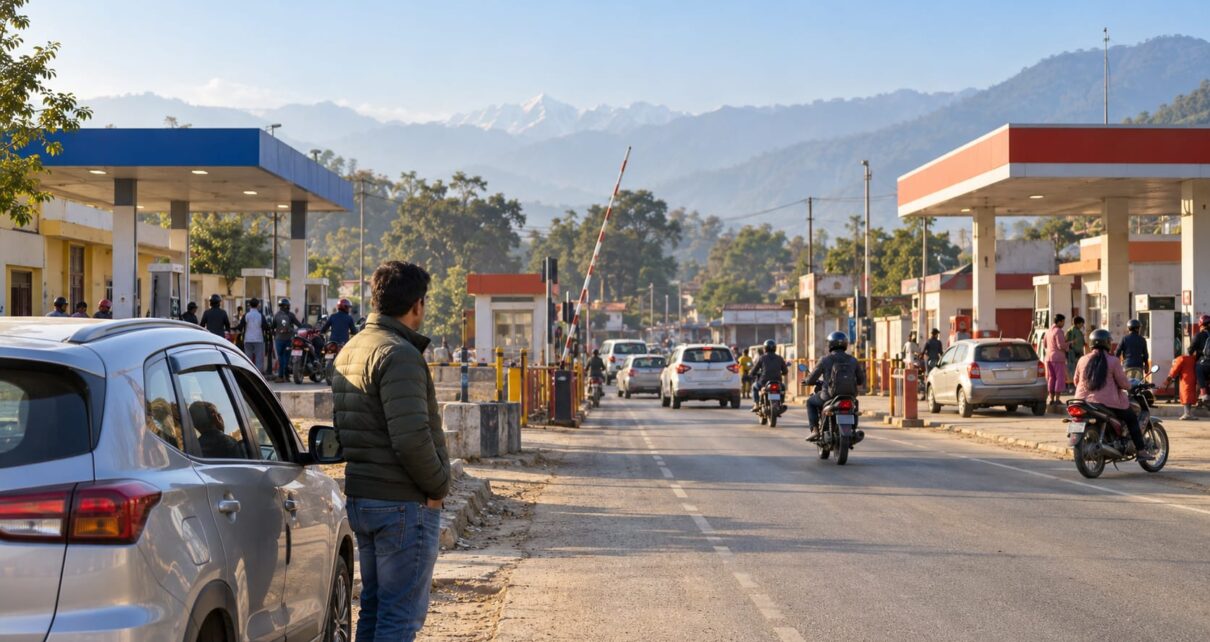
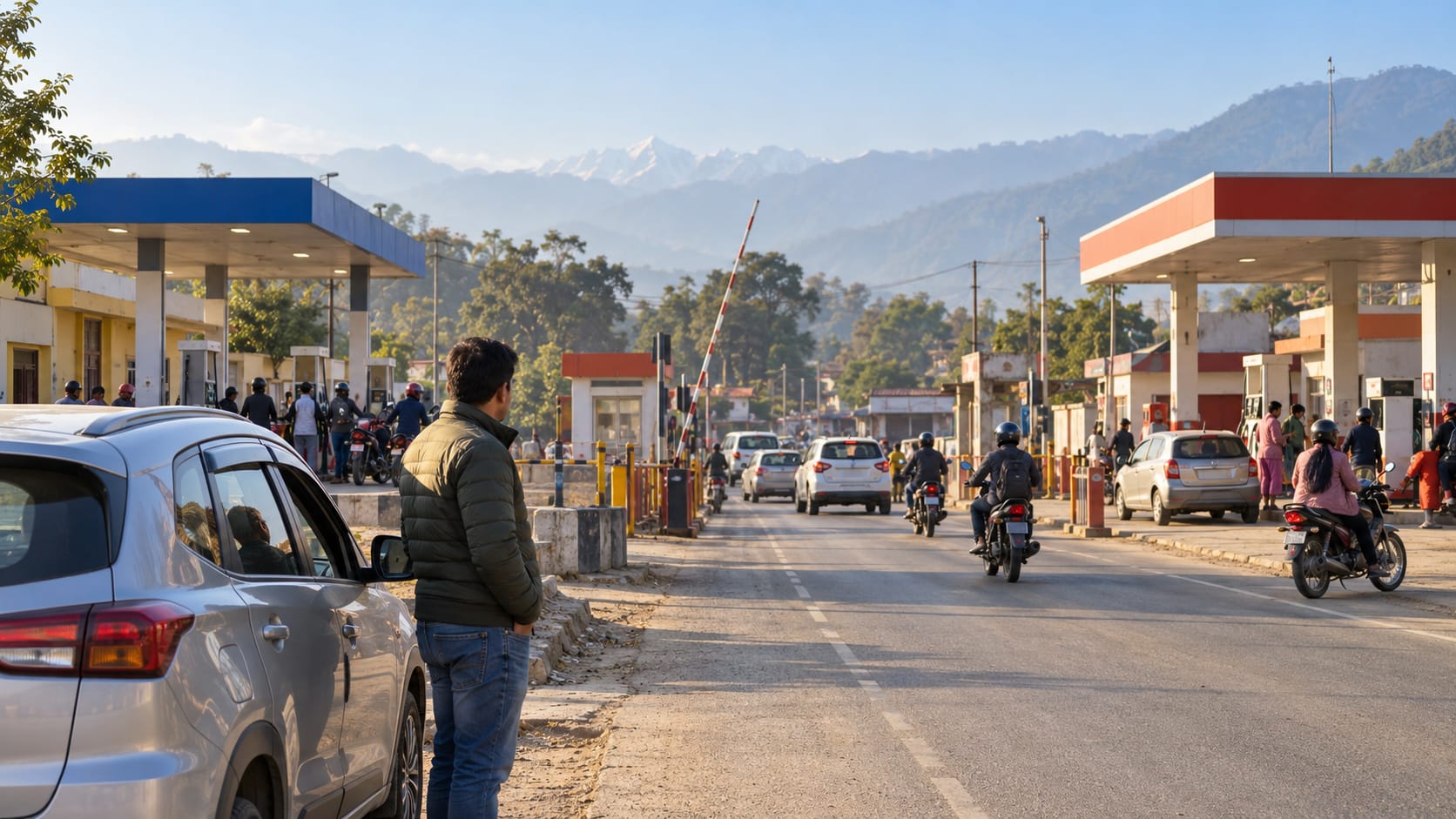
In 2018, the cheaper pump was often on the Nepali side. Around Birgunj–Raxaul, Indian motorists crossed into Nepal because petrol and diesel could be considerably cheaper. Similar patterns were reported elsewhere along Nepal’s borders with Bihar and Uttar Pradesh.
By 2026, the economic incentive had reversed. During the sharp price surge in mid-April, petrol stood at NPR 219 per litre in Kathmandu, while diesel rose to NPR 237 in Kathmandu, Pokhara and Dipayal, the areas covered by Nepal Oil Corporation’s third pricing category. Compared with nearby Indian markets, reported price differences exceeded NPR 60 per litre for petrol and approached NPR 100 for diesel in some comparisons.
The gap was large enough to change behaviour. Nepali vehicles increasingly crossed into India to refuel, putting pressure on filling stations in some Indian border towns.
In Nautanwa in Uttar Pradesh, near the Bhairahawa–Sunauli crossing, the local administration set purchase limits: up to three litres for Nepali two-wheelers, 10 litres for small four-wheelers and 20 litres for larger vehicles. The order followed complaints about hoarding and pressure on supplies for local consumers.
The episode also shows how quickly fuel economics can change. Nepal later reduced prices from their April peaks. By September, petrol and diesel were priced between NPR 197.50 and NPR 200 per litre, depending on the region. The direction may change, but for people living near the border, the calculation remains simple: which side has the cheaper pump?
There is an irony here. Nepal relies on India for its petroleum supplies, yet transportation costs, taxes, government pricing and other charges can produce substantially different retail prices on opposite sides of the same border.
The apparent saving is not the price gap alone. Distance, waiting time, fuel consumed during the journey and purchase restrictions all determine whether crossing the border actually pays.
The same logic appears thousands of kilometres west. In late September, average diesel prices were roughly 25 cents per litre lower in Spain than in Portugal. Spain’s temporary diesel-tax relief added to the attraction for some Portuguese motorists. On a 50-litre fill, that difference meant a saving of about €12.50 before accounting for the journey.
Farther north, the Republic of Ireland offers a useful comparison with Nepal. It shares a land border with Northern Ireland, which is part of the United Kingdom. People routinely cross it for work, shopping and everyday life. Like Nepal and India, the two sides use different currencies. But while the Nepali rupee is pegged to the Indian rupee, the euro and pound sterling float against each other.
Fuel duty, VAT, wholesale prices and exchange rates can therefore change which side of the Irish border offers the cheaper tank.
Research by Ireland’s Economic and Social Research Institute used station-level sales data from 2013 to 2015. It found that outlets in the Republic close to the border recorded about 54 per cent higher-than-expected diesel sales and nearly 15 per cent higher petrol sales than comparable stations farther away.
The parallel with Nepal is striking. An easily crossed border separates two fuel-pricing systems. A noticeable price gap emerges. Consumers calculate whether crossing is worthwhile, and filling stations on the cheaper side gain business. If the price advantage reverses, so can the traffic.
For Nepal, this is more than a curiosity about where motorists fill their tanks. Large and sudden price differences can redirect business across the open border, strain supplies in adjoining Indian towns and create incentives for unauthorised resale. They also show why Nepal’s fuel decisions cannot be viewed only as domestic pricing decisions. Their effects can appear almost immediately on both sides of the border.
Elsewhere in Europe, Luxembourg provides perhaps the classic example. Its relatively favourable fuel taxation has long attracted motorists from neighbouring Belgium, France and Germany. But not every movement of cheap fuel across a border is fuel tourism.
A household crossing legally to fill its vehicle is not the same as transporting fuel across a border for resale. In parts of Africa and South Asia, large price differences have supported informal distribution networks on a much larger scale.
Nigeria historically kept petrol prices low through heavy subsidies. That created a substantial price gap with neighbouring Benin and helped sustain a large informal cross-border fuel economy. Cheap Nigerian petrol did not merely attract motorists; fuel itself crossed the border. When Nigeria removed much of its fuel subsidy in 2023, the consequences were therefore felt outside Nigeria as well.
A comparable, though politically and economically different, story exists between Iran and Pakistan. Iran has historically maintained heavily subsidised fuel prices. Across the border in Pakistan’s Balochistan province, the gap helped create an extensive informal trade in Iranian petrol and diesel.
Once fuel is moved across a border in large quantities for resale, the issue is no longer simply fuel tourism. It becomes a matter of customs, taxation, safety and smuggling. The enormous differences in fuel prices around the world help explain why these incentives arise.
In global comparisons published in late September 2026, petrol in Hong Kong cost more than US$4.40 per litre, while several European markets were also among the most expensive. In heavily subsidised oil-producing countries, motorists paid only a fraction of that amount.
That difference is not simply about the price of crude oil. What appears on a petrol-station sign reflects taxes, subsidies, exchange rates, transport costs, refining and distribution expenses, government policy and competition. Two countries buying petroleum from the same global market can therefore end up with very different pump prices.
Geography also matters. In countries without an international land border, motorists have no comparable cross-border option. The debate instead turns to domestic taxes, government relief and competition.
For policymakers, the lesson is not to treat every cross-border fuel purchase as smuggling. Enforcement should focus on fuel moved for unauthorised resale, unsafe transportation and black-market distribution. Governments must also recognise that large and sustained price gaps, often created by taxes, subsidies and emergency measures, encourage people and businesses to seek the cheaper market. The result can be a shift in business across the border, additional journeys and higher emissions.
From Nepal to Ireland, Portugal to Luxembourg, and Nigeria to Iran, the underlying logic remains consistent.
Governments draw borders and establish different taxes, subsidies and pricing policies. Consumers see something simpler: the number displayed on the fuel pump. They also calculate the distance, waiting time and cost of getting there. When the difference becomes large enough, people respond. Sometimes they cross the border with a car.
Sometimes fuel crosses the border instead.
Suman Tiwari is an Ireland-based cybersecurity professional and writer focusing on technology, resilience and public policy.