Was an opportunity to let go Nepal when the providence was knocking at its door to make it a part of its sovereignty, another Nehruvian policy blunder, as it was a vis-a-vis Tibet and Kashmir, which is reflecting so adversely on India today ?
Vivekanand Jha, Ranchi: Pranab Mukherjee’s autobiography, The Presidential Years, has once again set the cat among the pigeons. Especially coming as it did, against the backdrop of India losing its traction in another neighbourhood to a most powerful Asian neighbour, China, has once again kick started a political storm: Was Jawaharlal Nehru, guilty of committing another blunder by rejecting the offer of Tribhuvan Bir Bikram Shah to merge Nepal into Union of India, especially when Nepal too, after Pakistan, has begun giving the mandarins in the South Block the sleepless nights?
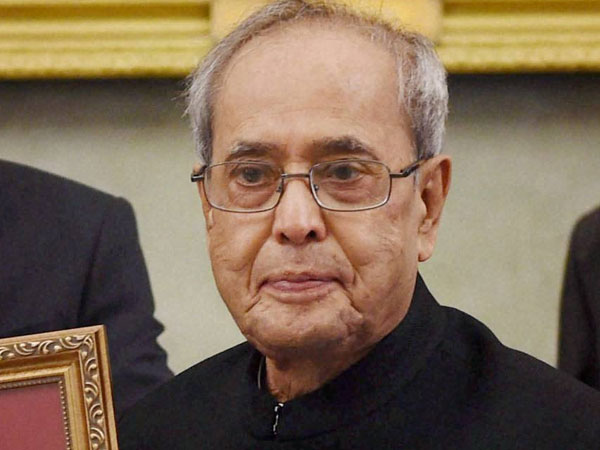
Significantly, Jawaharlal Nehru’s cautitous moves to decline the overture, on the ground that Nepal all along had been an independent country, enjoying integrity and sovereignty and, therefore, its independence should not be compromised at the altar of its proposed merger into Union of India. But then, Pranab Mukherjee writes, ‘ Had it been Indira Gandhi, in place of Jawaharlal, she would have certainly seized an opportunity to make Nepal an integral part of India’.
Whereas the revelation made by Pranab Mukherjee has already stirred the hornets nest, across India and Nepal, with Nepali ambassador in India, Nilambar Acharyajee, already dismissing Pranab Mukherjee’s revelation as nothing sort of rumour, the fact cannot be denied that a leader of the stature of Pranab Mukherjee was never given to cheap sensation or creating a buzz around gossips or fabricating lies, especially when he is no more. Notwithstanding the authenticity of the revelation, the host of questions that this revelation has engendered is, that how Jawaharlal Nehru, as in case of Tibet, so in case of Nepal, presuming that Pranab Mukherjee’s revelation is authentic, drastically failed to realise the strategic gravity of geo-political advantages of both Tibet and Nepal.
In the case of former, the British, before leaving India, after handing over the power to indigenous government, had sufficiently made it clear to Indian leadership about the status of Tibet, being the buffer state, should well have been under the patronage of independent India. No wonder managing of the foreign and Defence affairs of Tibet was logically and legitimately vested in India. But then policy paralysis, significantly brought about by Nehru’s legendary indecisiveness, induced by his own world of ‘make believe’, resulted in soft pedaling the grave and strategic issues that so humungously contributed to India’s nemesis in the decades to come. Apparently, while China was going gung ho, with all its militaristic preparation to annex Tibet, Jawaharlal, in his own impragmagism, conjured up an image of an ‘Asian solidarity’ even when China was ostensibly investing all its efforts to make Tibet, an independent nation, a part of its sovereignty. Regrettably, while China was almost knocking at Tibet’s door, the gullible Jawaharlal Nehru, in an act of inspidity brought about by the refusal to perceive the strategic gravity of the geo-politics, inevitably allowed China to gobble up Tibet, without India offering a semblance of resistance.
Worse still, Nehru’s obsession with his Panchsheel and Hindi-Chini Bhai-Bhai, proved India as a weaker nation in the eyes of China, which, consequently needed no reciprocity. Intriguingly, India’s meek recognition of Tibet being an integral part of China, inevitably robbed it of any further manoeuvring space. No wonder while China belligerently annexed Tibet, with India obsequiously acquiescing in its diabolical design, the latter jeopardised its own long term strategic interest not only by way of sacrificing Tibet, but perpetually providing leeway to China to claim Arunachal Pradesh as its own territory. Instead, if India had safeguarded its own strategic interest in Tibet, the jingoistic China, which is seeking to assert itself so aggressively in Asia, could have been kept under check and balance. K.M. Panikkar, the then ambassador of India in China, too was hand in globe with Chinese leadership to mislead Nehru on the happenings going on the Tibet front. Ironically, going against all past convention, Nehru had granted Panikkar the extension of his tenure as an envoy in China. No wonder 1959, which witnessed China taking over Tibet, also was the trigger for 1962 war with India.
Unfortunately, India ended up with a bloody nose, fostering a robust sense of confidence in China, as Global Times, the mouthpiece of Communist Party of China, continues to trumpet. Further, Nehru’s blatant failure in accepting the offer of Tribhuvan Bir Shah to merge Nepal into India, was another Himalayan blunder that had left India strategically exposed to danger from hostile China from Nepal side. Also, Nepal’s integration with India, which was a welcome step for Madhesi, if not for Paharis, the suppressed community in Nepal, would have resulted in an equitable development of the entire Nepal.
The continued discrimination against Madhes by the power elites from Paharis, has morphed into an eternal power prejudice against the people of Terai region. Significantly, even the new Constitution which came into force in the recent years, failed to address the urge and aspiration of Madhesi. On the contrary, it provided a viable platform for K.P.Oli Sharma to cash in on anti-India sentiment to rise to power. No wonder the rise of K.P. Oli, was the precursor for a rapid inroad of Chinese influence in the power corridors of Kathmandu. With Chinese BRI(Belt and Road Initiative) gaining traction with the power elites, Nepal is fast deteriorating as another Pakistan for India. Worse still, Nepal’s claim of Indian territory like Lipulekh, Kalapani and Limpiadhuara, has already added fuel to fire. Yet, there is a silver lining: The arrival of the foreign minister of Nepal in New Delhi where the emphasis was laid on renewing the long term relationship between the two nations. Also, the visit of Samant Goel, the RAW chief to Nepal and his meetings with the Prime Minister Oli and the opposition leader Bhattarai, is considered to have lubricated the new energy into the relationship between the two neighbours. In hindsight, the revelation of Pranab Mukherjee that Nepal had desired to be an integral part of Indian sovereignty, yet Jawaharlal Nehru’s refusal to go ahead with the offer extended to him by Tribhuvan Bir Shah, was a historic opportunity that India had missed. Had Nepal been a part of Indian sovereignty, as Tribhuvan Bir Shah intended it to be, India’s border in the northern side would have been secured. Besides, Madhes would never have been eternally discriminated against as they are in the present dispensation of Nepal. Vivekanand Jha is an author and Public Intellectual.
( Note: This article of mine is based on the revelation in The Presidential Years, autobiography of Shri Pranab Mukherjee, the former President of India. The piece only analyses the policies, their successes and failures, and at no place claims to have a shred of evidence to substantiate what Mr Pranab Mukherjee reveals in his book. This is an academic article written from the perspective of policy making and analysis of foreign policy of India. The writer takes this special occasion to convey that he deeply respects Nepal’s sovereignty and integrity and consequently seeks forgiveness if anyone feels hurt, for this article not even remotely contemplates causing any hurt to anyone. This article is written only for an academic pursuit.)