Basanta Lohani. Indra Chowk is more or less the same as it was some seventy-three ago except the black-topped road in the place of slabs and a renovated temple on the western side. It was called Sahar, the city by all those living beyond Ranipokhari and adjoining Tundikhel where the kith and kin of Rana rulers used to roam on horseback each morning. This sprawling field was wild, nature’s best, unhindered by present-day barriers and truncations. It was so fog-bound during the misty winter that it eluded vision even at a near distance and its size appeared as if one could not come to its other end. It served as a military parade ground under the command of a colonel. Those on horseback would gallop or trot to suit their whims and fancies. That was their pastime, an entertainment, and also a means of getting adulation from the people who were dehumanized by religious sanctions, state authority, property relationships, and social hierarchy that formed the setting.
All this was designed to condition people’s minds to such an extent that they were not just in rapt attention but in a meditative mood to get a glimpse of their masters for it was their cherished hope that an eye cast with favor would fructify their lifelong mission. The spreading Banyan tree called Khari ko bot encased in a platform almost in the middle of this Tundikhel attracted everybody’s attention because this platform was used to make military announcements. Beyond this, the Sahar ended. As such, across it towards the west was our present-day Bhotahiti marking the boundary of Sahar. Along with it, towards the North was the nation’s first learning center built for the rulers’ children called Durbar School that was still the way it is now and along the south was the nation’s first medical center Bir Hospital which was completely demolished and replaced with the new concrete buildings of today. For those of us living in Dillibazar or Gyaneshwor, the only means of transport was to walk to Sahar for buying necessities and for other such city facilities.
If any two persons happened to face each other at Bagbazar, one would say ‘ I’m going to Sahar’ while the other would reply ‘I am returning from Sahar. Only this portion of Kathmandu was called Sahar the way people living outside used to call Kathmandu ‘Nepal’. Durbar School that magnificently faced Rani Pokhari was where we had our classes. It was free and perhaps as a bonus, we used to get even free filling tiffin. Our school had an extra section in a building right in front of the present Biswajyoti Cinema Hall. We later moved to that building. Rudra Raj Pandey was our Principal and I remember, Bhattaraibaje taught us history and Amarbau geography. It was the same building that later housed Shrestra Pathshala, School for Accounting, and much even Montessori School. SAARC Summit has now got the road widened between this government building and Viswajyoti.
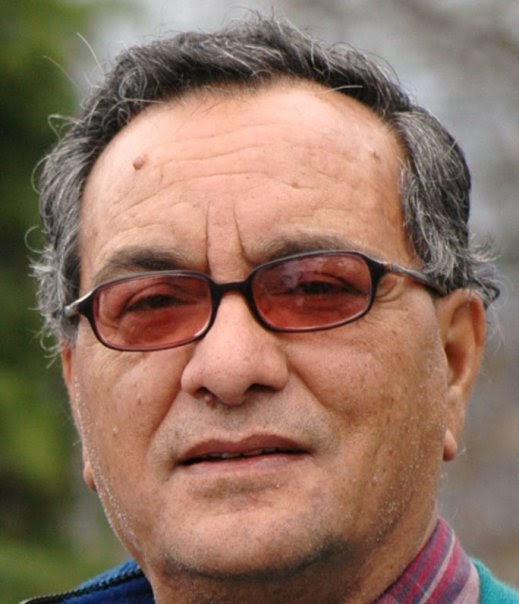
This is what an old man who is nearing eighty-seven tells me after jogging back on his memory lane. This self-made man who holds an impeccable character does not have glorious academic degrees. A man who always relied on hard work, practical wisdom, and discretion is a wonderful blend of determination and love towards his country. He introduced modern building technology which is called reinforced cement concrete construction to this country. He vividly recollects the moment how he, as a teacher of civil engineering, had lined up together with the Principal of the Engineering School Kul Ratna Tuladhar and the chief of the Public Works Department Jyan Bahadur Pradhan when the then ruler Juddha Shumsher fancied having a reinforced concrete building made. He took the challenge and built the first such building, standing since 1945 between Tri-Chandra College and the eastern side of Rani Pokhari. It is called Saraswati Sadan. When we have to evaluate the work like this, we need to get back to that time, that is fifty-six years back when it was unknown in Nepal and he had to start everything from scratch. That part we can talk about later. Now let us proceed to the corner meeting
He remembers this friend of his who became a martyr in 1941. And, he tells me so confidently that, though he was not a below-average student, there were miles of difference between him and his friend when it came to the level of consciousness. There was some sort of whispering among friends about this man. So one day he inquired with his friend “ I hear that you are involved in some other activity, tell me what is that?”
This friend replied with a kind of request “: can you come with me today and then you will know yourself instead of explaining it now” He followed him. They walked together to Indira Chowk and there both of them saw some sort of an unusual human movement. His friend disappeared. With a hung out face and not knowing what to do, this man watched over the eastern temple of Indra Chowk where the human movement was seen on the platform of this temple where now woolen rugs and carpets are sold. On this platform, suddenly from nowhere, his friend leaped through with the lightning charge of a cat and started his speech about the rights of the people. Barely had he spoken for five minutes or so, the police came and dragged him down furiously.
And, this man was so afraid of the whole thing that he ran from the adjoining street of Wotu Tole, like a deer in danger, as if he was saving his life from the greatest ever disaster. This man so scared to death then was Beda Prasad Lohani, my father. And, his friend whom he never saw afterward and only heard that he was shot to death in Shobhahagabati was Ganga Lal. My father narrates this corner meeting candidly and admits how timid he was in terms of political consciousness that Ganga Lal was so rich in at that school-going age. He further tells me that it was this consciousness or awareness that makes the difference between individuals even when the human element is the same and even academic qualifications may be the same. The combinations between head and heart are infinite and from this infinity emerge great people destined to do great things for the cause of humanity. Ganga Lal is a great soul and I join my father to pay tribute on this occasion of Martyr Day.