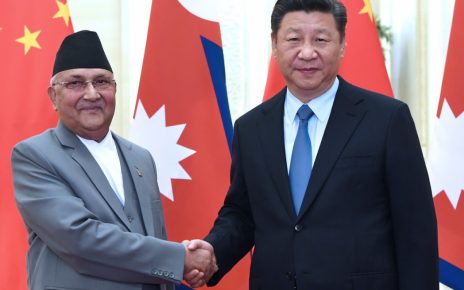
Kathmandu, July 17, 2025. Prime Minister KP Sharma Oli’s government faces a serious political setback after the Janata Samajbadi Party, Nepal (JSP-N) formally withdrew its support on Wednesday. The move not only strips the ruling coalition of its majority in the National Assembly, but also raises fresh doubts about the government’s ability to pass critical legislation, including the controversial Land Reform Bill, and execute promised reforms.
—
A Government in Minority
With just 27 out of 59 seats now under the ruling coalition’s control in the National Assembly, the Oli-led government is in a clear minority. A minimum of 30 votes is required to pass legislation in the upper house. The withdrawal by JSP-N has shifted the balance of power in favor of the opposition, which includes the Maoist Centre, Unified Socialist, and other smaller parties.
This shift significantly complicates the government’s legislative ambitions. The Land Reform Bill, which has stirred debate over land ownership and distribution rights, is now less likely to advance without cross-party consensus. More broadly, the government could struggle to move any bill through both chambers of Parliament.
—
Why Did JSP-N Withdraw Support?
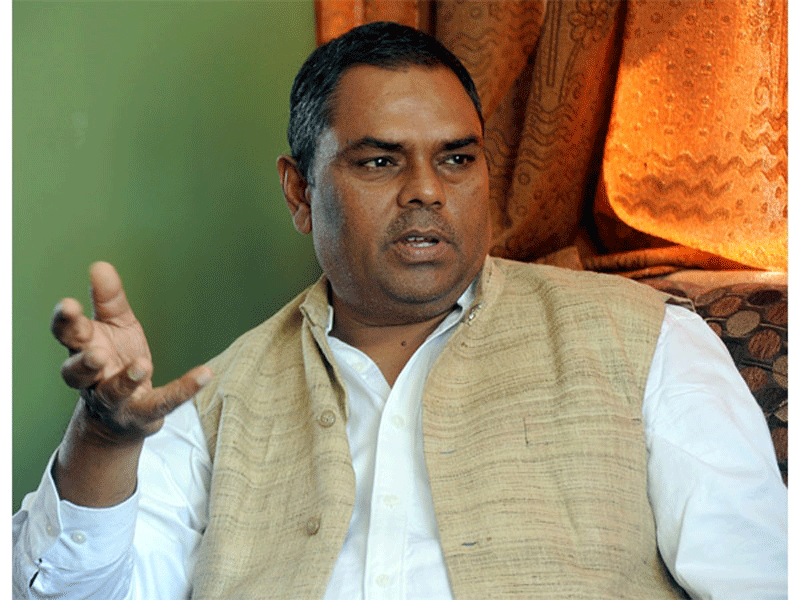
JSP-N, led by veteran politician Upendra Yadav, cited 11 reasons for its decision, ranging from governance failures to economic mismanagement. Key accusations include:
Inability to uphold good governance and control corruption,
Widespread impunity, cronyism, and the influence of middlemen,
Failure to revive Nepal’s sluggish economy or deliver a balanced budget,
Neglect of marginalized groups including Madhesis, indigenous communities, Dalits, and women,
Inaction on constitutional amendments and federal reforms,
No progress in releasing political prisoners from past movements,
Lack of tangible improvement in healthcare, education, agriculture, and employment generation.
Yadav emphasized that JSP-N had initially supported the government with the hope of reform. “But the government has failed to show commitment on fundamental issues,” he said. “We are stepping into the opposition, but will support legislation that truly serves the national interest.”
—
Analysts: Trouble Ahead for the Oli Government
Political analysts say the move is likely to paralyze legislative functioning.
> “The government no longer has a majority in the upper house. It will now struggle to pass even routine legislation, let alone contentious bills like land reforms or constitutional amendments,” said Shyam Shrestha, a veteran political commentator.
Another analyst, Vijaykant Karn, praised JSP-N’s decision as a “mature step” in contrast to the typical power-centric politics of smaller parties. “This is a message that representation must be issue-based, not power-based,” he noted.
—
Loss of Supermajority: Amendment Agenda Doomed
The withdrawal of support from JSP-N, coupled with a similar decision earlier by the Nagarik Unmukti Party, has deprived the Oli government of its two-thirds majority in the House of Representatives. The two-thirds majority—184 votes—is essential for any constitutional amendment, one of the government’s flagship promises.
Last year, the Oli government, backed by the Nepali Congress, formed with an agreement to pursue amendments to address issues of inclusion and federalism. That now appears unlikely, especially with mounting tensions between the government and smaller coalition partners.
—
Conclusion: A Moment of Reckoning
JSP-N’s decision reflects a broader shift in Nepal’s political climate. Support is no longer guaranteed by mere coalition arrangements — it must be earned through delivery, governance, and respect for federal principles.
For the Oli government, this is a critical moment. Without urgent course correction on governance, inclusion, and economic revival, the administration risks further fragmentation and public disillusionment.
The road ahead will be rocky — and the countdown to political recalibration in Nepal may have already begun.