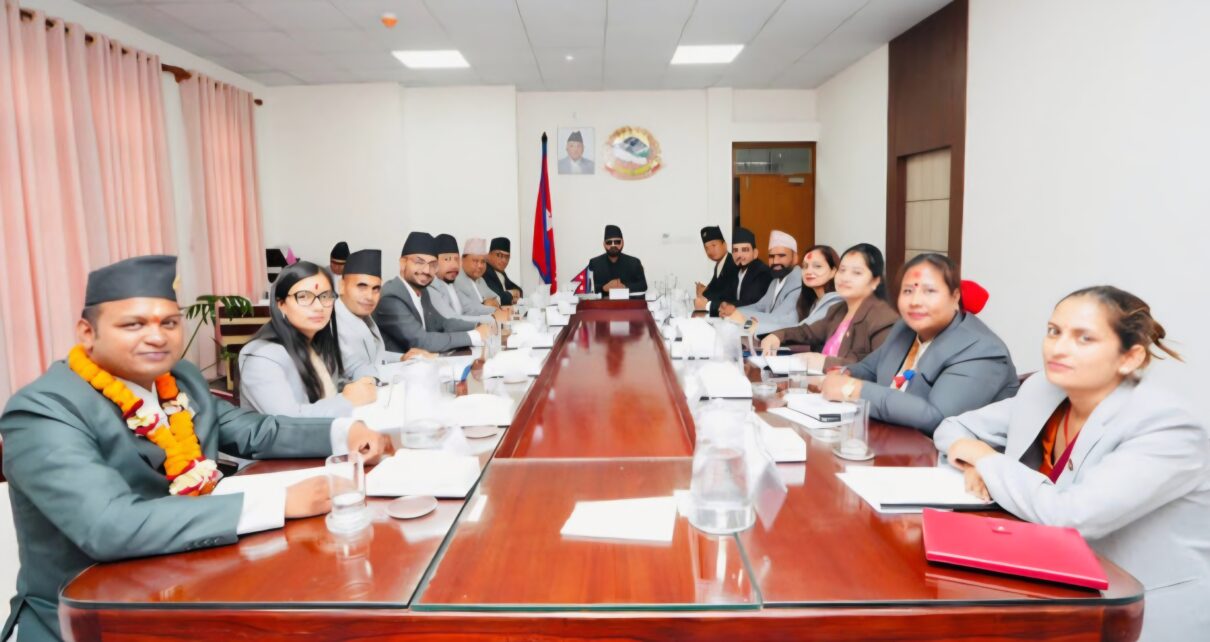
 Kathmandu, 30 march 026. Balendra Shah has been sworn in as Nepal’s Prime Minister in a grand ceremony, receiving blessings from representatives of various religious groups. His rise to power marks a significant shift, as he is the first figure from the Madhesh region to hold the office. His victory was particularly striking in Jhapa, where he defeated a key leader from the CPN-UML party, signaling a rejection of established political figures.
The backdrop to Shah’s ascension is a recent youth-led movement (Gen-Z) and its violent crackdown. In a swift move the day after taking office, Shah ordered the arrest of former Prime Minister K.P. Sharma Oli and former Home Minister Ramesh Lekhak based on a commission’s report into that crackdown. This action appears aimed at appeasing the movement’s supporters.
The text portrays Nepal’s three major political parties—Congress, UML, and Maoist—as being in disarray. It criticizes past governments for failing to utilize domestic resources, leading to a reliance on foreign remittances, and for being unable to curb corruption. A key point of critique is the government’s tendency to try and control the media, a trend that backfired during the recent protests, where social media like TikTok became the dominant platform for public expression.
While Shah’s popularity stems from his image as a charismatic artist and his perceived outsider status, his effectiveness is questioned. His tenure as Kathmandu’s mayor is noted as not having met public expectations. The text warns that if his new government fails to deliver tangible economic and social reforms within six months, he risks joining the list of failed leaders. Ultimately, it argues that genuine, accountable governance is the only solution to Nepal’s deep-seated problems.