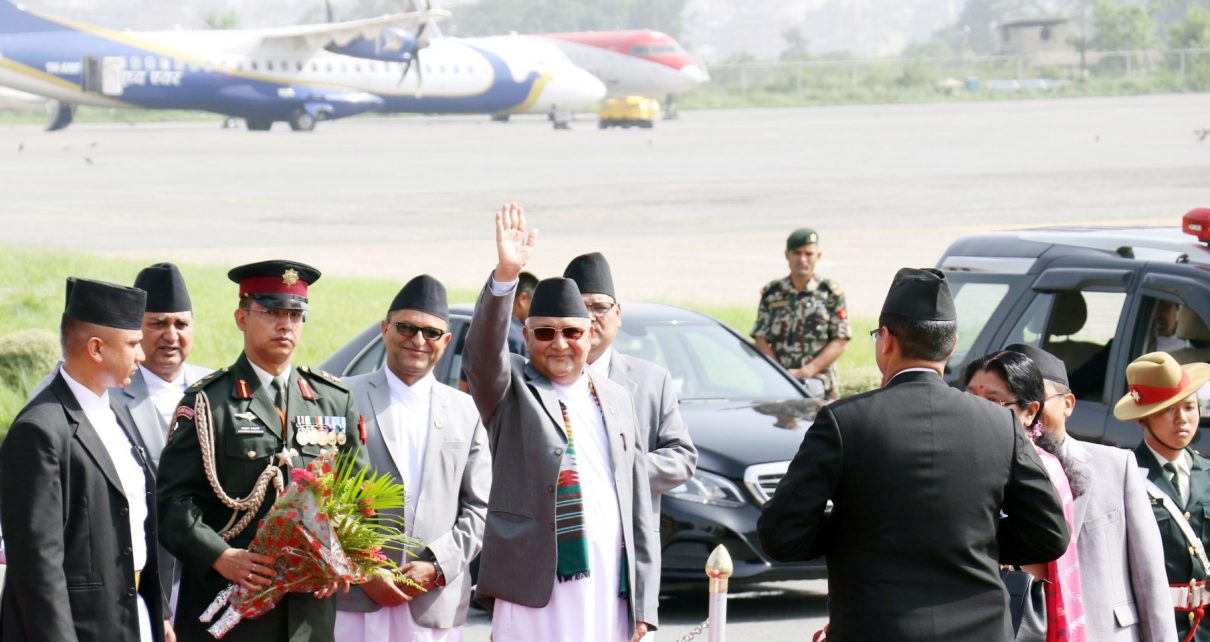
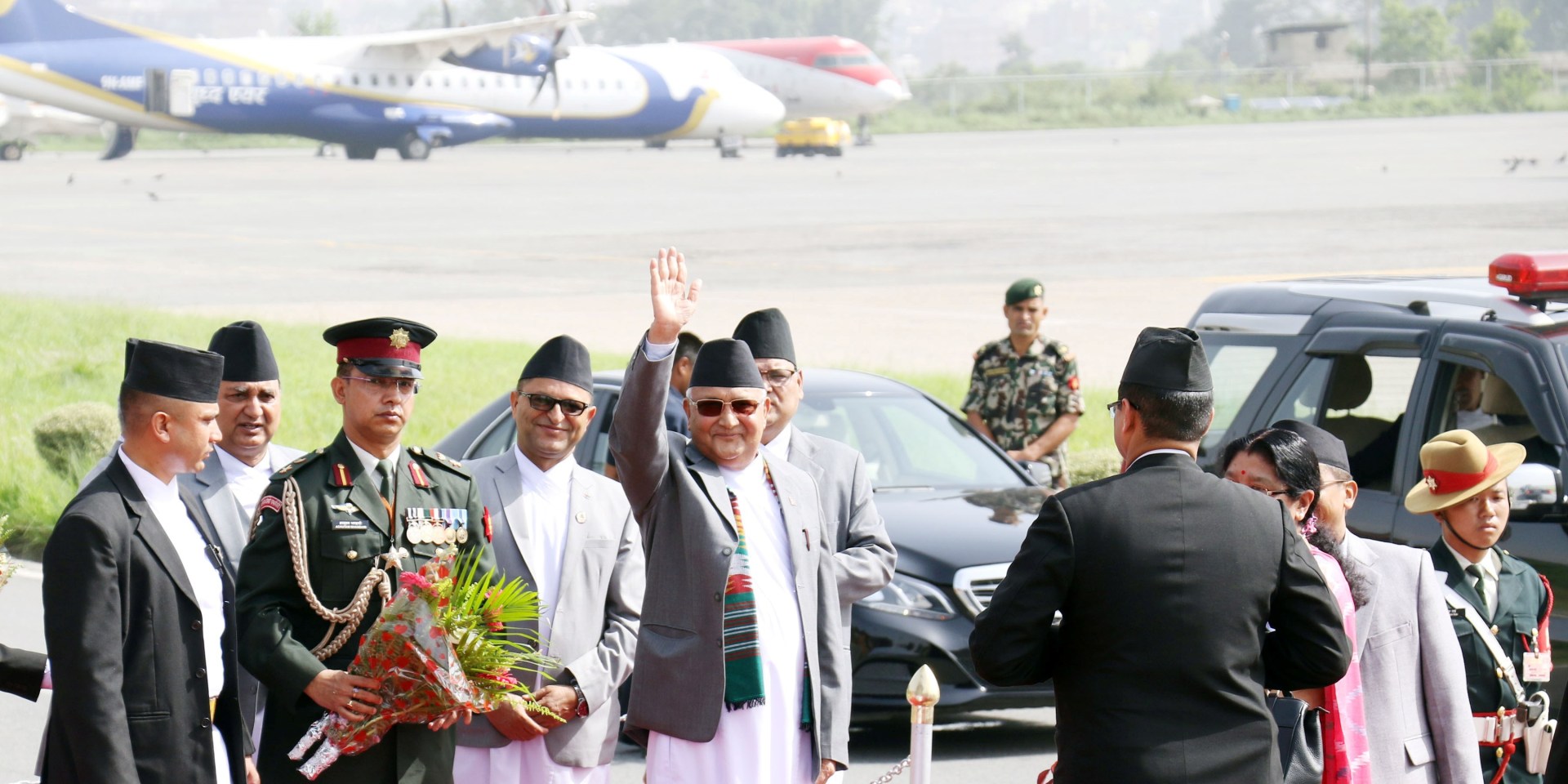
Prime Minister Oli returned home onWednesday evening after visiting Vietnam and Cambodia
Kathmandu, 14 july.Introduction: Prime Minister KP Sharma Oli’s much-anticipated visit to India has yet to materialize, despite earlier expectations that it would follow shortly after his return from Spain. More than a week has passed, but no official date has been fixed. Is this merely a case of procedural delay, or is Oli’s political rhetoric playing a disruptive role in diplomatic scheduling?
Progress, But No Confirmation Yet
Following Oli’s return from Spain, Nepal’s foreign ministry had initiated efforts to finalize the India visit. A senior official even traveled to Delhi prior to Oli’s departure, but no progress was achieved, partly because Indian PM Narendra Modi was then preparing for a trip to Ghana and other African nations.
Though Modi returned on July 9, there’s been no significant movement regarding Oli’s visit. According to diplomatic sources, preparations are ongoing, and the visit may happen in the second or third week of the Nepali month of Saun (late July to early August). However, there is still no confirmed date.
Backstage Diplomacy and Political Efforts
Nepal’s Foreign Minister Dr. Arzu Rana Deuba has been actively working to facilitate the visit, which holds symbolic value for her as well. She has made multiple visits to India, and two high-level meetings between Modi and Oli (in the U.S. and Thailand) were held in recent months to build momentum.
Moreover, senior UML leaders also visited Delhi to smoothen the process. Despite all this, Oli’s India trip remains uncertain—raising questions about what might be holding it back.
Is Oli’s Language a Diplomatic Obstacle?
Foreign affairs experts suggest that Oli’s assertive remarks on India might be causing discomfort in New Delhi. Since becoming prime minister, Oli has openly pressured India on sensitive issues such as the EPG report and border disputes. His consistent emphasis on Nepal’s sovereignty may have rubbed Indian policymakers the wrong way.
In a political document presented at a recent UML central committee meeting, Oli acknowledged that Nepal’s foreign relations had been “disturbed, imbalanced, and weakened” in recent years, a statement indirectly pointing fingers at India. This kind of language has added fuel to speculations of diplomatic strain.
Expert Opinions – Need for Dialogue and Clarity
Former diplomat and foreign affairs analyst Dr. Tank Karki believes delays like this are not unusual in Nepal–India relations. However, he also emphasizes that if India has reservations, it should openly communicate them so both nations can resolve issues and move forward. Bilateral visits should be regular, given the depth of the relationship, he argues.
UML leader and foreign affairs expert Bishnu Rijal, on the other hand, is skeptical that Oli’s visit will happen soon. He believes the decision lies entirely with India. “There are matters on which India must clarify its stance,” he says. “Nepal cannot initiate the visit alone; there needs to be mutual readiness and purpose.”
Conclusion:
The delay in Prime Minister Oli’s India visit reflects more than just scheduling issues. His political tone and strong nationalist stance may be complicating matters diplomatically. In geopolitics, especially with close neighbors like India, diplomacy demands balance, patience, and tact. To strengthen the Nepal–India relationship, both countries must commit to open communication, mutual respect, and pragmatic diplomacy—while leaders like Oli must be mindful of how rhetoric can influence regional dynamics.