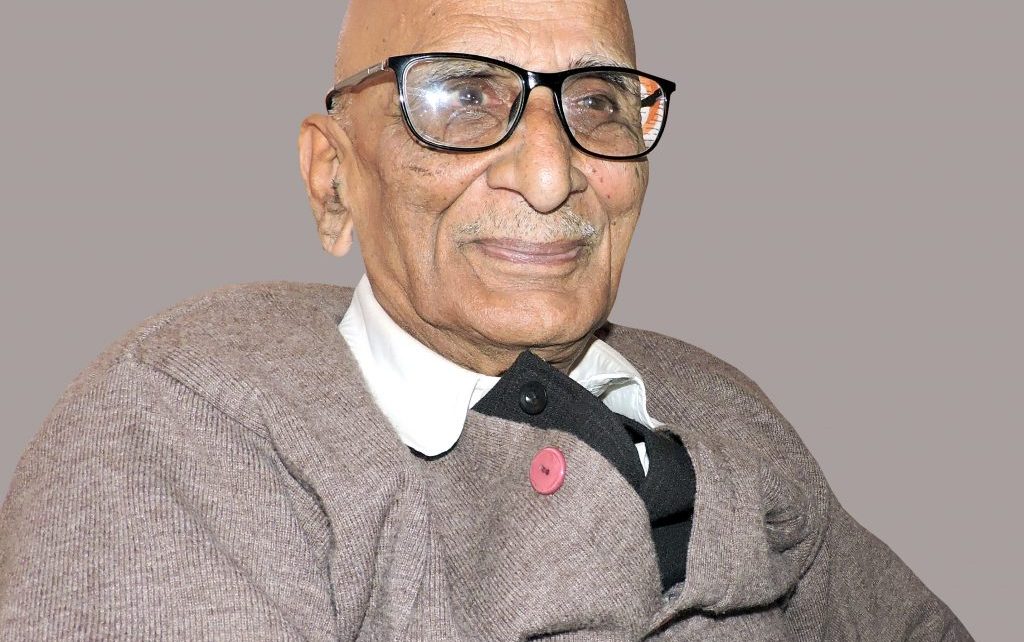
Change in electoral system is needed

By Birendra P Mishra (former election commissioner of Nepal) kathmandu. Every democratic country has its own electoral system to choose its representatives. All elections must be free and fair, on the one hand and economically viable with level playing field for all those who intend to participate in, on the other. Sadly, elections are getting costlier everywhere. In our neighbourhood, India is having seven-phase elections to its House of Representatives (Lok Sabha). Contesting election is getting costlier, as parties are depending on anonymous businessmen, leading to a lack of transparency. A senior fellow at the Carnegie Endowment for International Peace holds that elections are getting more expensive for many structural reasons: there is a growing population, increasing political competition, voter expectations of handouts in the form of cash and other inducements , and technological change ,which means greater outlays for media and digital outreach.
In Nepal, we had a general election to the House of Representatives (Pratinidhi Sabha) in 2017-8 for 275 seats. Elections were held for 165 seats under First-Past-the-Post (FPtP) system and for 110 seats under Closed List Proportional Representation (PR) system. It is reported in the print media that the Election Commission (EC) spent ten billion rupees to conduct elections and it is believed that almost equal amount was spent by the candidates on their election campaign despite a spending limit of two and half million fixed by the EC. It is felt that individual candidates in local level elections have spent millions of rupees in 2017. Thus, the high cost of electioneering has increased the level of political corruption, which draws immediate attention of the people. Hence, an electoral system has to be evolved, which may control the rising political corruption.
Generally, there are two extreme views that represent two major electoral systems: First-Past-the-Post (FPtP) system, which is based on plurality of voting (where the candidate, who gets the most votes is elected);and Proportional Representation (PR) system under which representatives are elected proportionally as per numbers of votes received by the party. It translates votes received into representation (seats won).
These two opposite systems have some merits and also some demerits. In the least developed countries and also in developing countries, FPtP has bad effects on politics. It is a fact that government formation is easy as candidates get elected with the highest numbers of votes without needing majority. In multi-cornered contests, sometimes the candidate with least votes is elected, as votes are divided into many candidates. In reality, majority of votes get wasted by way of non-representation. Voters are lured and intimidated to cast their votes in favour of a particular candidate, as voters are largely poor and uneducated. Caste, clan, ethnicity and creed play important roles in winning elections. Goons, criminal and contractors with easy money are gradually entering electoral politics and are capturing state power. The quality of politics has deteriorated, as personal interests of making money have shadowed the politics of public interests and welfare of the masses is no longer the goal of political leadership.
Comparatively, PR system is a less expensive system. In it, candidates’ personal credibility and integrity are not at stake. Sadly, in a country like Nepal candidates are chosen not fairly but on subjective basis. Senior political leaders use to nominate their kith and kin for PR seats. Sometimes, money too plays a major role for getting nomination from the party. Ironically, in Nepal, the closed list of PR system is allowed to change the priority of names to suit the leaders. It is commonly claimed that the representatives elected under PR system are no real representatives, as they have no specific geographic areas to represent or have no geographic constituencies,
Keeping in view the merits and demerits of these two systems, it is felt that a new system should be evolved by integrating the merits of these two systems, on the one hand and discarding their demerits, on the other. The effort of integrating will make yet another hybrid system to suit countries like Nepal which adopt both Plurality/Majority system and PR system to elect legislators to run the government in a democratic way. In the proposed system, PR system can be introduced to limit the seats of the parties as per their share of votes or their proportionality in translating the votes received into seats won. In PR system, not only the link between elected legislators and their constituents is weakened, but the link between voters and their representatives is also destroyed. Hence, candidates under PR will not be declared elected only as per list submitted by the parties. But to get elected they have to obtain at least highest or plurality of votes as being done under FPtP system. This will make candidates responsible to their voters and voters will know their real representatives. Significantly, under FPtP all candidates having highest or majority of votes will not be elected, as the seats available to the parties are limited under PR scheme. All parties will have seats in proportion to the votes received. The number of seats will be determined as per the natural threshold.
To get every constituency represented, the one-constituency-districts will elect their representatives under FPtP only. The seats won by the parties will be adjusted against their proportional quotas. Similarly, the smaller parties, whose shares will be meager, will get preference in getting their nominees elected on priority basis even if these parties do not win plurality of votes in any constituency. Similarly, independent candidates will also be elected with plurality of votes. Rest of these seats will be proportionally won by the major parties with plurality or majority of votes in individual constituency.
Elections, which are becoming ever costlier, need immediate attention of all stakeholders. If the election is conducted under integrated mixed system, which integrates the merits of FPtP and PR, it will not only limit the cost of electioneering but also make elected representatives responsible to their voters. Elections for 110 seats under PR will continue as they were conducted and there will be one ballot for both segments to reduce the cost of elections. Interestingly, the reformed system can be used in India as well by making every state a PR constituency with minimum two seats.
The logic behind the integration is winning election by getting highest voted in a constituency will not guarantee the victory of the candidates, the seats to be won by the parties are limited in proportion to the votes received on state or national basis under PR. If winning election by using money and muscle is not guaranteed, no candidate will take the risk of wasting money and using muscle power in any election to get the highest or majority of votes. The psychology of uncertainty of winning will deter the candidates to spend limited money in the election will reduce political corruption significantly.