
Dr. Vidhu Prakash Kayastha
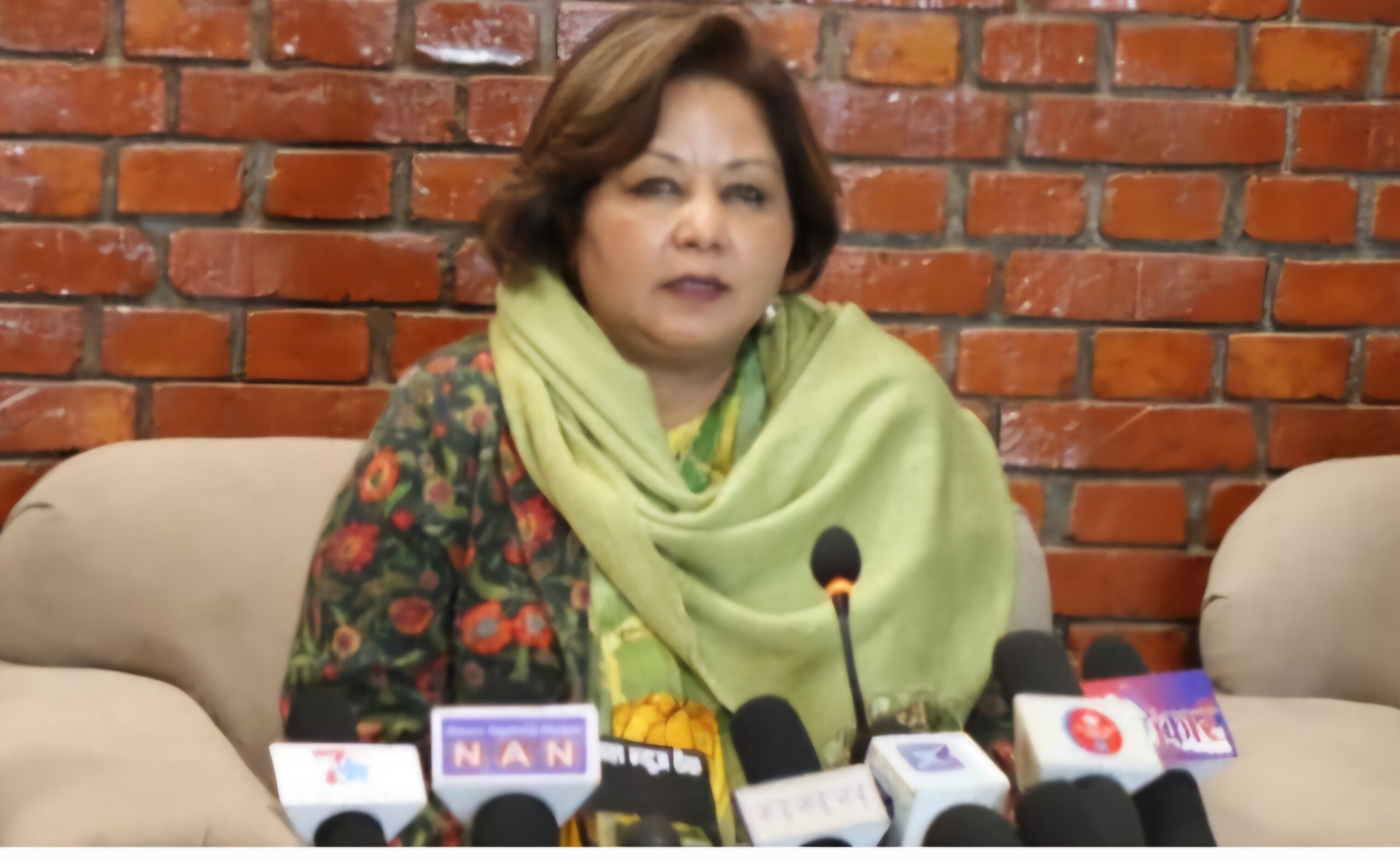
Nepal’s foreign policy is intricately linked to its two large neighboring countries—China and India. Balancing relationships with both powers is a delicate task, and Nepal’s Foreign Minister Arzu Rana Deuba has played a crucial role in this diplomatic juggling act. Her recent 11-day visit to India was a landmark in her diplomatic career, but it was also marked by her personal ambition to rise to the position of Nepal’s Prime Minister, a goal she hopes to achieve with the strategic support of India. This article delves into the significance of her diplomatic trip, as well as the personal aspirations that may influence her political trajectory.
Arzu Rana Deuba’s Prime Ministerial Ambitions: A Relationship with India at the Core
Arzu Rana Deuba’s personal ambition to become Nepal’s Prime Minister cannot be divorced from her foreign policy approach. Her long-standing ties with India, combined with her family’s political legacy, place her in a unique position to leverage India’s support. For Rana Deuba, a strong and positive relationship with India is not just about national interest; it is also an essential pillar of her own political future.
By maintaining close diplomatic relations with India, Arzu Rana Deuba seeks to position herself as the leader who can navigate Nepal’s complex geopolitical landscape, manage disputes, and deepen economic cooperation. It is understood that her ambitions for the premiership are tied to her ability to secure political backing from key international stakeholders, and India, as Nepal’s largest neighbor, plays an undeniable role in this calculation.
The Geopolitical Context of Nepal’s Foreign Relations
Nepal, a landlocked nation sandwiched between two giants—China and India—has historically maintained a balanced approach in its foreign relations. India shares deep cultural, economic, and geographical ties with Nepal, whereas China has become an increasingly important partner in Nepal’s economic development, especially through initiatives like the Belt and Road Initiative (BRI). The evolving political and economic landscape in Nepal, however, means that foreign policy is not just shaped by national interests, but also by domestic political aspirations.
For Arzu Rana Deuba, who has served as Nepal’s Foreign Minister since 2021, these international relations are not only a professional responsibility but also a political stepping stone. Her recent 11-day diplomatic visit to India was more than just a routine foreign trip; it was a calculated move in her broader political journey, which is intricately linked to her ambition to become Nepal’s Prime Minister with India’s tacit support.
Arzu Rana Deuba’s Role in Nepal’s Foreign Policy
Arzu Rana Deuba has long been a prominent political figure in Nepal. As the wife of former Prime Minister Sher Bahadur Deuba, she has had significant exposure to the political landscape of Nepal, and her political career is closely tied to her family’s legacy. After assuming the role of Foreign Minister, she has worked to balance Nepal’s relations with both China and India, often seeking to maintain Nepal’s neutrality while advancing its national interests.
Her diplomatic initiatives reflect a pragmatic approach to foreign policy, but they also underscore her ambitions for political leadership. While serving in the current role, Rana Deuba has navigated complex issues, such as territorial disputes with India and increasing economic dependence on China. Yet, her efforts to restore Nepal’s traditional ties with India stand as a key element of her larger political strategy. Nepal’s Prime Minister, Khadga Prasad Sharma Oli, is expected to visit India soon, a move that has sparked significant diplomatic attention. However, Foreign Minister Arzu Rana’s recent efforts to convince India to extend a formal invitation to PM Oli have not yielded results. Despite her diplomatic engagement, India’s reluctance to invite Oli underscores ongoing tensions and unresolved issues between the two neighboring countries. This development highlights the complexities of Nepal-India relations and the challenges in fostering meaningful dialogue at the highest levels.
The 11-Day Visit to India: Diplomacy and Ambition Combined
In March 2025, Arzu Rana Deuba embarked on an 11-day visit to India, a trip that was carefully designed to serve both Nepal’s diplomatic and her own political goals. The visit was framed as an opportunity to strengthen Nepal-India relations, but it also appeared to be part of a broader effort to align herself with India’s strategic interests.
Political Dialogue: Strengthening Bilateral Ties with India
The first part of Rana Deuba’s visit focused on diplomatic discussions with Indian leadership. She met with Indian Prime Minister Narendra Modi and External Affairs Minister S. Jaishankar, where the primary focus was on improving bilateral relations. Key issues such as border security, trade relations, and water-sharing agreements were discussed in detail.
During these talks, Rana Deuba made it clear that Nepal was committed to its relationship with India, aiming to resolve outstanding issues like the Kalapani dispute and seeking more robust economic cooperation. This diplomatic push reinforced Nepal’s position as a neutral yet strategic partner in the region—a position that aligns well with her political ambitions to be seen as a capable leader with the backing of Nepal’s key ally.
India’s Influence on Nepal’s Domestic Politics
One of the more subtle aspects of Rana Deuba’s trip was her pursuit of political support from India in her personal ambition to become Nepal’s Prime Minister. While Nepal has a multi-party system and the position of Prime Minister is determined through domestic political processes, India’s influence has historically played a role in shaping the political dynamics of its smaller neighbor.
Arzu Rana Deuba has long been aligned with India in her foreign policy approach, and she has been a vocal advocate for stronger ties with India. Her alignment with New Delhi is seen as an asset in Nepal’s internal politics, where India’s support could be pivotal for her political aspirations. It’s widely believed that Rana Deuba has sought, during her tenure as Foreign Minister, to cultivate a relationship with India that would ultimately provide her with the leverage needed to ascend to Nepal’s highest office.
Cultural Diplomacy and Public Perception
Apart from political talks, Rana Deuba’s visit also involved efforts to strengthen people-to-people ties between Nepal and India, which are vital for public perception in Nepal. By participating in cultural events in cities like Varanasi, Rana Deuba highlighted the shared religious and cultural bonds between the two countries. This cultural diplomacy was also an effort to cultivate a favorable image, not just in the eyes of Indian leadership but also among Nepali citizens who view India with mixed feelings at times due to the complexities of historical territorial disputes.
India’s influence in Nepal’s domestic politics has often been seen as a stabilizing force, especially when Nepal faces political instability. Rana Deuba’s engagement in cultural and diplomatic activities in India likely aimed to solidify her image as a bridge between the two countries—a position that would be advantageous in Nepal’s political scene, especially among those who favor closer ties with India.
Conclusion
Arzu Rana Deuba’s 11-day visit to India was not just a routine diplomatic mission; it was a carefully calculated move in her political career. Through strategic discussions with Indian leadership, emphasis on cultural diplomacy, and careful navigation of sensitive issues, Rana Deuba positioned herself as a leader committed to fostering stronger Nepal-India relations. However, beneath the surface, the visit was also an exercise in securing India’s tacit approval for her personal political ambition to become Nepal’s next Prime Minister.
In Nepal’s dynamic and sometimes volatile political environment, maintaining the delicate balance of relations with India and China is a fine art. For Arzu Rana Deuba, her diplomatic efforts are inextricably linked to her long-term vision for Nepal’s foreign policy and her own rise to political prominence, with India playing a crucial role in this vision. How her ambitions unfold in the coming years will depend not only on her ability to manage international relations but also on the political dynamics within Nepal itself.