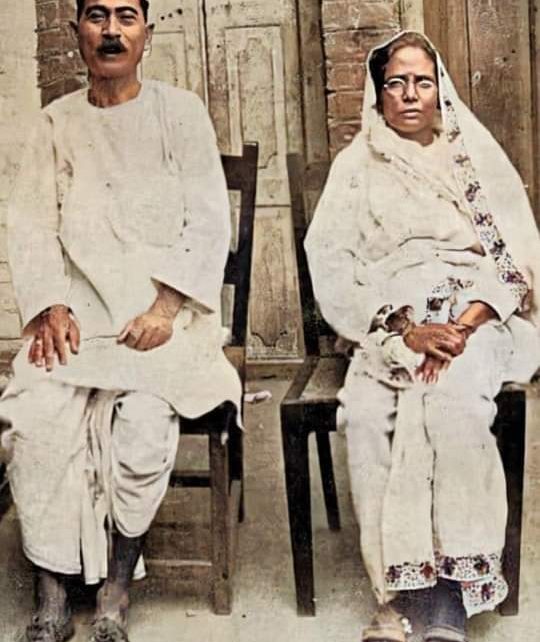
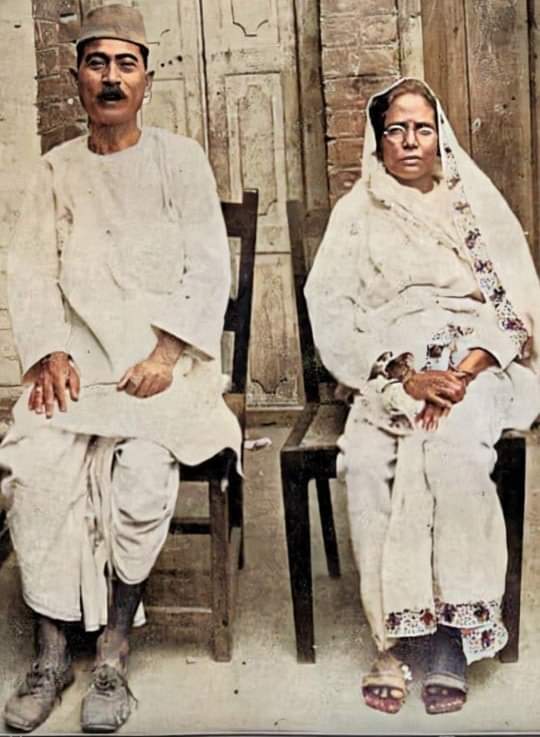
None ever could come closer to Munsi Premchandjee when it came to literary flow and flourishes. Small wonder then, his life was an immortality captured in the mortal frame.
Vivekanand Jha, Ranchi: In the irony of all ironies, when Munsi Premchandjee called it quits to his spectacular earthly life, there were only twelve pall bearers to take his cortege to the crematorium to bid him a good bye. Stumbling upon this article, serendipitously though, had numbed me into an inscrutable silence: even the ordinary men and women are being taken to crematorium with far greater numbers than the ones that had accompanied India’s greatest writer of the century, and if the survey is conducted for millennium, none can beat Munsi Premchand to grab a spot in the same. But then, the moot question which harangued me, and sent me reeling into the deeper state of contemplation was this: why would a man, who had depicted India, the way it was, without neither exaggerating, nor under representing it, should have no takers at the time when the spontaneity of the occasion warranted the multitude to pay their glowing tributes on his demise, what was the biting reality had caused me a humongous consternation: should the nation have given such a lackluster farewell to the man who understood the pulse of Bharat Varsha as few would? Was it at all befitting for the writer of the century, even millennium, to have died so quietly without stirring the least of the national conscience to enable the multitude to take cognizance of the death of the giant, India’s or world’s most prolific writers of all times? The greatest writer of the century died in penury; he lived in acute ok improvement, yet bestowed upon the nation the priceless legacy of real India which existed before and after India’s independence. No wonder, my reading of Godaan, the classic of all time, impressed upon me the unfathomable depth of the writer, Munsi Premchandjee. Mansarovar, several volumes of it, sent me reeling into deeper rumination of what India was then, how it evolved, and what it is today. Definitively, in no ambiguous terms, the soul of India, if anyone has portrayed in the most authentic terms ever, it was none but immortal Munsi Premchandjee. Small wonder then, in one of my earlier pieces on this eternal writer, Dr Deepak Jain Sahab, the world academician, had posted me his repartee: ‘Munsi Premchand was the Shakespeare of India’. However, even though I agreed with his observation in letter, in spirit I significantly beg to differ: It should be other way round; in fact, none of the Shakespeare’s creation, of whatever depth, lacked the inherent wisdom and behemoth of human sentiments and emotions which Munsi Premchandjee had sought to engender through the magnificent stories and novels he churned out, over decades. Unequivocally, had the linguistic supremacy not been the criterion, Munsi Premchandjee would have been reigning the literary world.
Reading the great piece of Idgah, I virtually cried; the rivulet of tears streaming from my eyes, stubbornly refused to call it quits. The scintillating depiction of the feelings of the boy, Hamid, transcending the precocity of a child, graduating into an ostensible adulthood maturity, exhibiting an enlightened wisdom brought about by the grinding impoverishment, rather than sitting in Lotus posture meditation tells a remarkable tale of a child’s divine feeling for his grandmother which, despite the magnitude of the occasion of celebratory festivity of Id, where all his friends were steeped in displaying childish tantrums, the boy Hamid remained singularly focussed in alleviating his grandmother’s bedeviling sorrow: The old lady, Hamida burning her finger everyday while preparing chapati. This phenomeno had so deeply impacted the child that, notwithstanding his friends celebrating the occasion for their childish contentment, the boy Hamid celebrated it with the highly exalted divine thought of celebrating it for his grandmother when he bought a tong( Chimta) for perpetually banishing his grandmother’s nemesis. But then, all sorts of grandstanding and bravados apart, the childish fantasies, even though surreptiously, nonetheless in all its poignancy, had revisited him on his way back to the village from the fair(mela). Despite pretending his supremacy over the choices of toys bought by his friends, his heart cried inconsolably when he had agreed to swap his own tong for the toys that his friends had bought. Kudos to the mighty facile pen of great Munsijee who wrote this immortal story, depicting the colliding human emotions confronting the contrasting situations. None ever had made me cry so inconsolably as Hamid had through the mighty pen of great Munsi Premchandjee.
In another brilliant story, Push ki Raat, Halku’s shivering throughout the night, with his inability to buy a blanket, spending the larger part of the dense cold night basking in the bonfire, and then, unable to resist the seductive temptation of an inviting sleep, he finally falls asleep. In the morning, awakened by the call of his wife, he realised his stupendous folly: The entire field was grazed by the Neel Gai. When his wife asked him, what he will do next, he lamentably mumbles, ‘ Will seek some majuri( contractual labour job). In the similar scenario, in the famous movie, Mahanagar, the central protagonist too says, ‘ This great city, Calcutta will definitely feed us; will take us to its mighty bosom’. In Panch Parmeshwar, the job of a judge is so remarkably depicted, is beyond any relations: Algu Choudhary and Jhuman Miyan, the two characters contribute towards the beauty of conveying a didactic message to the society. In Pariksha, the wisdom accompanied by compassion, and intelligence were the hallmarks which were the parameters for evaluating the best of the candidate among many competing against each other. No wonder, in plethora of stories dished out, the beauty of human values, a must for the viability and vibrancy of the society for all time, have been eloquently portrayed.
In hindsight, the immortal writer, who sought to portray as well as define, the soul of Bharat Varsha, himself had very few companions to take him to crematorium for the final farewell, indeed caused me a tremendous consternation. Should a writer and, that too, of such a stature as that of Munsi Premchandjee die the death of an orphan- for a man of his stature, being accompanied by just twelve pallbearers, was a matter that agonised and agitated me deeply. Especially when far lesser mortals did have the multitude offering them their glowing tributes, the greatest man of era and age, whose immortality is assured so long as poverty and impoverishment continues to bedevil humanity, was virtually dismissed as an incognito face, tells its own tale of irony of ironies. However, a sudden realisation awakened me from my deep distress: The number of people accompanying the cortege does not define the persona of a person. Whereas the lesser mortals might have thousands accompanying him to the sepulchre, but that need not define the longevity of his life. Munsi Premchandjee remains immortal. Small wonder then, whether twelve or thousand, the fellow travellers accompanying the cortege does not present the yardstick for measuring the greatness of a man. Munsi Premchandjee, like Gurudev Tagore, shall remain immortal till the sun shines on the horizon of Bharat Varsha and the world.
Vivekanand Jha Ranchi: An immortality in a mortal frame.