Never in the independent India, Bengali Bhadralok and Bhadramahila were stuck between the devil and the deep blue sea: If they vote for BJP, they tend to extend an open invitation for communal agenda to seize the culturally awakened people into a feast of communal frenzy; whereas if Mamata is voted back, the spectre of eventua Muslim takeover of the polity is the dread that has already begun giving Hindus the sleepless nights.
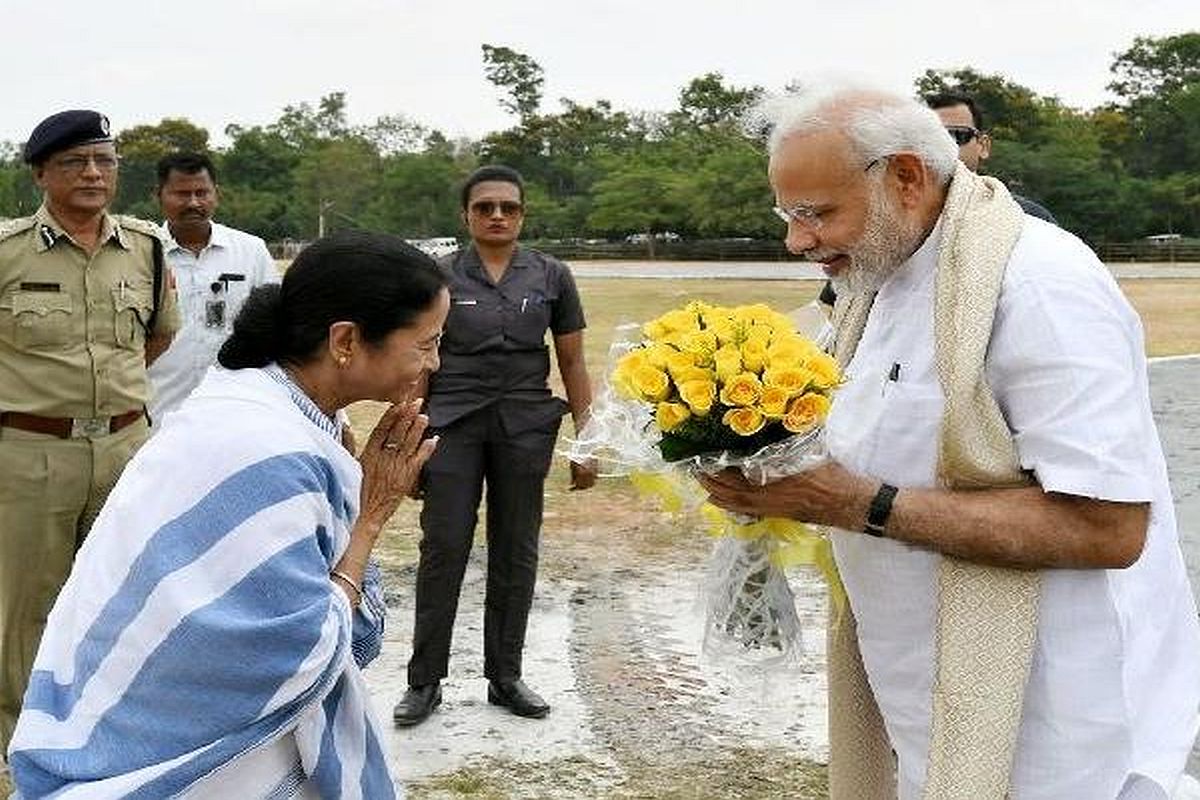
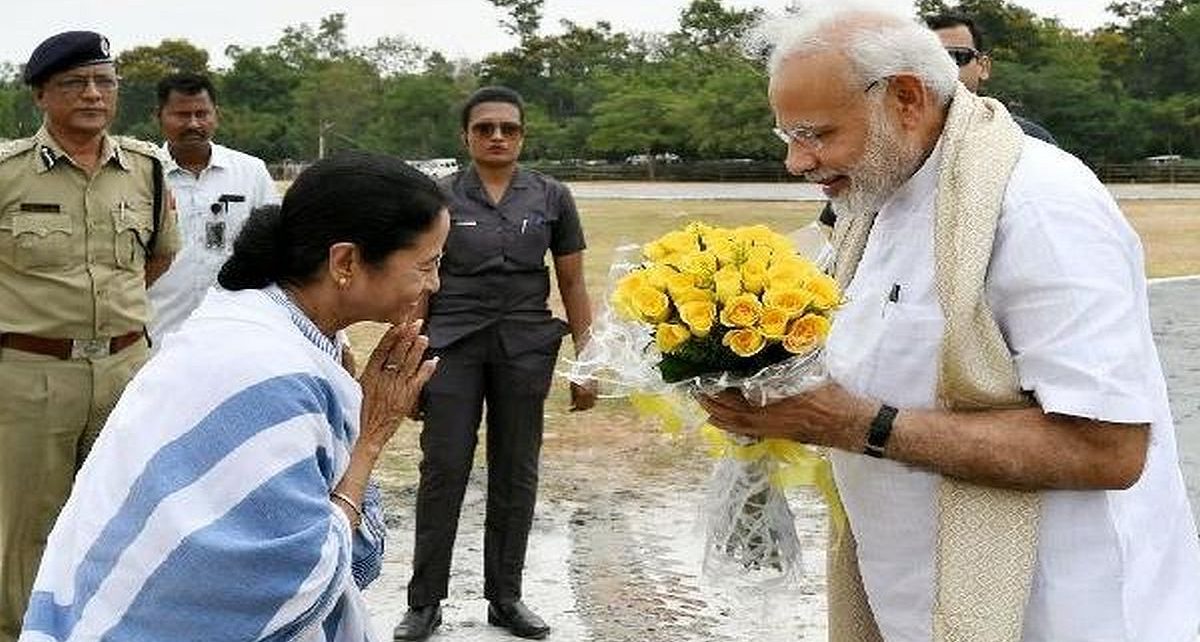
Vivekanand Jha Ranchi: West Bengal Assembly Election is destined to be the biggest democratic festival, ever since India voted back Modi to power in 2019. Incidentally, West! Bengal election is a direct fight between Narendra Modi, the Prime Minister of India and Mamata Banerjee, the Chief Minister of West Bengal. All others, in whatever capacity and across the spectrum, are the appendages to either of them. Also, albeit at a lesser degree, it is perceived as the battle between the Gujarati manoeuvrings of Amit Shah and Bihari resilience of Prashant Kishor. Significantly, the upcoming Assembly election in West Bengal, apart from settling the individual scores, has humongous implications for Indian democracy:
The triumph of Modi–the BJP is a non issue, as people are expected to vote for Modi–will further cement the stranglehold of Narendra Modi on Indian politics, while further emasculating Indian democracy in no ambiguous terms. On the other hand, the retention of power by Mamata, apart from arresting the inexorable march of Modi bandwagon, it will revive the potential face of the moribund opposition. No wonder the sheer brazenness in manoeuvrings to capture the political space and to browbeat each other, has already assumed the monstrous proportion. The BJP, bolstered by its laudable victory in Bihar, where it had eloquently achieved its twin objectives that it had actually set for: catapulting itself as the number one party in the coalition, and still magnanimously handed over the key to governance to Nitish Kumar; second, it had successfully used Chirag Paswan as an albatross around the neck of Nitish Kumar to reach the driver’s seat, pushing JDU to the pillion. No wonder BJP’s confidence is an all time high. Now, all guns of BJP in general and Narendra Modi in particular, is trained on redoubtable Mamata, in whose defeat lay the surer recipe of Modi’s eventual invincibility as the annihilator of the opposition in the polity. Significantly, in Modi’s unfettered rise as an unchallenged ruler of India, Mamata Banerjee is the only obstacle which impedes him and consequently vanquishing Mamata Banerjee remains an overwhelming focus for both Modi and his party.
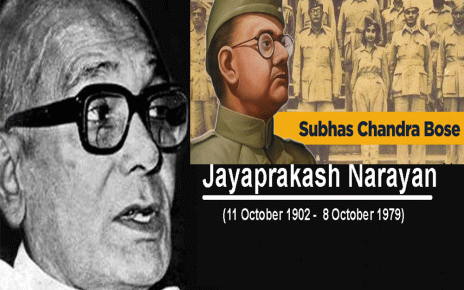
But then Mamata is not the ninepin that will collapse at the advancing sign of fast approaching Modi bandwagon; she too, like the Prime Minister, had greyed her hair in real politicking. Also, by way of striking similarity, both are given to individual whimsicalities and have the authoritarian streaks; both are also not known for forgiving and forgetting the rivals who dared to challenge them at some point in time. Interestingly, while Mamata came into the limelight when she danced riding on the bonnet of the car while celebrating the demise of Jayaprakash Narayan, to pleae Indira Gandhi; Narendra Modi, on the other hand, caught the nation’s fancy, for the first time, while walking all along the chariot of Lal Krishna Advani, during the famous Ahodhya Movement. Incidentally, while Modi’s trump card was to pilverise opposition, Mamata too, in her paranoia towards the Communists, had vindictively sought to eliminate their last vestiges from the face of Bengal’s polity and consequently invited a far bigger monster, BJP to dance on her head now. However, unlike Modi, Didi’s involvement in the Shradha and Narda, which had already dented her image, the decision to install dynasty, by anointing her nephew, Abhishek Banerjee, was the proverbial nail in the coffin of her immaculate image of being a leader whose summum bonum was the edification of West Bengal.
No wonder it was the foisting of her nephew, Abhishek over other leaders, which has triggered the current revolt within the party-the recent exodus of influential leaders like Subhendu Adhikari, Jitendra Tiwari, Rajib Banerjee and others –owes to Abhishek’s domination in the party. Added to this, is the mighty power of the BJP to engineer a defection within Trinamool. Besides, the Bengali Asmita, which, not long ago, Didi considered her as it appears, is up for grab now: Amit Shah’s recent visit to Kolkata, especially at Swami Vivekananda’s house, in North Kolkata, where he sought to claim Swami Vivekananda’s mantle, is the latest vindication of the thinks to shape up in the upcoming days. Whereas Amit Shah might revel in snatching the mantles of erstwhile Bengali greats, Didi has successfully, while taking the cue from Nitish Kumar and Laloo Prasad Yadav, in 2015 assembly election where they had famously devised a slogan of Bihari versus Bahiri, has dubbed the upcoming battle between ‘Bengali versus outsiders’. The underlying message behind this slogan is crystal clear: in the event of BJP winning the power, it will be the Narendra Modi and Amit Shah who will be running the show from Delhi, as BJP in West Bengal has no credible leader. No wonder this rhetoric is widely resonating with Bengalese across Bengal. Sensing their relegation, BJP has devised a counter rhetoric to drive the home about: in the wake of Trinamool’s return, it will be a Muslim takeover of West Bengal, which, notwithstanding its feasibility, has already started giving Hindus the sleepless nights.
Thus, the upcoming battle, which on the one hand is between Modi and Mamata, on the other it is an unequivocal contest between Gujarati mind of Amit Shah and Bihari resilience of Prashant Kishor. In case BJP defeats Mamata, which despite all its manoeuvrings, is unlikely, Modi’s unquestioned dominance in the polity will be a foregone conclusion; however, if Mamata succeeds in retaining her bastion, not only she will put a halt to Modi’s expanding footprints in the polity, but also may be the rallying point of the opposition unity within the country. It will also set the trigger for Mamata’s march towards the national politics.