
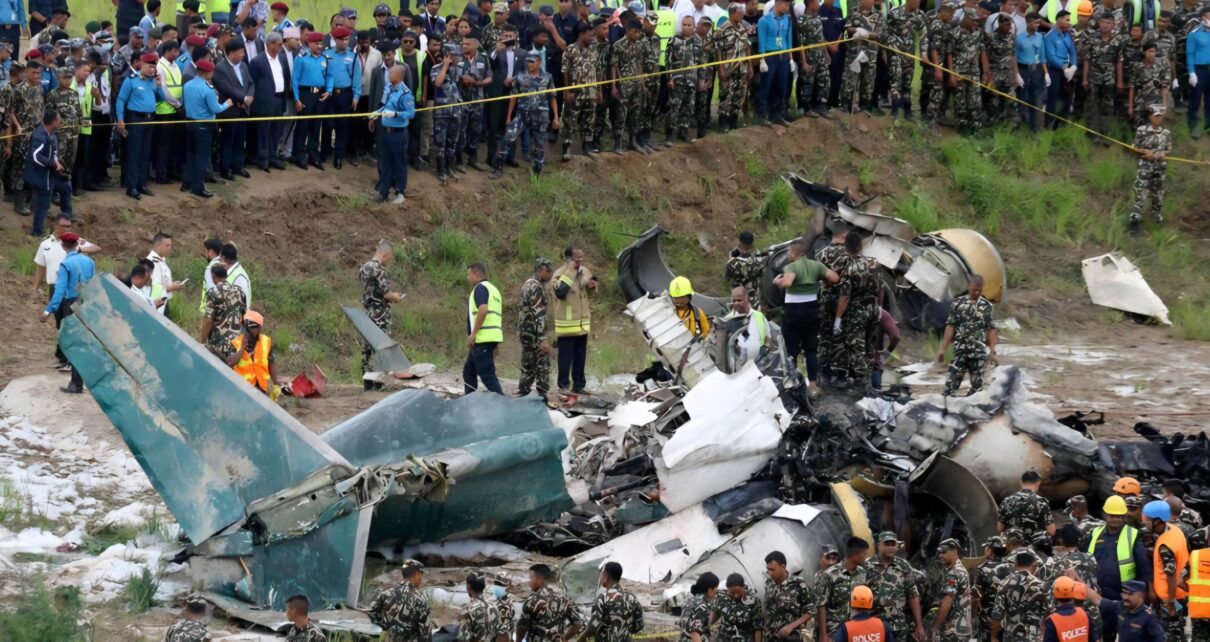
Kathmandu, July 17, 2025 (Shrawan 2, 2082 – Nepali Calendar) — A detailed investigation into the tragic crash of a Saurya Airlines aircraft has revealed serious lapses by the airline operator, flight crew, and Nepal’s Civil Aviation Authority. The crash, which occurred shortly after takeoff from Tribhuvan International Airport, resulted in the deaths of 18 people.
What caused the crash?
According to the final report submitted by the official investigation commission, the main cause of the crash was an abnormally steep climb at high speed during takeoff, which pushed the aircraft into a “deep stall”—a dangerous aerodynamic condition—leading to the crash.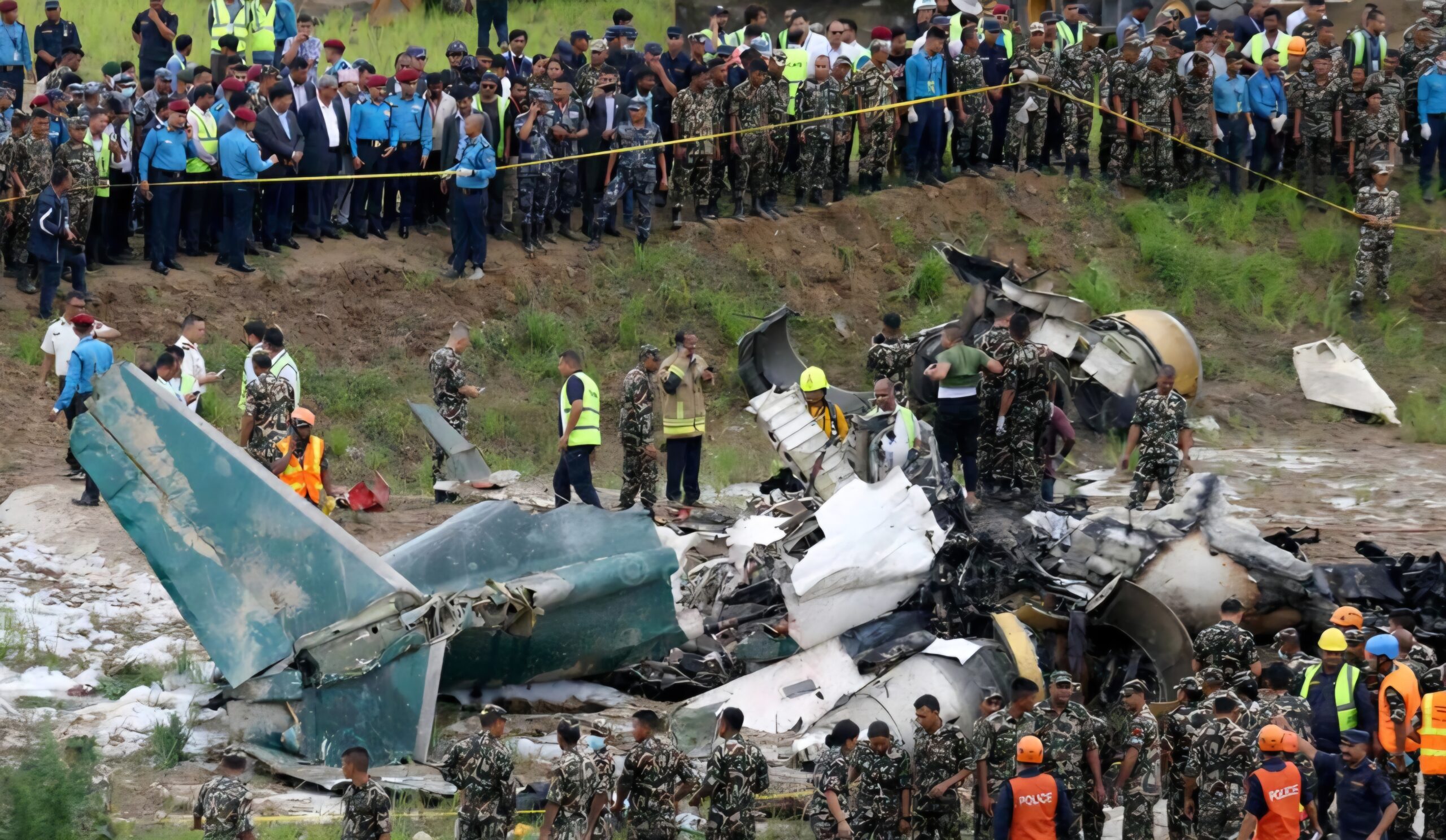
A miscalculated V-speed due to an incorrect speed card, excessive pitch rate, and unbalanced cargo load were key technical factors that contributed to the crash.
Technical and Procedural Failures
The speed card used to calculate the required takeoff speed was erroneous and unapproved.
The aircraft was overloaded with cargo, including flammable materials such as lubricants and contact cleaners, stored even in passenger cabins.
No proper calculation was done for weight-based speed (V-speed), and the aircraft rotated at an abnormal pitch rate of up to 8.6 degrees per second, and rolled 26 degrees to the right, which is considered dangerously unstable.
Crew and Flight Preparation
The captain entered the cockpit only 30 minutes before flight.
Cargo was loaded haphazardly, including into the cabin, without securing it properly.
One of the engines initially failed to start due to a fuel flow issue but started on the second attempt. No engine malfunction occurred during takeoff.
Fire & Rescue Timeline
The aircraft crashed and caught fire within 4 seconds of rolling right, dropping 130 feet vertically.
The first fire engine arrived 1 minute and 40 seconds after the crash and began spraying water within 15 seconds.
While the captain was rescued before the cockpit caught fire, the report noted a lack of runway safety area and emergency access points hampered rescue efforts.
Some passengers might have survived if proper emergency procedures and fire-fighting equipment had been in place.
Regulatory Oversight Failures
Despite being categorized as a “ferry flight”—which is meant to transport aircraft for maintenance without passengers—Saurya Airlines carried unauthorized passengers, in direct violation of aviation rules.
The Civil Aviation Authority of Nepal (CAAN) not only approved the flight but also failed to monitor preflight checks, passenger manifest, and cargo safety.
Specific Findings on Responsibility
Party Key Failures
Saurya Airlines Improper cargo loading, lack of safety protocol, use of untrained personnel, failure to adhere to operations manual
Flight Crew Aggressive pitch and climb behavior, violation of standard rotation procedures
Civil Aviation Authority Authorized a passenger-carrying ferry flight, failed to enforce safety and cargo loading regulations
Additional Observations
Cargo included not only baggage but also tools, food supplies, and hazardous materials — all unsecured and scattered inside the aircraft.
The flight’s load and balance was not measured, and the cockpit voice recorder (CVR) confirmed hasty preparations.
Runway safety zones and emergency response infrastructure at Tribhuvan Airport were found lacking.
Commission’s Recommendations
Strict compliance with ferry flight protocols, including prohibition of passengers.
Regular monitoring of flight data and operational trends across all domestic airlines.
Immediate improvement in emergency preparedness and airport infrastructure.
Conclusion
This disaster highlights systemic issues in aviation operations and oversight within Nepal’s domestic airspace. Despite favorable weather and fully functional engines, poor preparation, miscalculations, and procedural violations caused an avoidable crash. The investigation calls for urgent reforms in airline management, flight crew training, cargo handling, and civil aviation regulation.Source: OnlineKhabar
This report is of significant concern not just for Nepal, but for aviation safety globally, particularly in developing air markets.