
Governor, Nepal rashtra bank
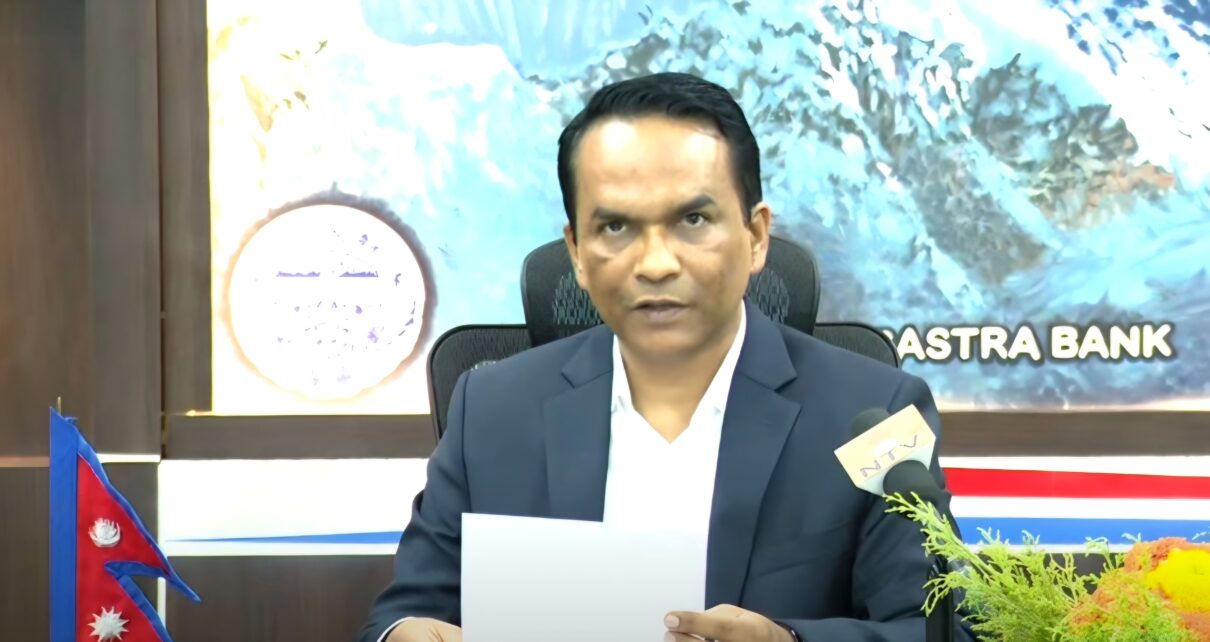
July 12, 2025 | Kathmandu. Nepal Rastra Bank (NRB) Governor Bishwanath Paudel has unveiled his first monetary policy for the fiscal year 2082/83 (2025/26), taking a notably expansionary stance to revive the sluggish economy. The policy introduces reduced interest rates, expanded credit access, and structural relief for banks and financial institutions.
Key Highlights
Home loan cap raised: From NPR 20 million to NPR 30 million
Share mortgage loan limit: Raised from NPR 150 million to NPR 250 million
Agriculture and small business loans: Up to NPR 1 million without collateral
SMEs access: Loans up to NPR 30 million at favorable terms
Interest rate corridor adjusted downward
Currency exchange for foreign travel: Increased to USD 3,000
Policy Objective
Governor Paudel emphasized that despite high liquidity and low lending rates, the benefits had not trickled down to the government and private sector. The new policy aims to activate economic sectors like real estate, capital markets, agriculture, and small industries by encouraging broader credit flow.
Diverging Views Among Experts
While the private sector has welcomed the policy with optimism, several economists warn of potential risks to financial stability. They argue that the policy lacks strong measures to protect depositors and is overly lenient across multiple sectors at once.
Former Governor Maha Prasad Adhikari’s COVID-era relaxations have been reintroduced, although many components will undergo review and adjustment.
Changes in Interest Rates
Policy rate: Reduced from 5% to 4.5%
Upper bound of interest rate corridor (Bank Rate): Reduced from 6.5% to 6%
Lower bound (Deposit Collection Rate): Reduced from 3% to 2.75%
These reductions aim to further lower lending rates and increase liquidity in the market.
Relief Measures for the Banking Sector
Regulatory reserve from non-banking assets can be counted as supplementary capital for up to two years
Flexibility in working capital loans
Planned revision of loan classification and loss provisioning standards
Policy revision to ease blacklisting due to bounced cheques
Increased share mortgage loan limit to boost capital markets
Support for Microfinance and Rural Credit
Microfinance dividend distribution rules under review
Loans up to NPR 300,000 (NPR 500,000 for women) for migrant workers to be classified as priority loans
Collateral-free loans up to NPR 1 million for agriculture or business, using assets like farmland or infrastructure
Working capital loan guidelines to be relaxed based on business nature and repayment cycle
Digital Banking and KYC Integration
Banks and financial institutions will be allowed to integrate their Know Your Customer (KYC) systems with the national ID infrastructure. Once a customer updates their details with one bank, others can access it digitally.
Private Sector’s Reaction
Industry bodies such as the Federation of Nepalese Chambers of Commerce and Industry (FNCCI), Confederation of Nepalese Industries (CNI), and Chambers of Commerce have praised the policy. They consider it a timely intervention to stimulate investment and help struggling entrepreneurs recover from past economic setbacks.
Conclusion
Nepal’s latest monetary policy represents a significant shift toward economic stimulus through affordable credit, regulatory easing, and digital transformation. While it energizes the private sector, the actual impact will depend on the policy’s implementation and management of associated risks.