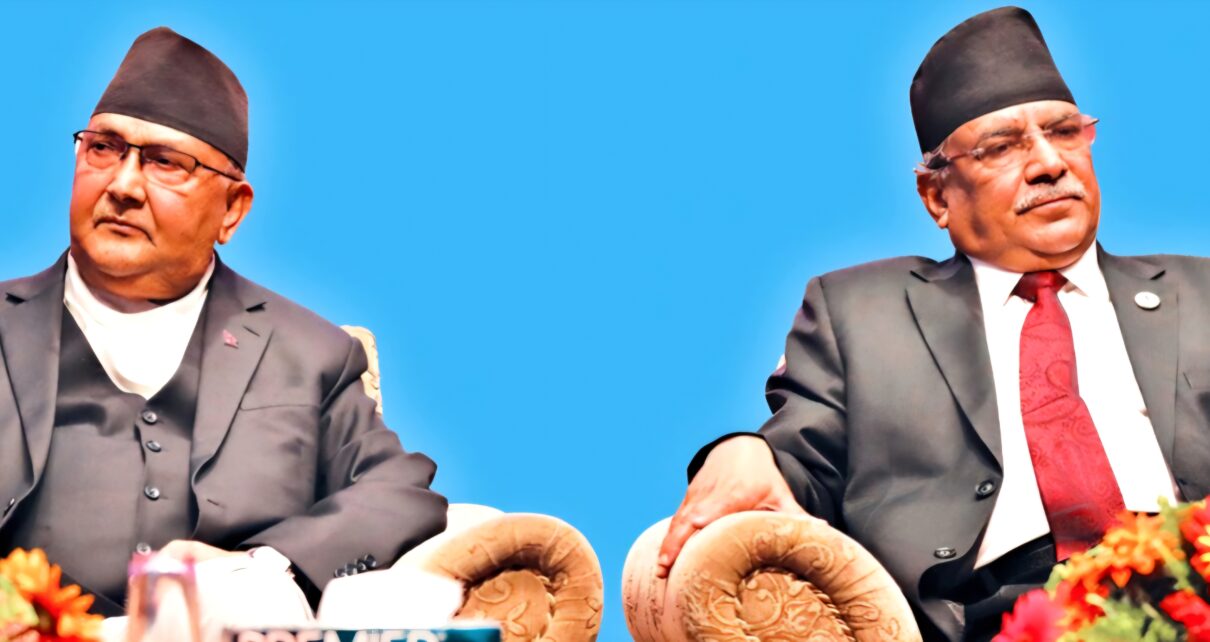

Kathmandu, July 15, 2025 – As the coalition government led by the Nepali Congress and CPN-UML completes one year in office, the occasion became a stage for a sharp political confrontation between Prime Minister KP Sharma Oli and opposition leader and Maoist Chairman Pushpa Kamal Dahal ‘Prachanda’.
While Prime Minister Oli expressed satisfaction over the government’s performance, Prachanda accused the administration of undermining democratic institutions and serving vested interests.
PM Oli’s Claim: “Strong Performance, Systemic Reforms”
Early Monday morning, Prime Minister Oli took to social media to praise his government’s efforts over the past year:
“Key economic indicators have improved.”
“National development projects have gained momentum.”
“Important legal reforms have simplified public service delivery through digital means.”
Oli highlighted that introducing timelines for project execution was a new practice, saying, “The culture of accountability has begun.”
Prachanda’s Critique: “A Government Hijacked by Middlemen”
In an hour-long speech in Parliament, Maoist leader Dahal launched a series of serious allegations against the government:
“Parliament has become a playground for brokers and lobbyists.”
“The School Education Bill is being held hostage by vested interests.”
“Constitutional appointments are based on political bargaining, not merit.”
He also criticized the budget for being overly concentrated in projects like view towers and industrial parks, neglecting marginalized regions and communities.
From Stadium Promises to Visa Scandals: A War of Words
Dahal accused the government of failing to advance the construction of the cricket stadium in Kirtipur, despite PM Oli’s prior commitment to complete it within 300 days.
PM Oli countered: “Go see the ongoing construction — floodlights and parapets are being installed. Unlike your term, we set timelines and worked.”
Dahal Raises Concerns Over Visit Visa and Arms Procurement
The Maoist chairman accused the government of downplaying the “visit visa scandal” and reviving controversial arms procurement deals previously halted during mass protests.
“This is not just an administrative glitch but a matter of national security and accountability,” Dahal said, adding that his party had lifted its parliamentary obstruction only after the government agreed to a two-point investigation deal.
Constitutional Amendments Labeled as Self-Serving
Dahal further alleged that the recent push for constitutional amendments served the narrow interests of those in power, rather than the aspirations of the people.
Conclusion
The fiery exchange between Prime Minister Oli and former Prime Minister Dahal highlights the growing political rift in Nepal, even among former allies. While Oli’s government touts economic recovery and governance reform, Dahal paints a picture of deepening elitism, misuse of public funds, and erosion of democratic processes.