
By: Dr. Geeta Kochhar & Sipu Tiwari
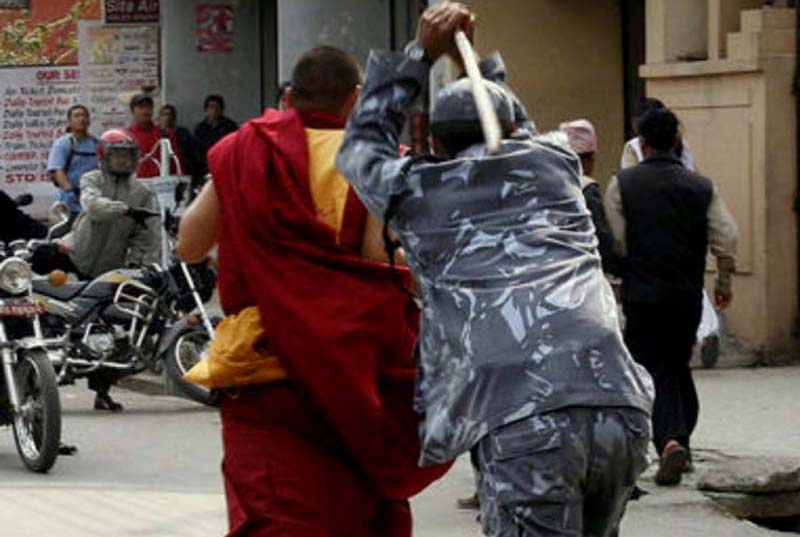
With the US Special Coordinator on Tibet Uzra Zeya paying three-days visit to Kathmandu starting from May 21, the issue of Tibet has become the limelight in Nepal. Her visit to Tibetan Community in Lalitpur and raising the issue of Tibetan Human Rights has been strongly condemned by the Chinese. However, the question of preservation of Tibetan culture and the development is of prime importance to both China as well as for the world.
Worth noting is the fact that while some in Biden administration are keen to raise the issue of Tibet and Taiwan in foreign land; there are voices stressing the remarkable work of the Chinese government i
n preserving the culture and heritage of Tibet. Sherab Phapa, an Assistant Researcher of the Institute of Social Economy at the China Tibetology Research Center (CTRC) pointed out in an online event on the sidelines of the 49th session of the United Nations Human Rights Council that China has made unremitting efforts to protect the traditional culture as well as the rights of the people of Tibetan Autonomous Region (TAR).
She further said that China has placed greater focus on the development of Tibet that has benefited a large number of Tibetans to root out abject poverty; while efforts to protect and promote Tibet’s intangible cultural heritages has made great progress. In 2012, the United Nations had named one of the region’s intangible cultural heritages as an ‘Intangible Cultural Heritage of Humanity’. This is apart from the 13 events being listed as State-level intangible cultural heritages, Sherab Phapa noted.
Since early 1980s, China has focused on the economic development of Tibet as a major priority. While improving the infrastructure has been one of the objectives, there is also an impetus given to channeling resources to restore cultural relics and promote Tibetan Buddhism beyond its borders. Yang Liyuan, a researcher at the CTRC’s Institute of Contemporary Studies, states that the Chinese government has recognized Tibetan traditional culture as a national treasure, and it has made every effort to protect and pass down the culture; while proceeding with measures to intensify socio-economic development in the region. He, however, added that Dalai Lama supporters and anti-China forces have long ignored the achievements and progress made in the region and instead choose to slander the Chinese government
Liang Junyan, a researcher with the CTRC’s Institute of History, highlights that China has invested 3.4 billion yuan (USD 530 million) to restore 155 cultural relics and units in the region from 2006 to 2020. He also pointed out that TAR has established a management system to oversee the museums to propagate and preserve the regional culture. To this effect, the Chinese government State Council Information Office had issued a White Paper last year May titled “Tibet Since 1951: Liberation, Development and Prosperity”, which stressed on the effective protection of cultural heritage. The White paper highlighted that since restoration work of the Jokhang Temple in 1972, the country has continued to invest huge sums in the maintenance and protection of the Potala Palace, Norbulingka, Jokhang Temple and other cultural relics and historic sites. Those who have visited the Potala Palace do confirm the remarkable restoration work and the splendid view of the palace.
Apart from the restoration of temples and establishment of museums, Chinese government has also stressed on the traditional Chinese medicine, especially supporting the inheritance and development of Tibetan medicine. The University of Tibetan Medicine of China has trained more than 7,000 professionals in the field. The spread of Covid-19 has placed greater importance to traditional Chinese medicines, which the Chinese government at all levels is pushing for distribution to other countries as well. This is more likely to be a part of the Health Silk Route under Belt and Road Initiative, a signature policy of President Xi Jinping.
As Nepal struggles to restore its temples like the Pashupatinath Temple that was badly damaged due to the 2015 earthquake, some lessons are there for Nepal to learn from China, and probably even take the help of China in reconstruction works. Under such circumstances, is it possible that Nepal will side with the US to take up the human rights issue of Tibetans as a major cause of concern; while becoming a hot bed of proxy war between the major powers? Or the Nepalese government will adopt a neutral posture and remain a true democratic state to allow the spread and promotion of Tibetan culture in its soil. Already Lumbini is fast becoming a hub of Buddhist centre, where Nepal plans to cash on the Chinese buddhist tourists and invite Chinese investment to make it a focus of cultural heritage. Where the wind blows is time to tell, but surely the northern wind is hot for the Himalayan Kingdom.

Dr. Geeta Kochhar, Assistant Professor, Jawaharlal Nehru University; China Fudan FDDI Ambassador in South Asia
By: Dr. Geeta Kochhar, Assistant Professor, Centre for Chinese and South East Asian Studies;
Sipu Tiwari, Madhesh Based political commentator & writer