
Kathmandu, 5 August 025.
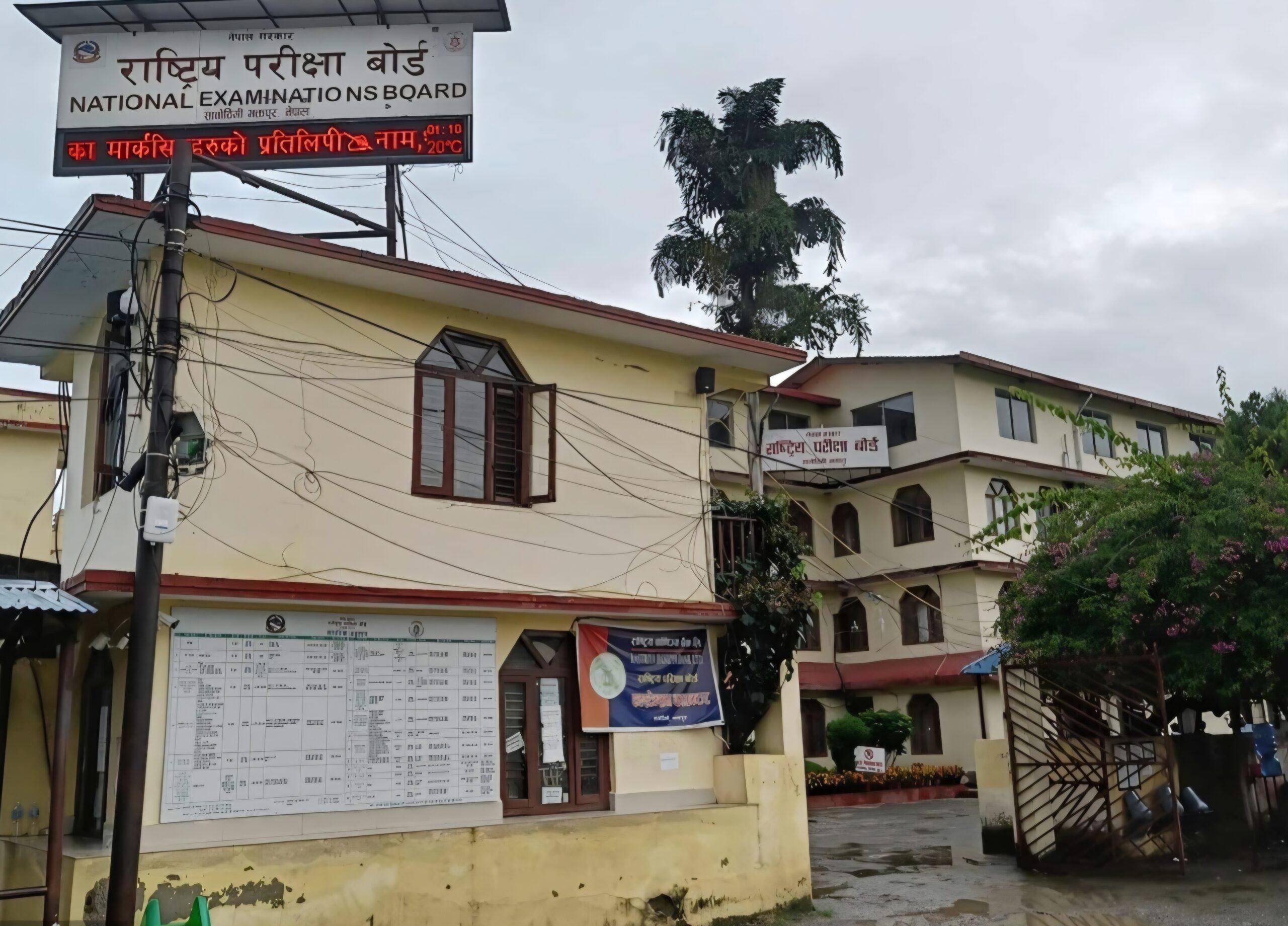
The National Examination Board (NEB) of Nepal has announced the results of this year’s Class 12 examinations. A total of 61.17% students have passed the exam, showing an improvement of 9.02 percentage points compared to last year. However, over 153,000 students failed to achieve a minimum grade and are thus ineligible for immediate admission to higher education.
Key Highlights:
Out of 396,347 examinees, 242,465 students received a passing grade.
Students who failed in up to two subjects will be allowed to sit for grade improvement exams on Bhadra 28 and 29 (September 13 and 14, 2025).
Among the partial (supplementary) examinees, only 36.49% managed to pass.
Over 72,800 partial students are not eligible to take part in the upcoming grade improvement exams and will have to wait until the annual exams in Baisakh (April/May 2026).
Provincial Performance:
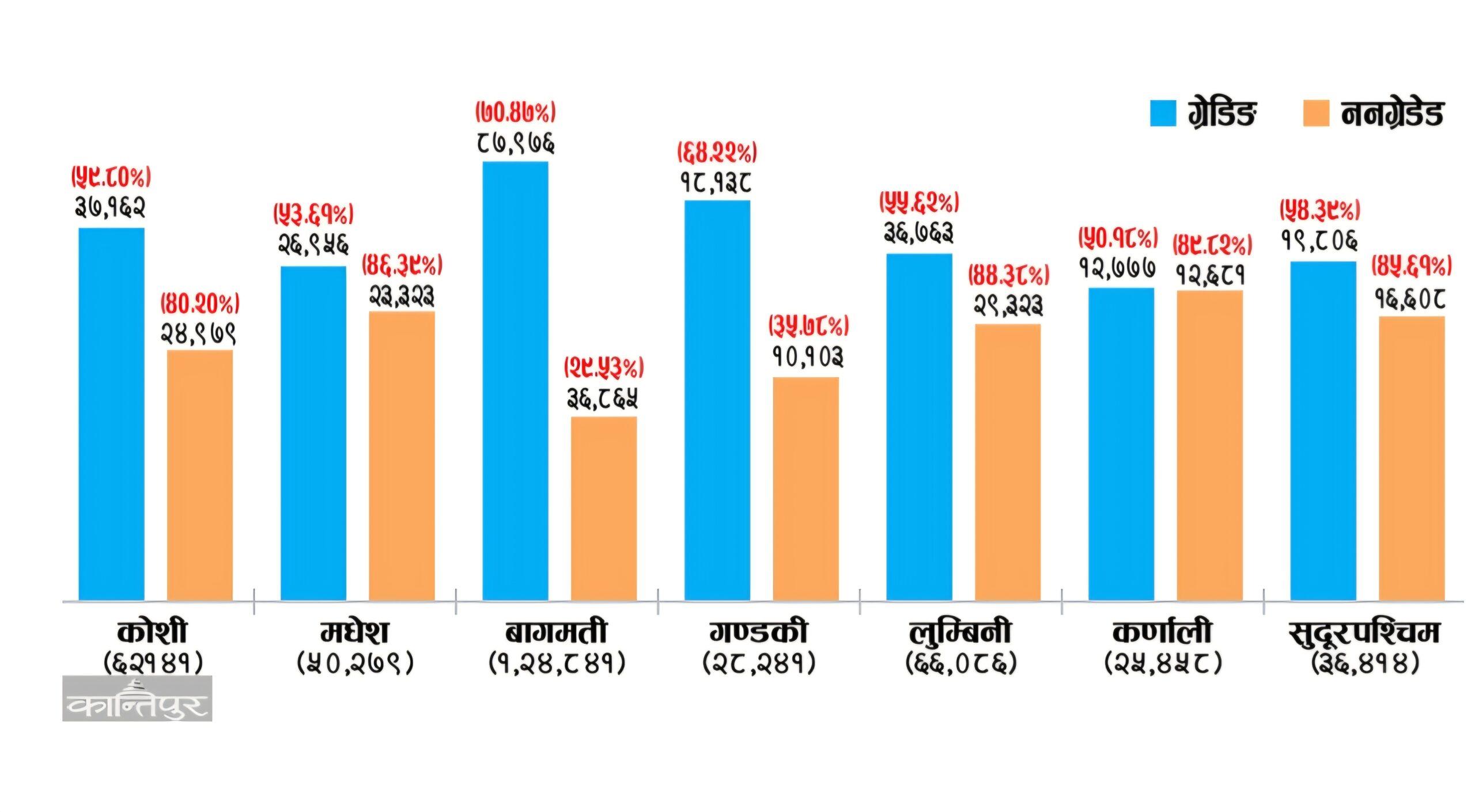
Karnali Province recorded the lowest pass rate at 50.18%.
Bagmati (70.47%) and Gandaki (64.22%) provinces performed above the national average.
Provinces such as Madhesh (53.61%), Sudurpashchim (54.39%), Lumbini (55.62%), and Koshi (59.80%) fell below the national average.
Subjects with Most Failures:
The highest number of non-graded (fail) students were in:
English – 66,000
Accounting – 41,000
Social Studies – 33,900
Followed by: Nepali, Economics, Business Studies, and Mathematics.
This pattern mirrors the SEE (Secondary Education Examination) results where most students underperformed in Mathematics, Science, English, and Social Studies.
GPA Distribution:
GPA 3.60–4.00: 13,502 students
GPA 3.20–3.60: 55,896 students
GPA 2.80–3.20: 94,268 students
GPA 2.40–2.80: 69,812 students
GPA 2.00–2.40: 8,964 students
GPA 1.60–2.00: 23 students
Educational Concerns: While the overall results show improvement, education experts remain skeptical. Some argue the better results might be due to lenient assessments rather than actual improvements in teaching and learning.
Furthermore, a shortage of qualified teachers, especially in community schools for subjects like Math, Science, and English, continues to hinder academic progress. Notably, there have been no new permanent teacher appointments for Grades 11 and 12 since 2057 BS (2000 AD).
Conclusion: Despite improvements in pass rates, the significant number of students still failing and provincial disparities in performance reveal ongoing challenges in Nepal’s secondary education system. The results prompt a deeper examination of teaching quality, exam standards, and education policy implementation across the country.