When India’s foreign policy stands at the historic crossroad: Will India back NATO or Russia, in the ongoing war in Ukraine? The historic Hollywood movie, Ben-Hur should be revisited for taking cue for its historic dilemma in setting its foreign policy trajectory.
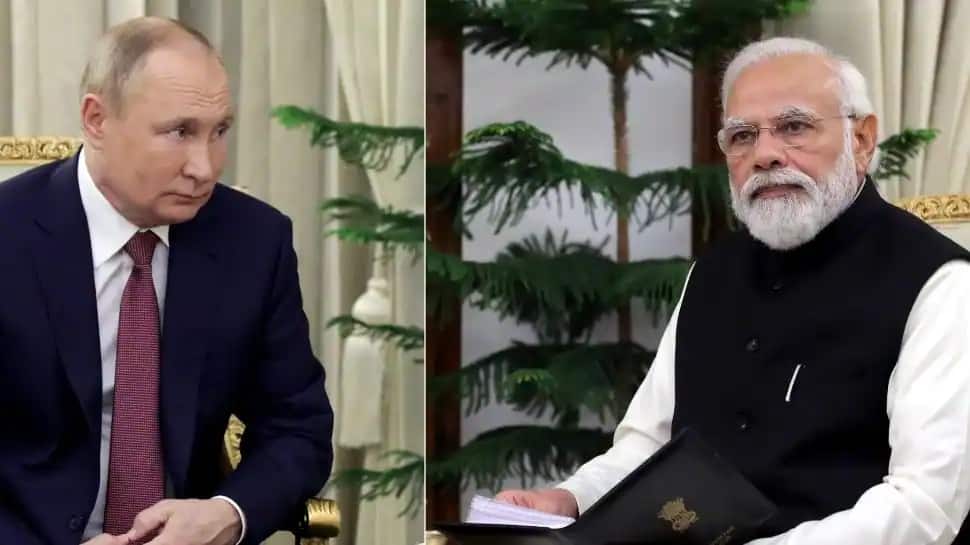
Vivekanand Jha Ranchi: In the boyhood days, filled with an endless resplelence, in the city of joy, simply were my best days in life. Subhadra Kumari Chauhan, a great poet, had penned a scintillating stanzas: ‘ Chinta rahit khelna khana, aur phirna nirbhay swachand, kaisay bhula ja sakta hai bachpan ka atulit anand'( playing and eating soulfully, unconcerned by even an iota of anxiety, and wandering independently, how the infinite bliss of childhood remains indelibly printed in mind). Significantly, stepping into adolescence, had its ingrained flavour: my friend’s, especially Babloo’s, insistence that, so long as I do not watch English movies, I never qualified for being considered as a student of English medium school, was the inevitable trigger for my maturing into the students of English medium school. It was during such moments, my coming of age began: I watched few great English movies of Hollywood: Ben-Hur was one such magnificent movies, apart from Magnificent Seven and others. Ben-Hur of great Charlton Heston and Stephen Boyd, not only kept me in thrall while the movie was on, but for all time to come. It was, in fact, reading Tavleen Singh’s piece–she is my guru, as Dronacharya was to Eklavya, and would surely like to invite her for my next book launch–I never skip her pieces in Indian Express, much like Dr Amartya Sen, the Nobel laureate religiously reads them while in India(Dr Sen had personally acknowledged this through his piece in Express). Now, coming to the issue in hand: reading Tavleen Singh’s piece on the ongoing cataclysmic development in Ukraine, where she had excoriated Modi government’s foreign policy being kept hostage to geo-political consideration, the thought like lightening struck me; in fact, Ben-Hur, the great Hollywood movie came knocking at my mind space, whose relevance to the current template of India’s foreign policy has a monumental ramification.
Ben –Hur showcased the intimate bonding between two central protagonists, Charltan Heston and Stephen Boyd. The bonding between them was just like Shri Krishna and Sudama. However when Stephen Boyd insisted upon subjugating the community and the race to which Heston belonged, the unbridgeable differences arose between the two, setting them irreconcilably apart from each other. Significantly, the chariot race, the finest part of the extravaganza the movie so eloquently portrays, has the prowess to convey the underlying message: when friends turn into sworn enemies, the outcome for both is catastrophic. Now, the ongoing foreign policy travails for India, in the context of Russia’s invasion of Ukraine, is monumental: India’s historic foreign policy dilemma is as much beguiling as it is bedevilling the foreign policy template. On the one hand is NATO, the treacherous forces which India can seldom rely upon, on the other hand, it is the fiduciary relations with Russia, which withstood the turbulence of history and still stood rock like, notwithstanding certain imponderables which, of late, especially under Putin’s tenure, has been starkly staring at India’s finances–Putin’s regime derelicting and procrastinating on its sovereign obligation of delivering the fighter jets S-400, resulting in the huge cost burden on India’s exchequer. But then the long term relations, based on trust and faith, despite certain ruptures, is not to jeopardised at the altar of the impulsive decision to break with Russia, especially when geo-political consideration is hardly in favour of India, with jingoistic China gesticulating at our borders. But then the moot question here which Tavleen broaches: When the very raison d’etre and summum bonum of India is at stake; when India’s greater cause of championing humanity is being challenged by the hegemon, what India should do? Will it align with NATO and castigate Russia for its flagrant violation of humanity, especially when the community of Indian students stand inextricably trapped in this ongoing bombing by Russia? It is here Jaishankar’s Achilles hill is to ensure that, how the Indian students trapped, are finally bailed out with the benign intervention from both: Russia and Ukraine. India’s neutrality is the best policy hitherto applied, shall continue uninterrupted, for the clarion call of geo-political consideration warrants India to maintain its strong and vibrant relations with Russia, for NATO has never been a trusted ally, nor it can ever be trusted. Whereas relations with USA, which Narendra Modi has been trying to upgrade, leveraging India a proximity with both USA and Russia. Also, Putin’s personal seeing off the students leaving for India from Russia, if the news is genuine, vindicates that India’s deft diplomacy is paying off. Therefore, the famous story of Ben-Hur should revisit the foreign policy template: So long as India’s strategic national interest is not jeopardised, much like Charltan Heston’s own community and race was affected, when he severed his friendship with Stephen Boyd, India should not, on the pretext of speaking for the larger cause of humanity, unnecessarily jeopardise its entente with its long term ally, Russia today, the erstwhile Soviet Union. Small wonder then, I reject Tavleen Singh’s sentimental outbursts as her going overboard, without being adequately concerned about India’s geo-political interest, lock, stock and barrel. Tavleen’s misplaced emotion cannot be a substitute for a robust foreign policy template.
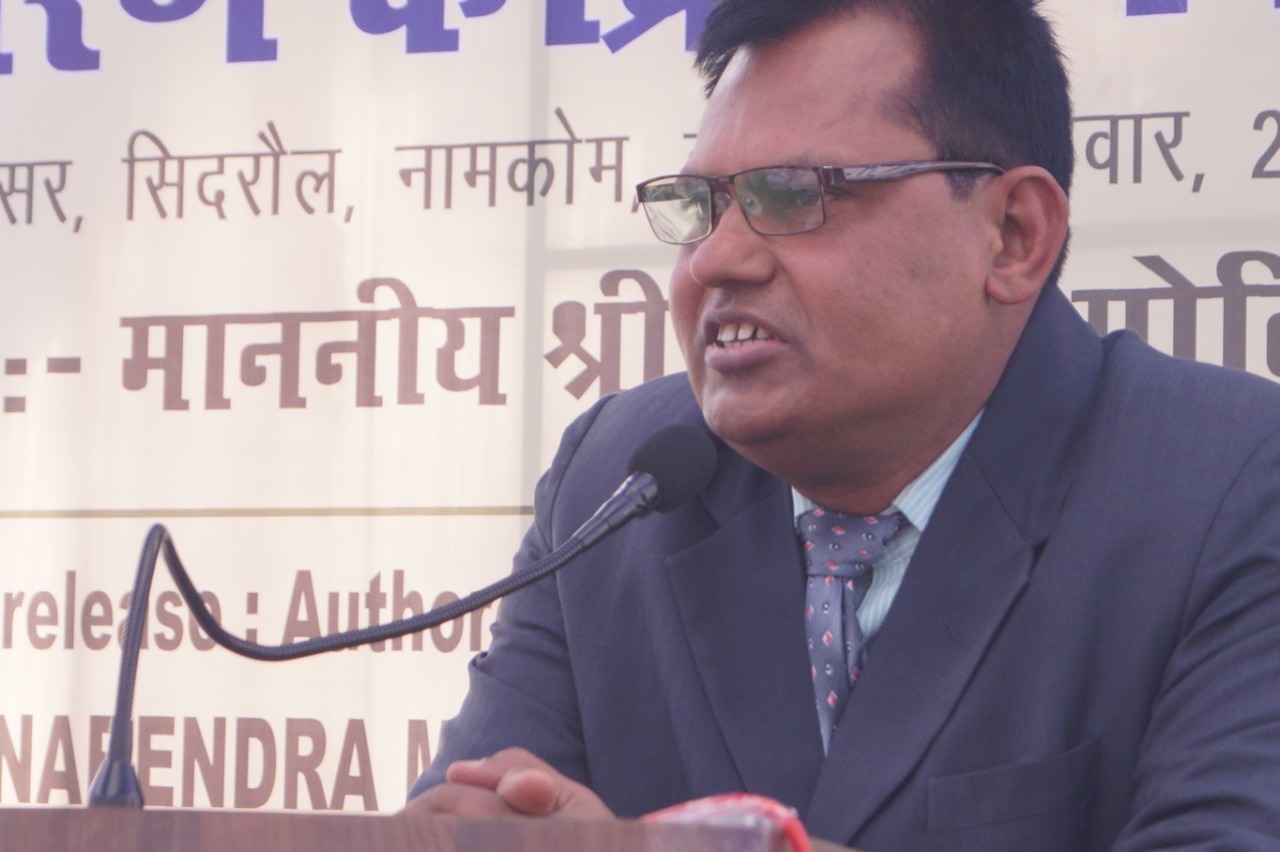
Vivekanand Jha is an Author, Academician and a Public Intellectual.
He is the Convener of Education pe Charcha.