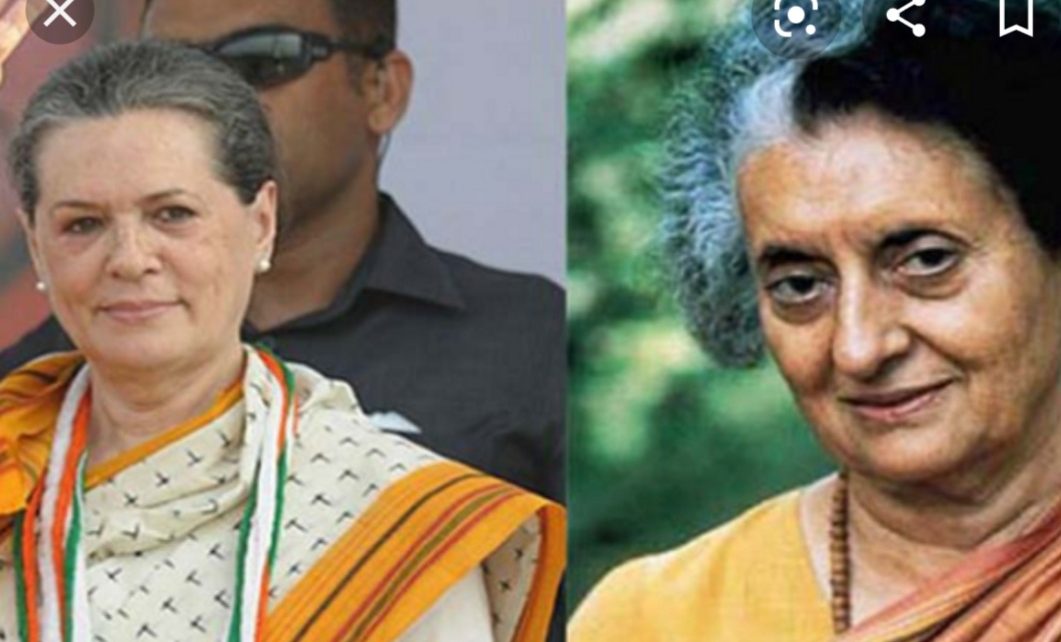
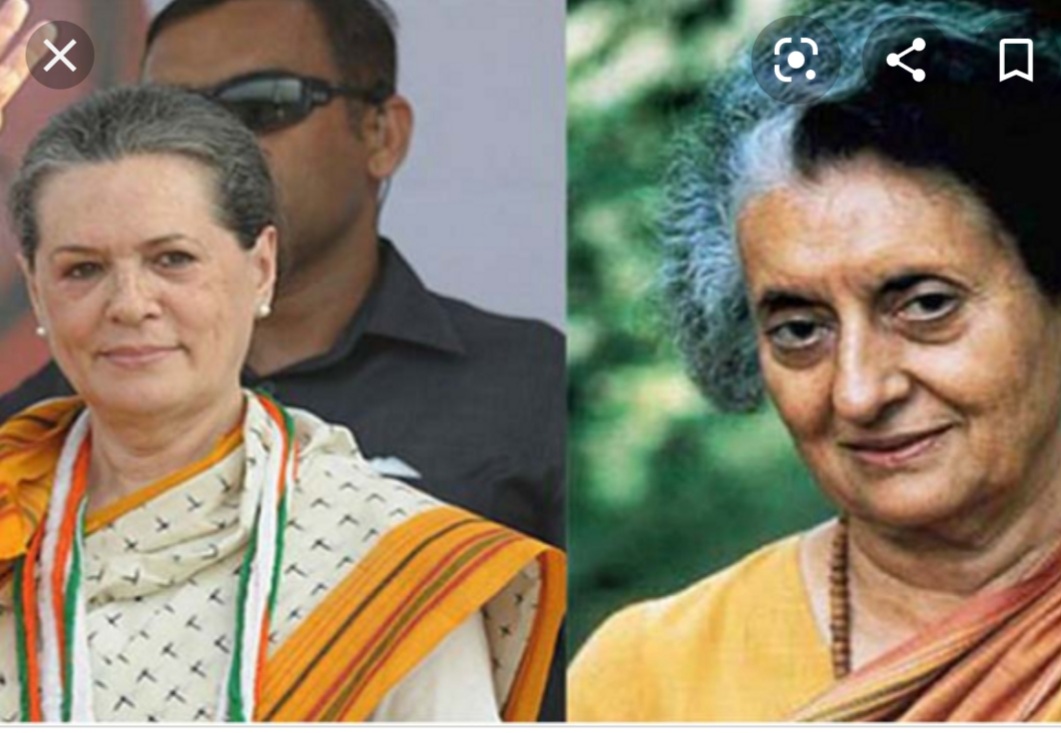
When the daughter-in -law presides over the funeral of the party that her mother-in-law had so meticulously built from the scratch.
Vivekanand Jha Ranchi: The Congress Party, which Tavleen Singh had so aptly described as a Private limited company whose controlling interest is held within the first family of the party, is in for its most critical phase: It is negotiating with its existential crisis, perhaps even of a greater magnitude than what Indira Gandhi had confronted way back in 1967 when she was battling against the collective might of the Syndicate which had conspired to treat her as the de jure prime minister, while they would be the real power behind the scene. The syndicate comprising of K.Kamaraj, Sanjiva Reddy, Atulya Ghosh and Nilangigappa. The underlying objective behind coming into existence of the Syndicate was the collective wielding of power by foisting someone incompetent so that they could control the government from behind the curtain.
Unequivocally, the coming together of the quartertet was the obvious threat that they faced from the stalwart Morarji Desai, who was all set to succeed Jawaharlal Nehru. Incidentally, Desai, his own man, was not only a threat for the Syndicate, even Nehru, frightened of his legacy being upended, in the event of Desai stepping into his shoes, abhorred Desai ultimately succeeding him. Coinciding with Nehru’s deep revulsion for Desai, and Kamaraj own agenda to rise at the helm of the affairs, the latter orchestrated a Machiavellian plan: Kamaraj plan, to show Morarji the door. In the subsequent move that followed, Nehru’s cabinet ministers were asked to put in their papers, thus giving freedom to the Prime Minister to pick up his cabinet. Jawaharlal, smitten by the severe blows of a humiliating defeat against China on the one hand and the economic misery on the other, confronted his hitherto the humongous credibility crisis. No wonder the voice of dissent had begun brewing up and consequently the most formidable face of Congress after Nehru, Morarji Desai was a looming threat to replace Jawaharlal. Hence, Kamaraj plan provided Nehru the much needed relief: Morarji was given the marching order.
Lal Bahadur Shashtri, a diminutive man, brought in as Nehru’s successor, by the scheming syndicate, the underlying objective was the same: To make him a puppet while the centrality of power would rest with the Syndicate. With the demise of Shashtri, albeit in quick succession, the so-called ‘Goongi Gudiya’, Nehru’s daughter, Indira Gandhi, was foisted upon the nation by the same Syndicate, with a motto to manipulate her. Unfortunately for the Syndicate, far from proving to be a goongi Guria, Indira Gandhi took the Syndicate head on. Seemingly, the entire Syndicate stood pulverised in no time. Indira later, became an all conqueror, endeavouring to dwarf even the nation when she had sought to eclipse the constitutional democracy by foisting her whimsicality upon the trusting nation. Indira kept the hope of the dynasty alive when she effortlessly anointed her own sons, first Sanjay Gandhi, and later, in the wake of his death, the elder son, Rajiv Gandhi. Sonia Gandhi too, much like her mother-in-law, stepped into her husband’s shoes, after an interregnum of more than eight years, when in a surprise coup, she usurped the position of the President of Congress Party, by orchestrating a coup on the then Congress President, Sitaram Kesri. But, unfortunately for her, despite making the tireless efforts, she failed to become the prime minister when Mulayam Sigh Yadav stubbornly refused to back her in her bid to ascend the highest political position of the land. Consequently, Sonia innovated with an ingenious plan: To make her protege, Dr Manmohan Singh as a front face, a stop gap arrangement, till her own son was matured enough to replace the octogenarian
. Alas, Sonia had known wishes were seldom horses! Her role of being a Marie Antoinette of India, has to finally end in fiasco for altogether different reasons: India, in twenty first century is not the same as it was in the 20th. In the twentieth century, the nation was enamoured of Nehru-Gandhi family, powered by the continuous spoon feeding by the Congress government backed by the dynasty that nation had only three priceless legacies to nurture, to reverentially admire with a worshipful adoration. However, in this twenty first century, the dynasty of Gandhi-Nehru family is treated as the bane, the biggest curse of the republic. Secondly, the secularism, which the dynasty has considered its own summum bonum for its survival, while expediently fragmenting the Hindus, has become the thing of the past. The consequence for the same has been increasingly apparent: The decimation of the Congress Party in the last two consecutive elections, when the party got 44 and 52 seats is the vindication of the fact that both secularism and dynasty have completely lost traction with the people. No wonder the leaders of the party see their own future in absolute shambles today. Worse still, the resolute determination, as reflected in the action of Sonia Gandhi so vindicates, is that she will not allow an alternate leadership to emerge. Hence in this backdrop, when the state of hopelessness and a sign and symbol of morbidity stares at the prospect of the party, the 23 senior Congress leaders’ coming together to write a letter to Sonia Gandhi seeking transparency and a full time visible leadership, is a daunting challenge to an ailing Sonia Gandhi, who, like the famous French Queen Marie Antoinette, is determined to see her son ascend the prime ministerial throne. But the moot question is, when the chorus of dissension is already threatening to assume a menacing proportion, with Congress leaders resolution to fight back with resilience, the question that looms on the horizon is this: Will the daughter-in -law, as in the case of her mother-in -law, be able to fend off the latest challenge, or be prepared to preside over to write the obituary of the party that her mother-in-law had so meticulously nurtured?