With the fragility of republic being an all time high, the latest accentuation of turmoil brought about by the hijab controversy has all the potential to further unsettle the republic. Hence in this backdrop, when the focus of the national attention is on the full bench of Karnataka High Court, the moot point is: will it relive the historic moments of Keshvanand Bharti case, or fizzle out at the unconscionable level and magnitude of pressure exerted upon it by the myriad stakeholders? The jury is out on this.
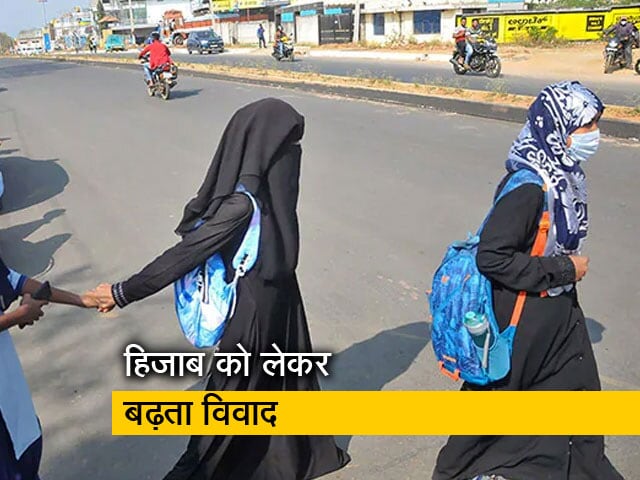
Vivekanand Jha Ranchi: The hijab controversy is refusing to die down, with secular media having smelt blood, will leave no stone unturned in its ulterior motive to further its own agenda of fulminating Modi government for unleashing persecution upon minority Muslims. The moot quedtion which boggles India today is this: should hijab, a traditional costume for Muslim women, be construed as an infringement upon the modernity; some sort of intrusion into the modern sense of dressing ? If this be the case, where a particular dress pattern is considered as obnoxious; in fact, antithetical and antagonistic to that of modern life style, it does raise a pertinent question: should India, having its own glorious civilisational history, notwithstanding the colonisation of its mind, in the wake of Macaulay’s wisdom of replacing the age old glory of Vedas and Upanishads, needs to revisit with all sorts of gusto and objectivity, where subjective colouring should not be allowed to prejudice, its own glorious tradition belonging to all religions, especially when India is on the threshold of a cultural and civilisational renaissance. Moreover, hijab, despite being a traditional costume for covering women’s face in the public domain, is a sign and symbol of a religious identity which, in such a secular republic as ours, is a matter of deep scrutiny and evaluation before the august full bench comprising of Chief Justice of Karnataka High Court and other two brother judges. However, the question staring at our face today is this: Will judiciary be able to stand erect to adjudicate the matter in letter and spirit of jurisprudence, or succumbing to the extraneous consideration might falter to call a spade a spade. This is the homongous dilemma confronting the republic today.
Incidentally, the women demonstrating against the banning of Hijab by the Karnataka Government, appeared far more belligerent than what the situation might have warranted, for the underlying reason paraded for such aggression being an attack on religion, was little overstated. Even Muslim women, if there is no fear of backlash or retribution from their religious zealots, would privately agree that, hijab is the genuine impediment to their individual freedom and liberty; it seeks to bridle them into being subservient to that of their male counterparts. In fact, male machismo has been the pivotal factor behind hijab finding its traction in Muslim society. Nonetheless, the wonen would publicly assert the obvious: an attack perpetrated on their religion by banning hijab. Regrettably, Malala, the youngest Nobel laureate, whose unwarranted comment on the banning of hijab by the Karnataka government, as an interference in the religious affairs, was uncalled for and unconscionably scorching. On the contrary, Malala, kept quiet when the human rights were blown into smitherren in Afghanistan. This dubious discriminatory approach of a Nobel laureate appears in flagrant violation of the wisdom she was expected to countenance as the Nobel laureate, for she should have had the good sense to appreciate that Indian judiciary is strong enough to decide on any contentious issue confronting the republic, and therefore, any fulmination from an outsider was never acceptable to the nation.
Whereas the decades of secular politics has given the overwhelming voice to Muslims, it invariably has rendered Hindus comparatively impotent, in the past decades. The CAA(The Citizenship Amendment Act) which had nothing to do with Muslim politics or curtailment of Muslim rights, yet they took up the nation wide mass protest to force the government to withdraw it. But then government withstood this, instead of pulverising, as the earlier governments would, for instance, Rajiv Gandhi biting dust at the mere semblance of muslim consolidation in favour of nullifying the impacts of Shah Bano case, had made a mockery of Indian law falling like ninepins before the religious fanaticism seeking to browbeat the law into submission. Small wonder then, the surcharged atmosphere of the country today yet again, in the wake of the matter reaching the full bench of Karnataka High Court engenders the delicate question yet again: Will judiciary triumph or lose out to the religious outcry? More so, when the single judge panicked from adjudicating it, lest the backlash would, if the judgment is not viewed favourably, adversely reflect on him, is the vindication enough that the individual judge had chickened out at the avalanche of pressure building up against him from different stakeholders.
Unequivocally, the onus will be on Karnataka High Court now. Whether the full bench of High Court headed by the Chief justice Ritu Raj Awasthi and other two judges, out of which one is a Muslim woman judge, uphold the law of the land by examining the constitutional angles of the issue involved, especially the fundamental rights conferred upon the citizens through various Articles on religious freedom given to the citizens of India to fearlessly practice and champion their own religions, without any fear or favour. The full bench of three judges should examine Articles 25 and Article 26 and other incidental Articles and precedents to dissect the rights and freedom of citizens vis a vis the rights and power enshrined in Constitution; the age old practice institutionalised in the society which, by virtue of its long practices, assumes the force of law. Most importantly, the judges should consider that, if Sikh is allowed to exhibit the turban in classrooms and campuses, why would not a Muslim woman be allowed to do the same? And if hijab is sought to be banned, why not turban too follow suit? The duty of the judge, while sitting upon the judgment, is only to ensure that the justice is wholesomely dispensed and perceived to have been done by the larger community, not striving for the propitiation of any party as such. A couple of years ago, in Kolkata, a verbal argument had kickstarted between the former Speaker of Loksabha, Somnath Chatterjee, and the former judge of the apex court, Justice Ashok Kumar Ganguly, wherein the former had alleged that the latter, through his rigorous scrutiny of law, had jeopardised the investment of crores of FDI, which if channelised, would have created lots of jobs. Significantly, Somnath Chatterjee, despite being a barrister, had faltered in interpreting the spirit of the provision of law, for the sacred duty of a judge, while sitting on a judgment, is only related to the prima facie review of the aspects and dimensions of law, not about its consequential impacts, even though the outcome might prove to be disastrous for the nation. Hence in this backdrop, the full bench of the Karnataka High Court is embarking upon a historic moment when it will adjudicate upon the the grave issue confronting the nation today. Especially when the entire nation is staring at the judges for seeking to uphold the majesticity of law, it is incumbent upon the judges to prove it yet again that, Indian judiciary, despite Indian democracy, in recent years, has left much to be desired, judiciary, as a watchdog and the sentry of the society stands as robust as ever. Willy nilly the Keshvanand Bharti versus State of Kerala revisits the the full bench of Karnataka High Court where, instead of Basic Structure of Constitution being examined, it would be the age old religious practices which will form the building block of legal scrutiny for the judges to arrive at their own legitimate judgment on which the very onus of India’s unfolding political and religious trajectories shall take their tangible shape.
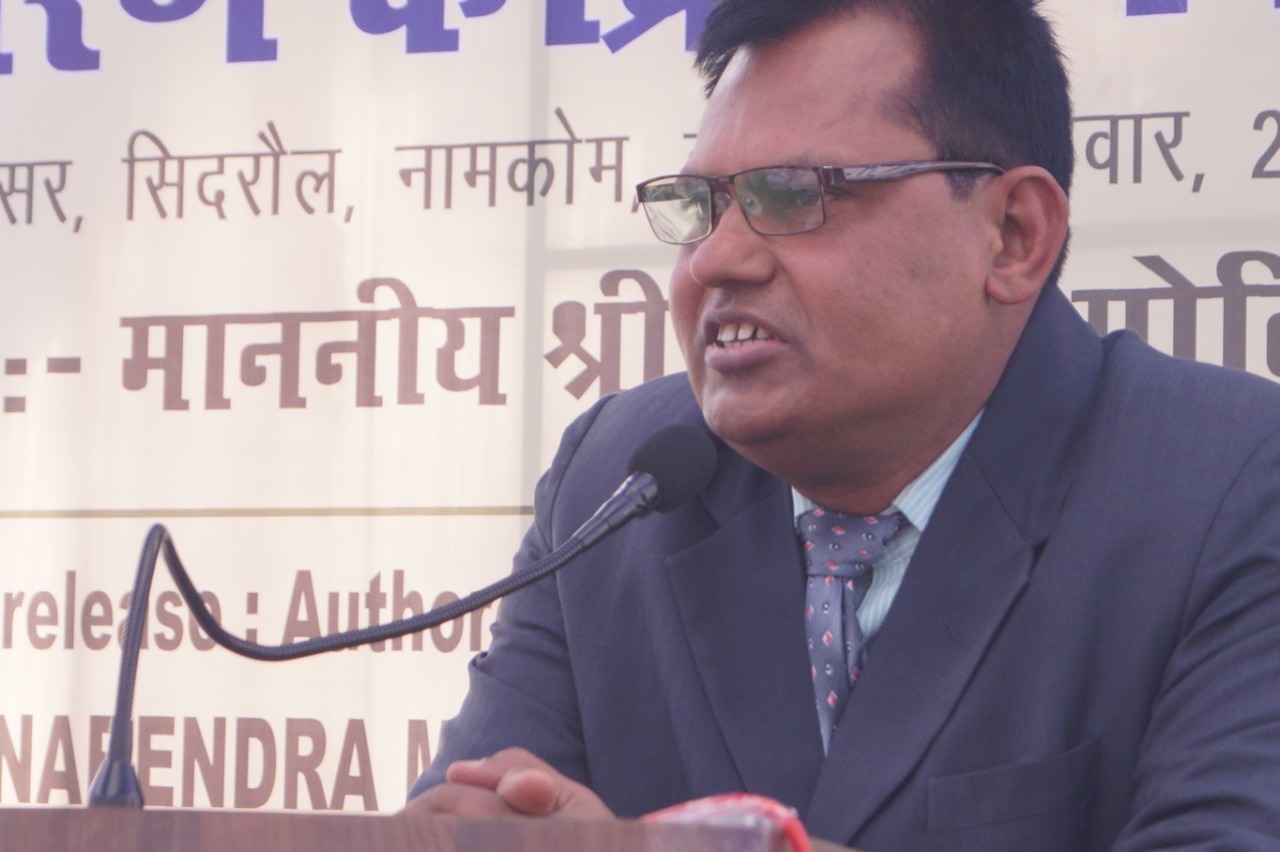
Vivekanand Jha is an author, academician and a Public Intellectual.
He is the Convener of Education pe Charcha.