Kathmandu, July 19, 2025:
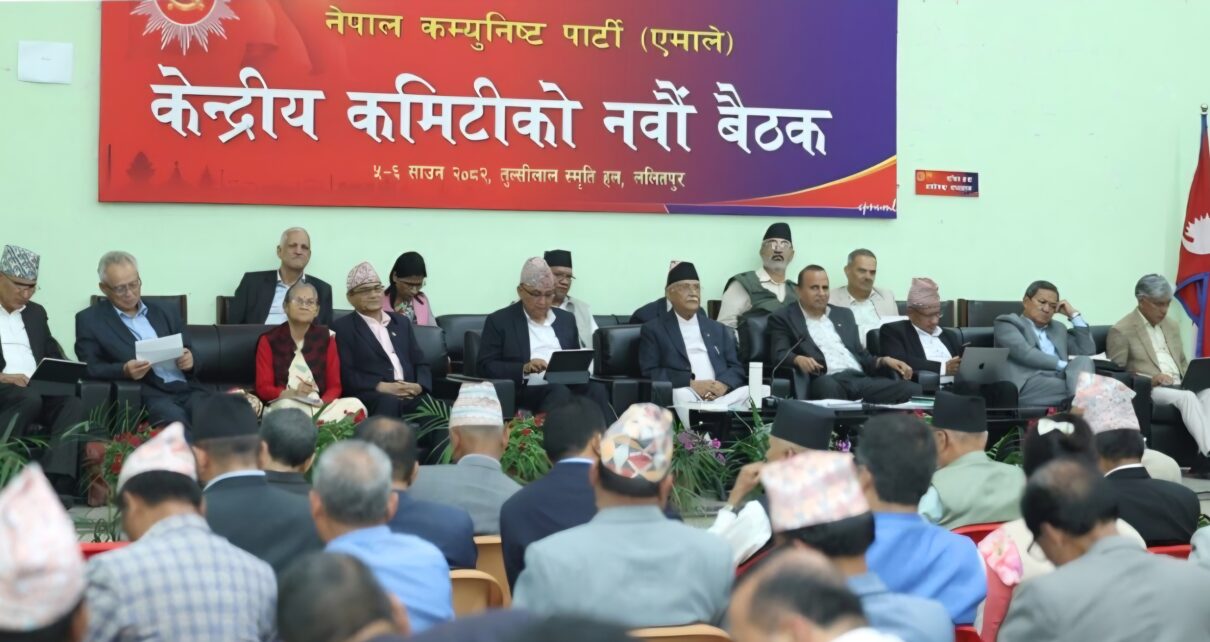
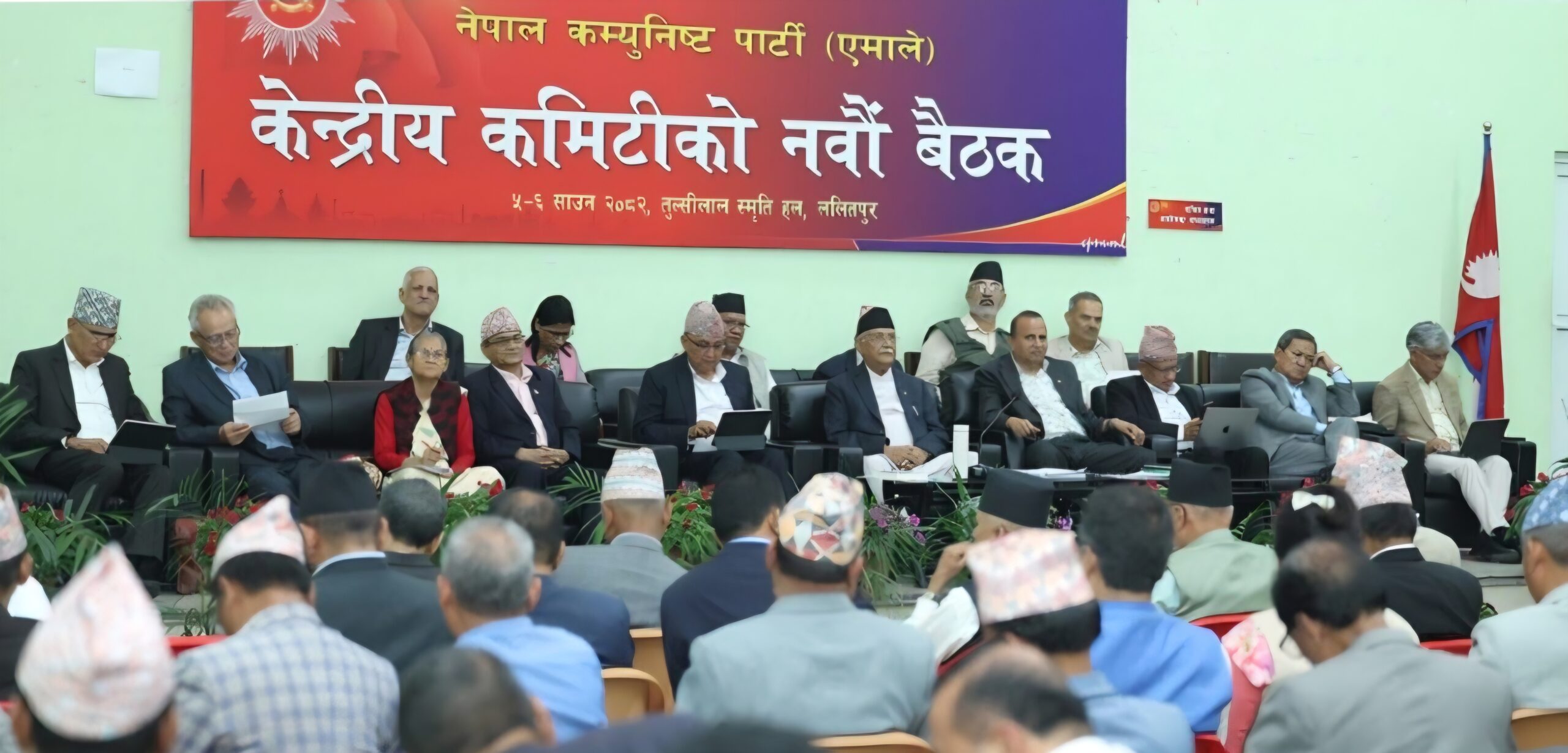
The ninth Central Committee meeting of Nepal’s main opposition party, the CPN-UML, began Friday with a sharp focus on internal leadership issues, sidelining broader political and ideological agendas.
Although the primary objective of the meeting was to deliberate on policy and organizational drafts ahead of the party’s upcoming statute convention scheduled for early September, nearly all 49 speakers on the first day centered their remarks on party leadership — particularly the continued role of party chairman and Prime Minister KP Sharma Oli.
According to party insiders, the leadership-centric tone was set early by Oli himself, who raised the issue of former President Bidya Devi Bhandari’s party membership. Speaking in a cautionary tone, Oli questioned Bhandari’s unclear political posture and criticized those leaders who continue to follow her despite her ambiguous status within the party.
This sparked a series of speeches overwhelmingly supportive of Oli’s leadership, overshadowing the policy proposals presented by party Vice-Chair Bishnu Poudel and General Secretary Shankar Pokharel.
Some party members, including former Youth Association Chair Rajib Pahari, went so far as to suggest that the meeting itself declare Oli as the party’s chairperson for a third term. “Let’s announce KP Oli as the next chairman right from this meeting,” Pahari said, receiving backing from several other members.
However, a few dissenting voices did emerge — a rare development in a party that has been under Oli’s firm grip for over a decade. Leaders from the Gandaki, Madhesh, and diaspora coordination committees raised concerns over the need for leadership change and called for adherence to the party statute, which currently limits chairmanship to two terms and sets an age cap of 70.
During a recent secretariat meeting, senior vice-chair Ishwar Pokharel reportedly advised Oli to step down, citing the need for renewal and better internal governance. He and others opposed attempts to amend the statute to remove age and term limits — a move seen by some as designed to allow Oli to continue at the helm.
Central Committee members such as Rachana Khadka, Diwakar Devkota, Arbind Singh, and others also voiced criticism of the party’s direction. “Are we tailoring rules around individuals?” Khadka asked. “This undermines institutional credibility.” Singh objected to the leadership’s role in steering the meeting toward personal issues instead of procedural and ideological discussion.
Although leaders were given only three minutes each to speak, insiders say many used their time primarily to praise Oli, rather than engaging substantively with policy matters.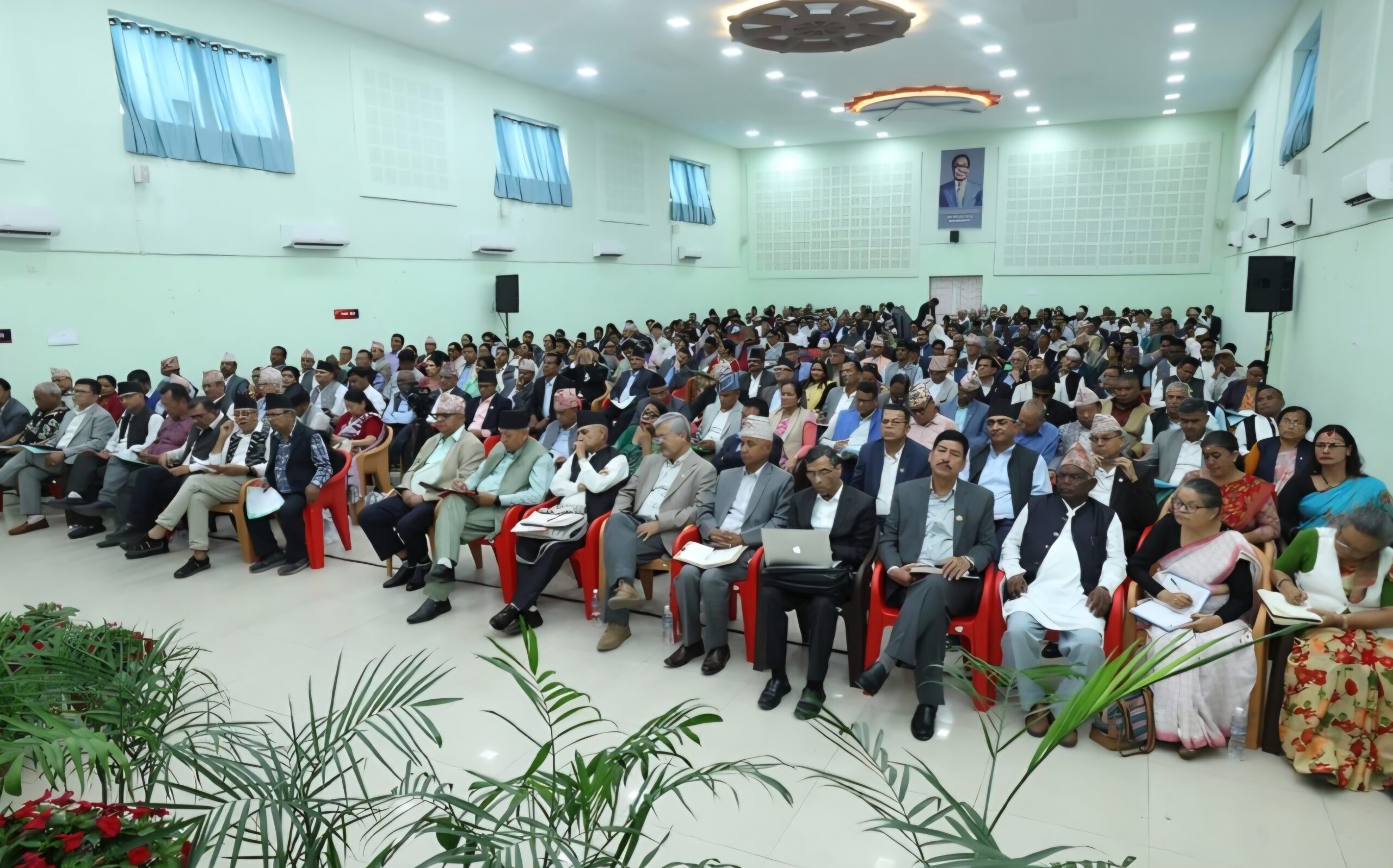
The tone of the meeting has raised concerns about internal democracy and rule-based functioning within the UML. With the party aiming to consolidate ahead of the 2084 (2028 AD) general elections under its “Mission 084” campaign, the tension between loyalty to Oli and calls for renewal is likely to deepen in the days ahead.